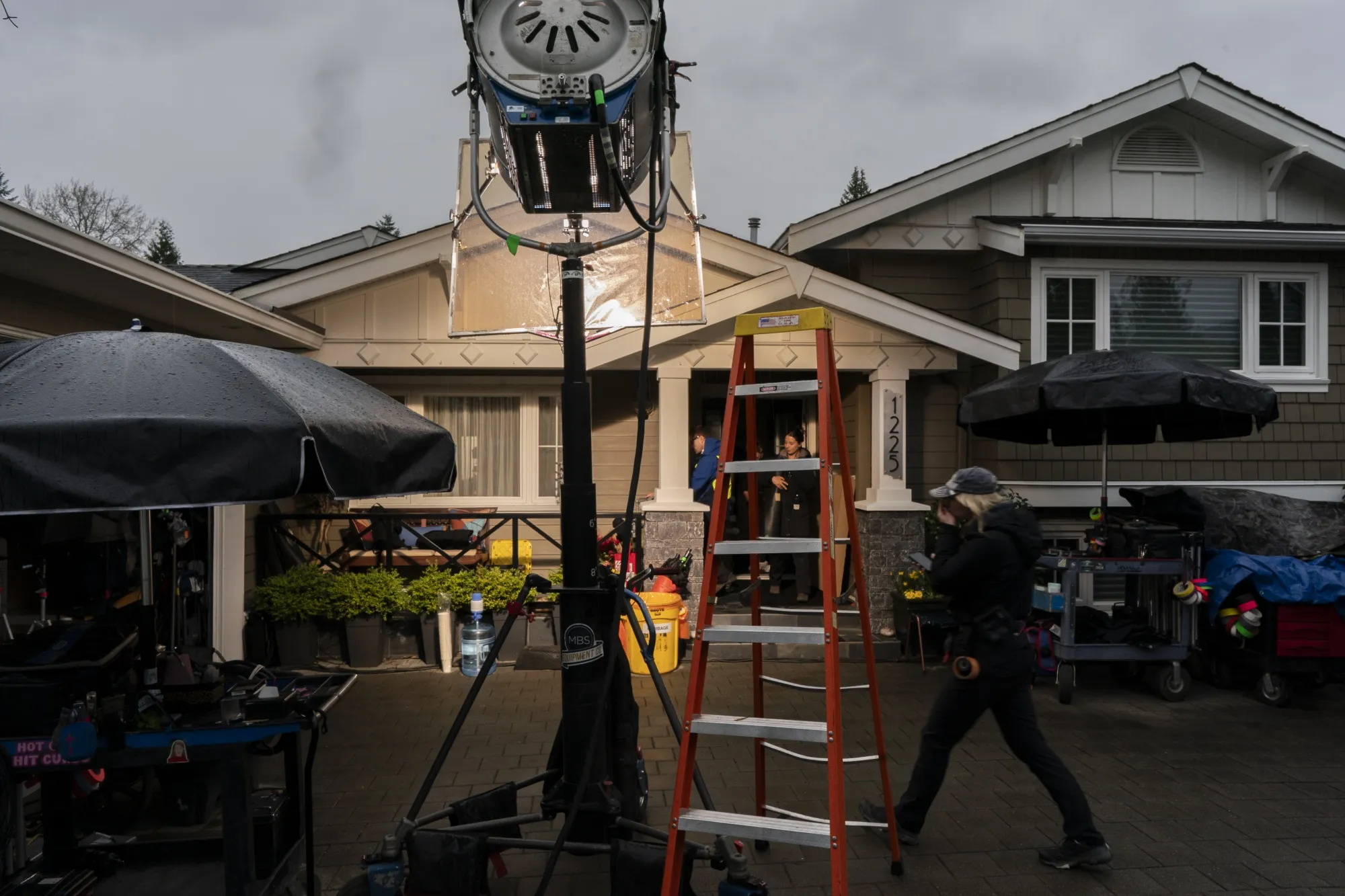
On a rainy day, massive 18,000-watt lights running on a giant battery provide the ‘sunlight' on the Virgin River set.
Photographer: Paige Taylor White/BloombergNetflix Wants to Shrink Your Favorite TV Show’s Carbon Footprint
Virgin River is using batteries and Bridgerton is testing out hydrogen, but the company's overall emissions reduction progress has been marginal.
There’s a soft, afternoon glow suffusing an intimate scene between the plucky protagonist and her wood-chopping, flannel-shirted love interest’s mother on the Vancouver set of the Netflix Inc. show, Virgin River. A soapy drama centered on a nurse practitioner in a small, northern California town, Virgin River is the kind of show that reliably delivers buried secrets, thwarted villains and reunited lovers. That fake sunlight — the combined power of two massive 18,000-watt lights running on a giant battery — is how Netflix wants to clean up the dirty business of Hollywood productions.
On most film and television sets, illumination is powered by loud, clunking diesel generators. Virgin River is one of a number of Netflix’s productions replacing generators and fossil fuel-based transportation with greener alternatives. In Atlanta, Stranger Things is dabbling with solar-powered trailers, and just outside London, Bridgerton has tested a hydrogen power unit.