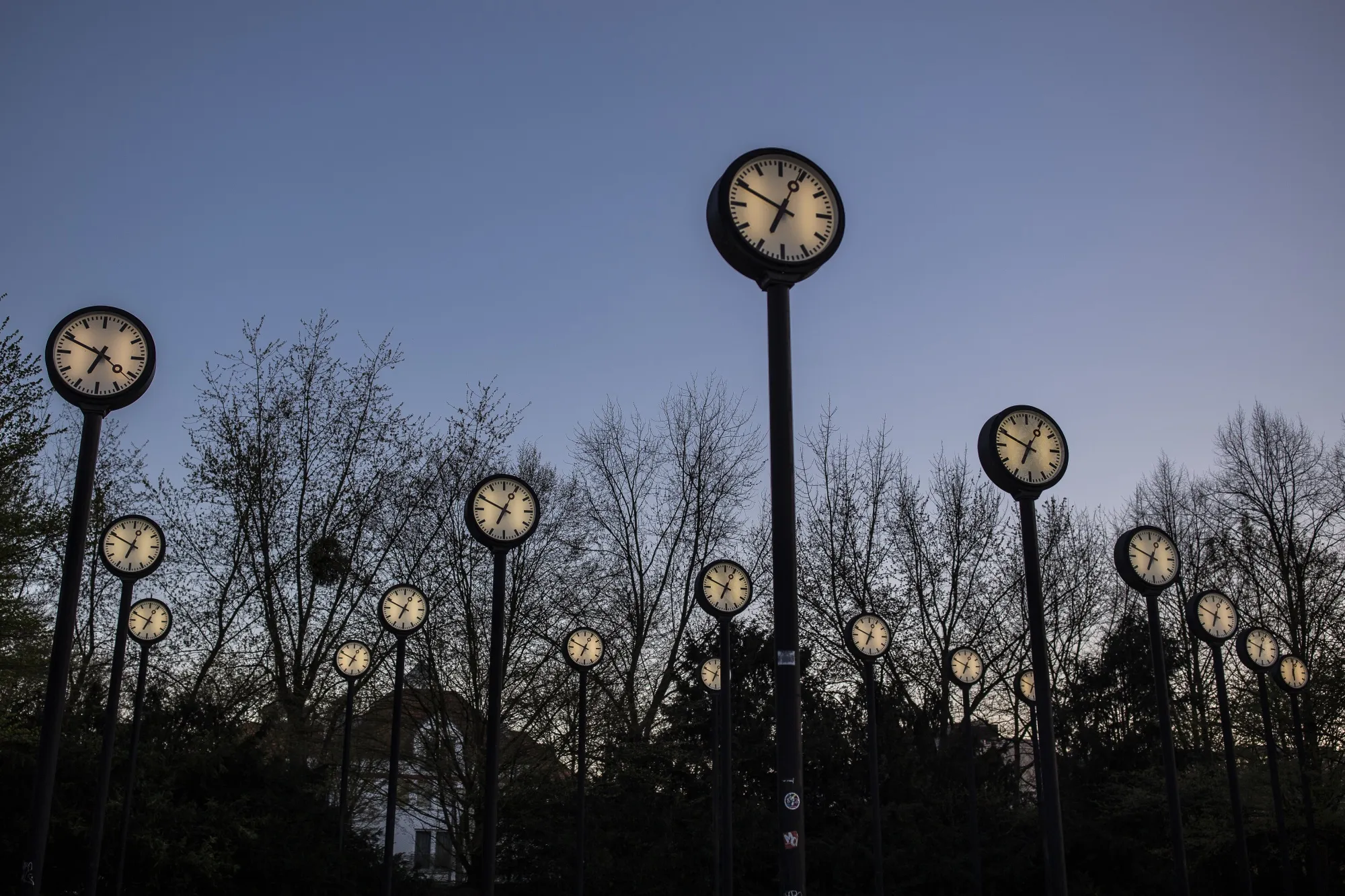
The US adopted daylight saving time in 1918.
Photographer: Maja Hitij/Getty ImagesWhy Daylight Saving Time Is a Perennial Source of Debate
“Spring forward, fall back” is a twice-a-year part of life in roughly 70 countries around the world. In the US, where the practice is more than a century old, lawmakers are considering measures that would end clock changes and make daylight saving time permanent, a proposal President Donald Trump endorsed on April 11. That would mean later sunrises and sunsets for half the year. There’s evidence that the public health effect would be mixed: fewer car accidents and heart attacks caused by time shifts, but potentially a loss of sleep quality for almost everyone in winter. The history of the issue both in the US and around the world shows that no approach is likely to make everybody happy.
Daylight saving time changes how our timepieces align with the longer hours of sunshine that come in summer. It allows people to enjoy more light in the evening, rather than sleeping through it in the early morning, without changing their schedules. US inventor and diplomat Benjamin Franklin is often credited with inspiring the concept. He wrote an essay in 1784 suggesting a change in sleep routines to reduce candle consumption in the evening. Daylight saving time was first adopted as official policy by Germany during World War I, with the aim of conserving energy.