The End of College Football As We Know It
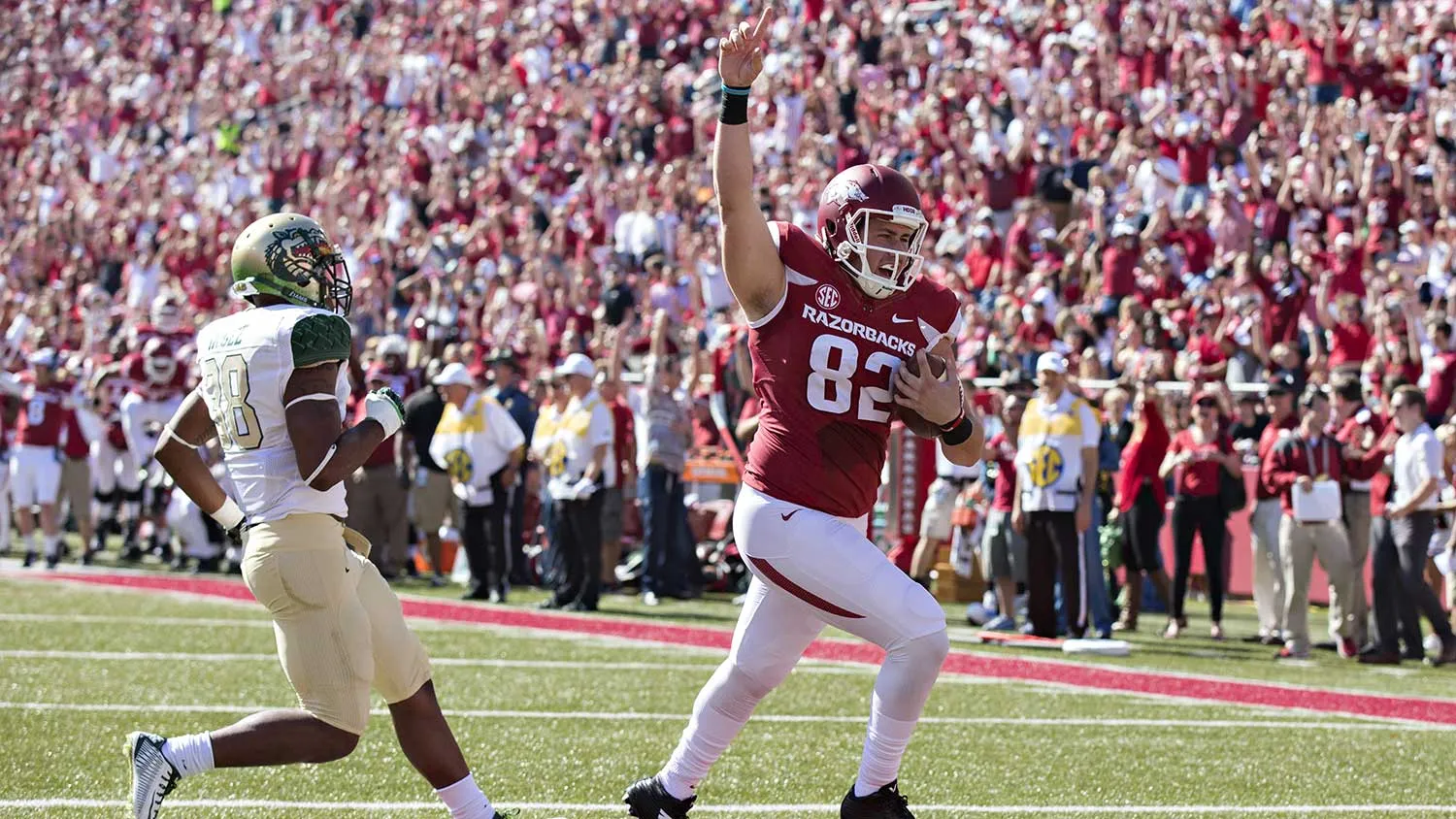
Luke Rossi #82 of the Arkansas Razorbacks catches a pass for a touchdown against the UAB Blazers at Razorback Stadium on October 25, 2014 in Fayetteville, Arkansas.
Photo by Wesley Hitt/Getty ImagesIt is tempting to say that 2014 was a bad year for the NCAA, but, honestly, every year is a bad year for the NCAA. But this was a particularly eventful one. In March, former athletes brought an antitrust class-action suit against the organization, calling it an “unlawful cartel.” Football players at Northwestern voted to unionize. The NCAA lost the Ed O’Bannon case. O'Bannon, a UCLA power forward, accused the league of unlawfully profiting from his image, and a U.S. district judge ruled that the organization “unreasonably restrained trade” when it came to its players’ earning potential. The way it handled an autographs-for-pay “scandal” with star Georgia running back Todd Gurley—suspending him for attempting to profit off his own name and then including “community service” in its punishment, as if the NCAA were some sort of licensed judicial entity—made many wonder why in the world anyone would ever want to be a part of this corrupt system in the first place.
But the most significant change, the pivot point around which the future of the sport may revolve, might have come in August, when the NCAA—in an attempt to stave off its increasing weakness and potential irrelevance—allowed universities from the Power Five conferences (the ACC, Big 10, Big 12, Pac-12, and SEC) unprecedented autonomy in basically making their own rules. Schools from those conferences, profoundly more wealthy than smaller schools because of their massive cable contracts in a television industry that needs them more desperately than ever, had long been chafing under NCAA regulations, particularly when it came to compensating (or at least providing insurance and more expansive scholarships for) their athletes. After years of threats that those conferences would take their ball and go home to start their own leagues, the NCAA gave in and granted them their precious autonomy. It has only been since August, so there haven’t been many massive changes yet. But they’re coming.