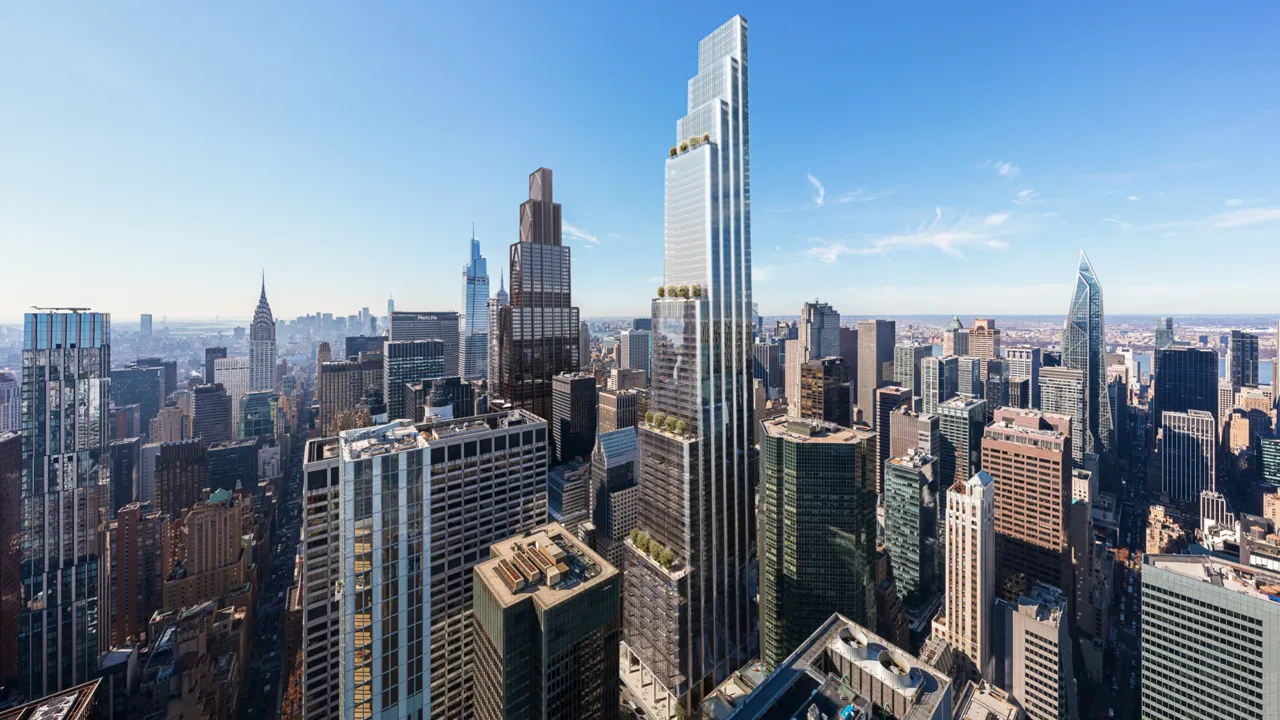
Source: Foster + Partners
Shadow Banks Are Too Big to Stay in the Shadows
Mega hedge funds are so critical to modern finance they should be regulated more like banks.

When it’s finally completed seven years from now, Citadel LLC’s New York tower will be the second tallest building in the city, after the World Trade Center. It will also loom over the headquarters of JPMorgan Chase & Co. just a few hundred yards south along Park Avenue. That the world’s most valuable bank will be literally in the shadow of a key pillar of shadow banking is an overt and irresistible metaphor for how financial power has shifted over the last 15 years from traditional lenders toward enormous, less restrained repositories of money such as Citadel.
Shadow banks do a lot of the work that commercial banks do without being hampered by strict government regulations. That means these operations — particularly hedge funds and private asset managers — can invest more aggressively, taking on greater risks and potentially earning greater rewards. It doesn’t mean, however, that they don’t pose a systemic risk to global finance and economies. They are woven intricately into similar transactions and obligations that have periodically made banking collapses existential threats, yet the risk they pose goes relatively unchecked and under-examined. That should worry investors, policymakers, regulators and consumers.