Why Russian Nationalists Are a Big Target for Both Sides
Ukraine and the Kremlin have strong reasons to fear an uncompromising radical vision of a revived Russian empire.
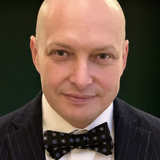
True believers represent a cross-cutting threat.
Photographer: Contributor/Getty Images EuropeAs the father of daughters, I can’t bear to imagine what far-right philosopher Alexander Dugin must be going through after his daughter, Darya, was blown up in a car bombing on Aug. 20. I suspect the video of Dugin grabbing his head in despair at the scene of the killing, and his tears as he delivered the eulogy, tell more about his inner state than the grandiloquent statement put out on Dugin’s behalf by his financier friend and backer Konstantin Malofeev: “Our hearts thirst not merely for revenge or payback. That’s too petty, too un-Russian. We only need our Victory. It’s on Victory’s altar that my daughter has laid her young life.”
Yet the statement — and the similar content of the eulogy — is hardly beside the point. Darya Dugina’s assassination, blamed by the Kremlin and the Russian special services on Ukraine and by Ukrainians on the Kremlin or on Dugin’s enemies inside Russia, spotlights the only force in Russia that supports Vladimir Putin’s invasion of Ukraine with a sincere passion: the Russian nationalist community, of which Dugin is a prominent member and in which his daughter also was active. Without the nationalists’ ardor as the driving force, the invasion would have been a purely mercenary enterprise; without the body of text they have created since the 1990s, Putin, the lifelong political opportunist and mobbed-up economic operator, would hardly have found the words he uses today to justify his late-career bid for imperialist glory.
Dugin, variously described as “Putin’s brain” and a “Nazi clown,” doesn’t fit either cliche. In the 1990s and early 2000s, Russian intellectuals and their Western followers liked to mock the marginalized ultranationalists who aired their exotic beliefs on obscure websites, seemingly without a hope in the world for money, power or influence, ever the only measures of success in Moscow. Then, after the 2014 Crimea grab — a move advocated by Dugin and his allies since the Soviet Union’s breakup — the search for the origins of Putin’s imperialist turn in the writings of nationalist philosophers became fashionable. The Trump-Russia paranoia post-2016 reinforced the trend, and polyglot Dugin’s outreach to nationalists across Europe, as well as his ties with parties the Kremlin appeared to be grooming as a fifth column in the West, began to look outright sinister.