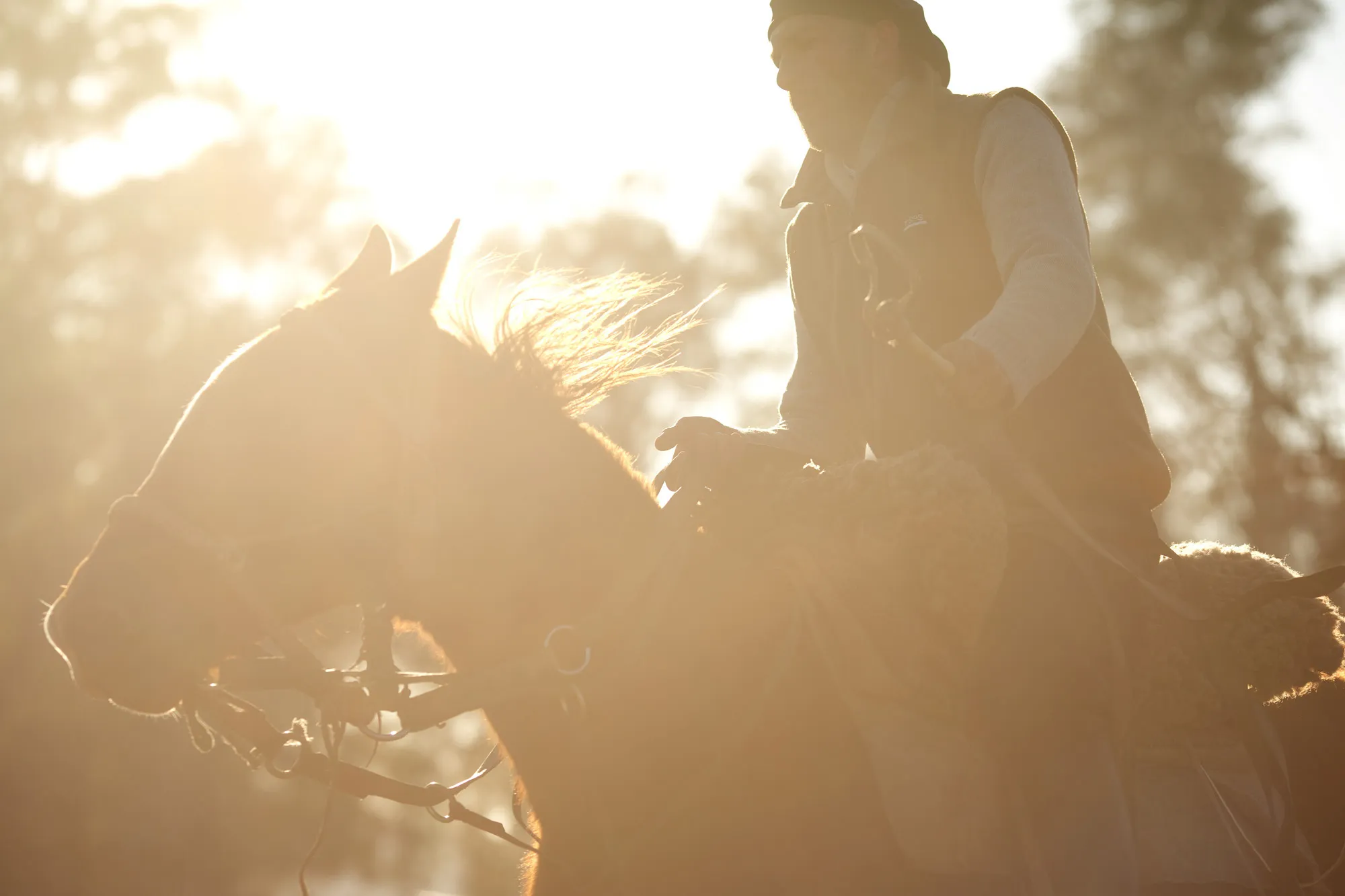
Gaucho and domador, or horse trainer, Luis Daniel Cerrudo trains a young horse on the Estancia La Argentina farm outside San Antonio de Areco, Buenos Aires province, on July 22, 2015. The doma, or the process of training cattle horses, lies somewhere between breaking and training. When a horse is trained, it does the same thing every day and learns from repetition. With the doma, horses learn a variety of new things each day of training and are given days off to let the lessons sink in, a process that can last a year. Declines in cattle herds due to increasing soybean production that takes up pastureland, government policies that keep beef prices low, and the breakup of large farms have all led to a decreasing number of gauchos in the fields of the Pampas. “Now the gauchos of today are fewer and fewer,” Cerrudo says. Photographs by Victor J. Blue/Bloomberg

Gaucho and domador, or horse trainer, Luis Daniel Cerrudo trains a young horse on the Estancia La Argentina farm outside San Antonio de Areco, Buenos Aires province, on July 22, 2015. The doma, or the process of training cattle horses, lies somewhere between breaking and training. When a horse is trained, it does the same thing every day and learns from repetition. With the doma, horses learn a variety of new things each day of training and are given days off to let the lessons sink in, a process that can last a year. Declines in cattle herds due to increasing soybean production that takes up pastureland, government policies that keep beef prices low, and the breakup of large farms have all led to a decreasing number of gauchos in the fields of the Pampas. “Now the gauchos of today are fewer and fewer,” Cerrudo says. Photographs by Victor J. Blue/Bloomberg

Photographer: Victor J. Blue/Bloomberg

Gaucho Moderno

This month the U.S. will lift a 14-year ban on the import of Argentine beef that was instituted in 2001 after an outbreak of foot-and-mouth disease. The overall Argentine herd fell from 55 million heads in 2003 to 48 million in 2011, as farmers started to cull young animals because of low prices and slumping demand. Over the years, it’s become more and more difficult for Argentina’s modern-day cowboys, or gauchos, to make ends meet in an industry shaken not only by the ban, but also by factors such as global commodity trading and expanded soybean production. With fewer and fewer cattle to run, the lone horseman is finding himself increasingly out of demand. Photographs by Victor J. Blue for Bloomberg.