Business Schools Need Cash. Some Are Counting on Executive Education
Training corporate bigwigs can pay off handsomely—if schools navigate past the obstacles.
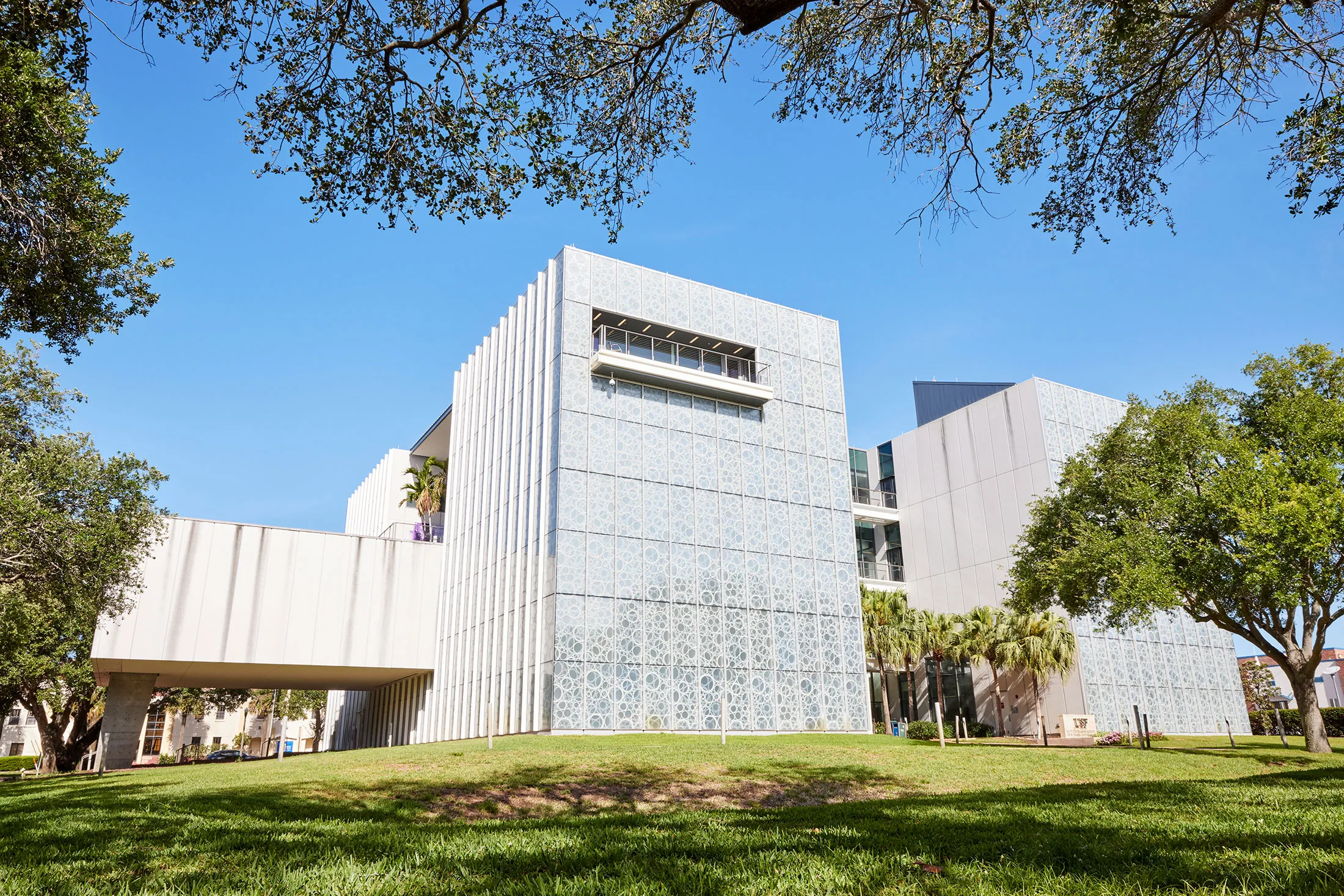
The University of South Florida’s Muma College of Business in St. Petersburg is home to the new Center for Executive and Leadership Education.
Photographer: Alayna Vance for Bloomberg Businessweek
Not long after Dave Blackwell arrived in Tampa to take charge of the University of South Florida’s Muma College of Business in 2024, he understood he would have to make investments. USF had recently been invited to join the Association of American Universities, the selective organization of top research institutions on the continent, and the honor came with expectations. “We had to keep investing in our faculty,” he says, “to keep up our research profile to be consistent with a business school at an AAU university.” At the same time, with B-schools increasingly competing on amenities, Blackwell could see that Muma’s building in Tampa needed to be expanded and updated.
How would Muma pay for all this, or for the many small projects and opportunities that would inevitably pop up? University annual budgets are notoriously tight. “There’s not a lot of extra money that is discretionary to invest in other parts of the college,” Blackwell says. “We have to develop alternative revenue streams.”