A Fight Over Dirt in Utah Hints at the Future of America’s Public Lands
As the Trump administration prepares to move the US Forest Service to Utah, it’s been opening the door for unprecedented control by state and local governments—and use by industry.
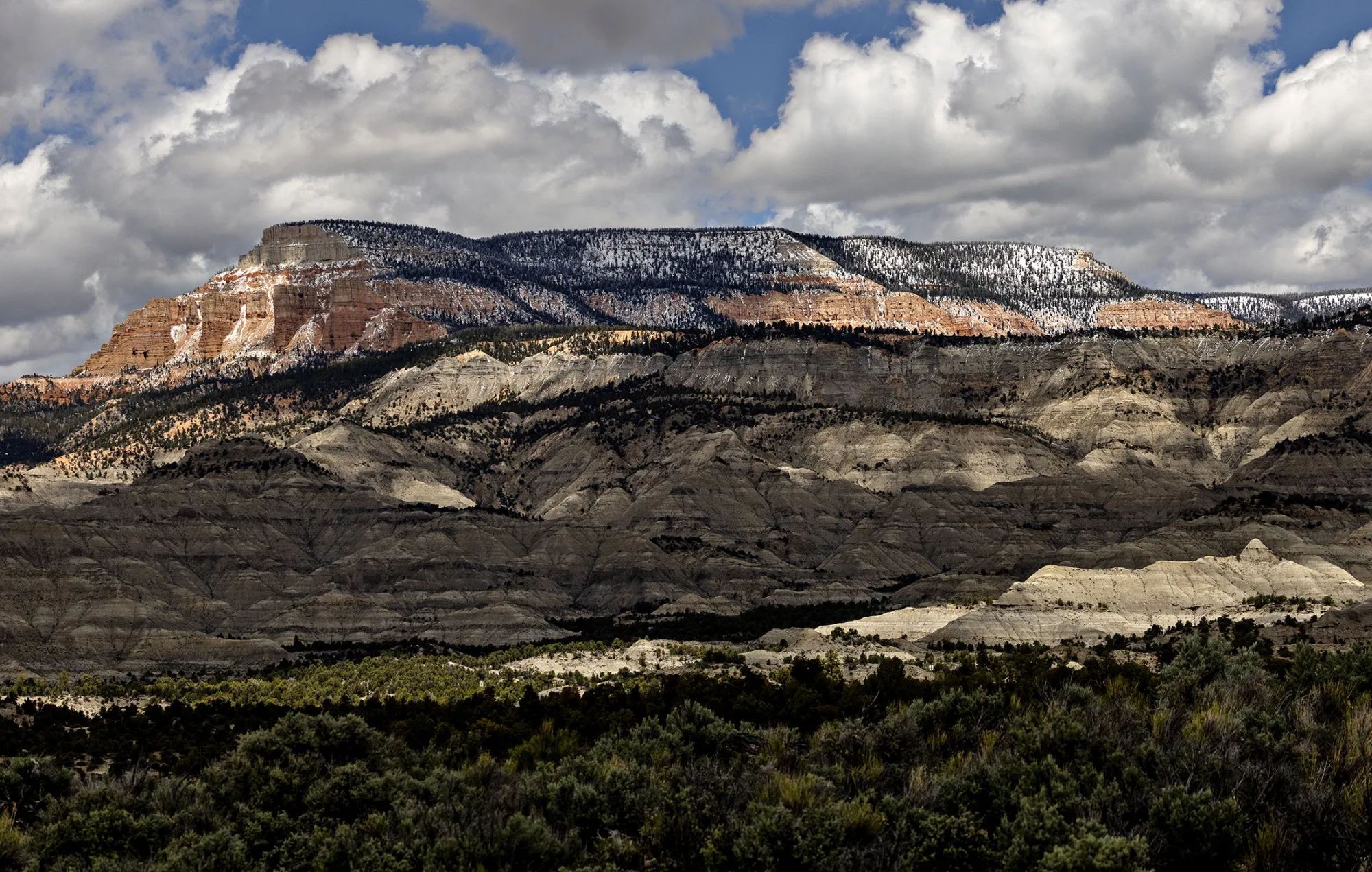
Powell Point Vista, part of the Grand Staircase-Escalante National Monument.
Photographer: Kim Raff for Bloomberg Businessweek
Hole-in-the-Rock Road is a dirt track scratched out of the Utah desert by Mormon settlers more than 140 years ago. The 62-mile drive from the hamlet of Escalante to the western shore of Lake Powell can easily take four hours due to washboard conditions, longer if rainstorms turn the red silt to mud. Mormon families make the trip to pay homage to their forebears, while other tourists brave the drive for the magnificent slot canyons and plateaus. Less obvious from the road is what makes the area a flashpoint. Most of the route has been under federal protection since 1996, when President Bill Clinton created the Grand Staircase-Escalante National Monument to guard the dinosaur fossils and Native artifacts buried in the ground.
Business interests and Mormon ranching families in surrounding Garfield County didn’t appreciate Washington putting protections on the area. “It was settled by the pioneers, and we put our roots here, and then all of a sudden, this big map is drawn around our communities,” says Leland Pollock, a county commissioner and rancher who favors cowboy hats and wraparound shades. While the local tourism industry is thriving, Pollock yearns to see more livestock grazing, logging and other uses. With the support of state officials, he and Garfield County have long argued that even if the land itself is owned by the US Bureau of Land Management (BLM), a Civil War-era congressional statute gives the county a special right to control Hole-in-the-Rock Road.