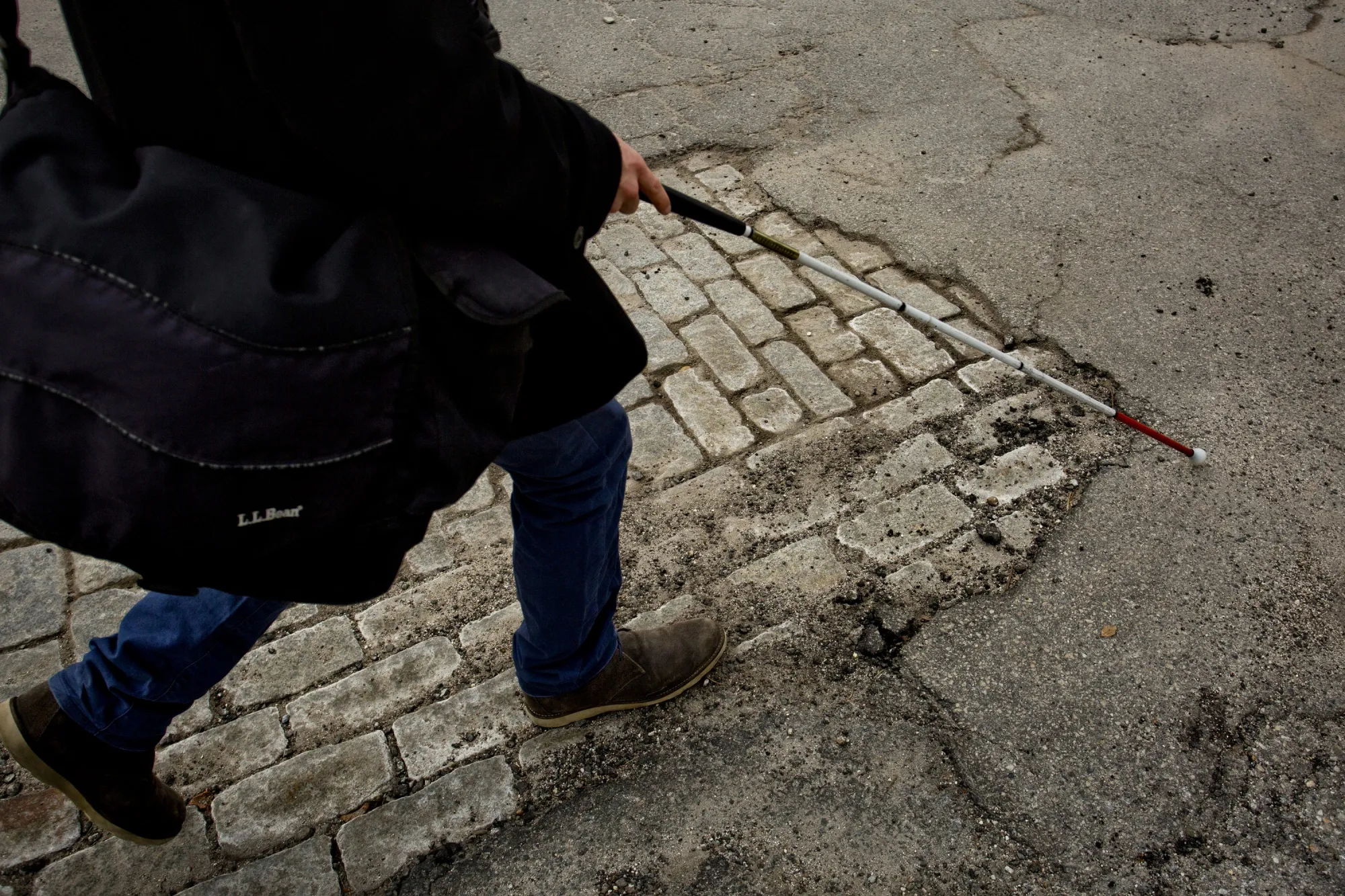
For many visually impaired and blind people, getting around means learning the tactile cues of the urban streetscape.
Photographer: Gabe Souza/Portland Portland Press Herald via Getty Images
What Would a City Designed for Blind Commuters Look Like?
People with low vision or blindness face unique barriers as they negotiate streets and subways. But new accessibility tech and policies can make getting around the city easier.
Stepping off the 2 subway at Wall Street on September 10, 2015, Sharon McLennon Wier performed her usual rundown of sensory tasks: She listened for everyone to leave the train, stepped down on the narrow platform below her feet, and maneuvered toward the exit, using her white cane to probe for obstructions as she made her way for the stairway. Then she fell.
“I found out later the particular platform at that time had tactile striping, but it wasn’t the correct one,” said McLennon Wier, now the executive director of the Center for Independence of the Disabled, or CIDNY. “In some places, they’re yellow or orange, but I’m a totally blind person so I don’t know the coloring. Larger bumps help in detecting when you’re at the edge.” That day, her usual touchpoint wasn’t the same: The bumps had been worn down. “Not having that, I was on the subway tracks.”