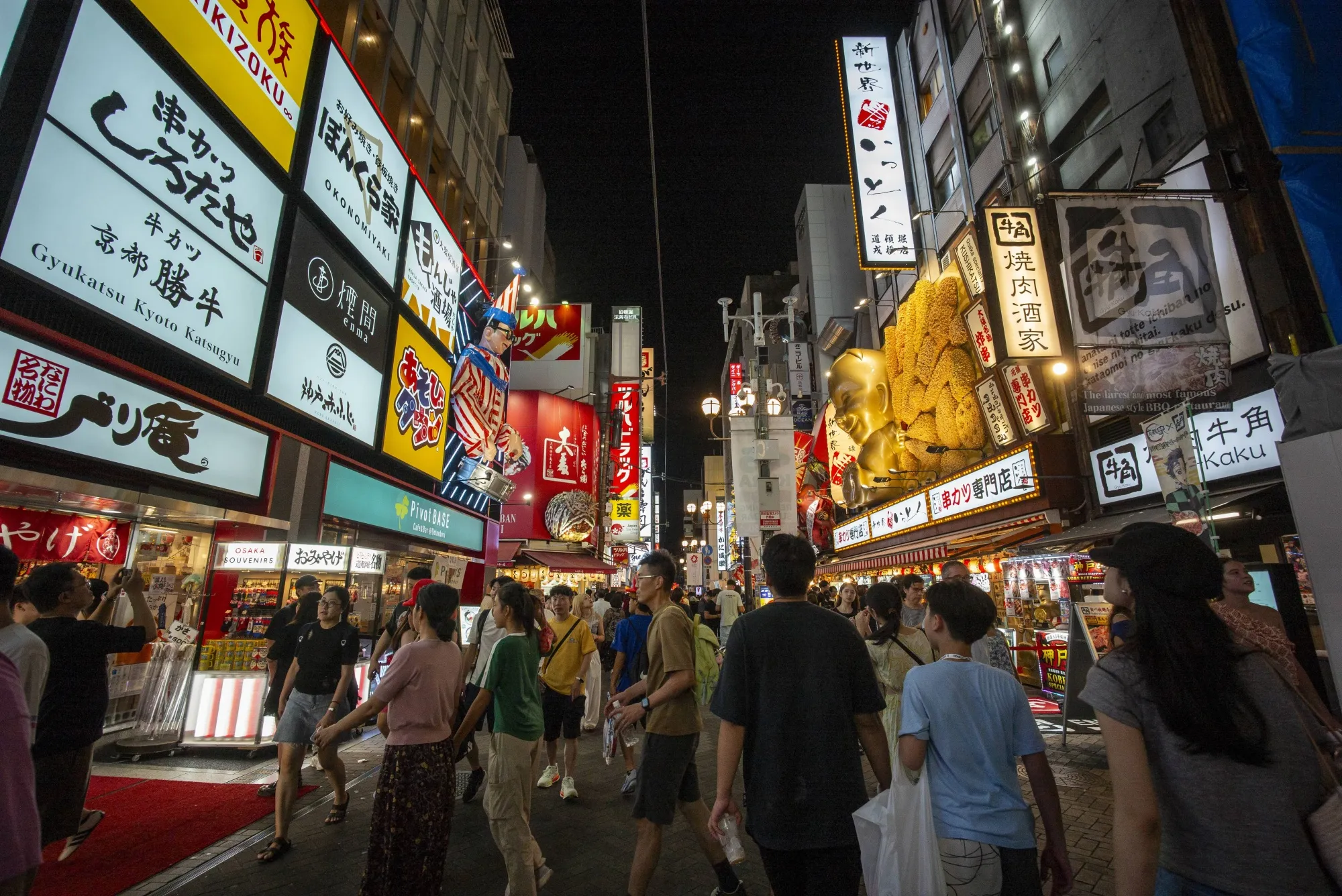
It might look chaotic, but the jumble of storefronts in Osaka’s Dotonbori district represent one model for a vibrant urban community.
Photographer: Alfredo Martinez/Getty Images
In Praise of Urban Disorder
The book Messy Cities looks at unregulated and informal development from Toronto to Tokyo to show how less planning can deliver more vibrant neighborhoods.
In his essay “Planning for an Unplanned City,” Jason Thorne, Toronto’s chief planner, poses a pair of provocative questions to his colleagues. “Have our rules and regulations squeezed too much of the life out of our cities?” he asks. “But also how do you plan and design a city that is safe and functional while also leaving room for spontaneity and serendipity?”
This premise — that urban planning’s efforts to impose order risk editing out the culture, character, complexity and creative friction that makes cities cities — is a guiding theme in Messy Cities: Why We Can’t Plan Everything, a collection of essays, including Thorne’s, gathered by Toronto-based editors Zahra Ebrahim, Leslie Woo, Dylan Reid and John Lorinc. In it, they argue that “messiness is an essential element of the city.” Case studies from around the world show how imperfection can be embraced, created and preserved, from the informal street eateries of East Los Angeles to the sports facilities carved out of derelict spaces in Mumbai.