Trump’s Assault on the WHO Is Forcing Radical Reform
The UN agency that responds to Ebola outbreaks and other health emergencies is in turmoil. But its leaders say it could emerge stronger.
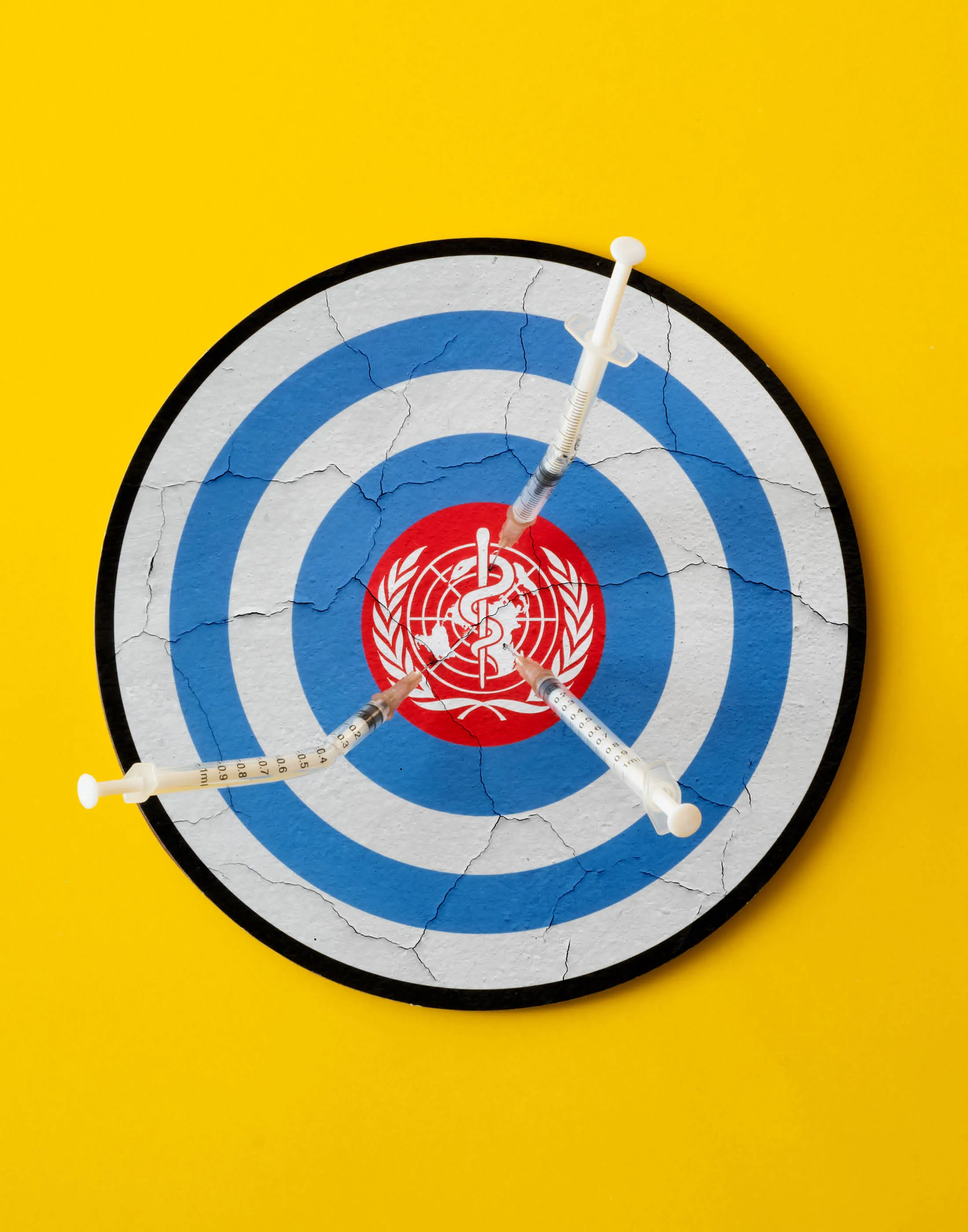
Illustration: Ricardo Tomás for Bloomberg Businessweek
On a wooded slope above Geneva, a sleek glass-and-steel office tower with commanding views of Mont Blanc sits empty. The only person present in the lobby is a security guard at a gleaming reception desk. Behind him, a lone Pride flag hangs. When a reporter for Bloomberg Businessweek raises a smartphone to take a photo, he responds sternly: no pictures allowed.
Refurbished last spring at a cost of 110 million Swiss francs ($137 million), this building was intended to serve as an upgraded home for the World Health Organization, the United Nations body that monitors infectious diseases, recommends vaccine standards and advises governments on outbreak response. But the move-in date has been pushed back, pending the completion of layoffs. A neighboring complex for the UN Programme on HIV/AIDS will soon house just 19 staff, far below its capacity of 480.