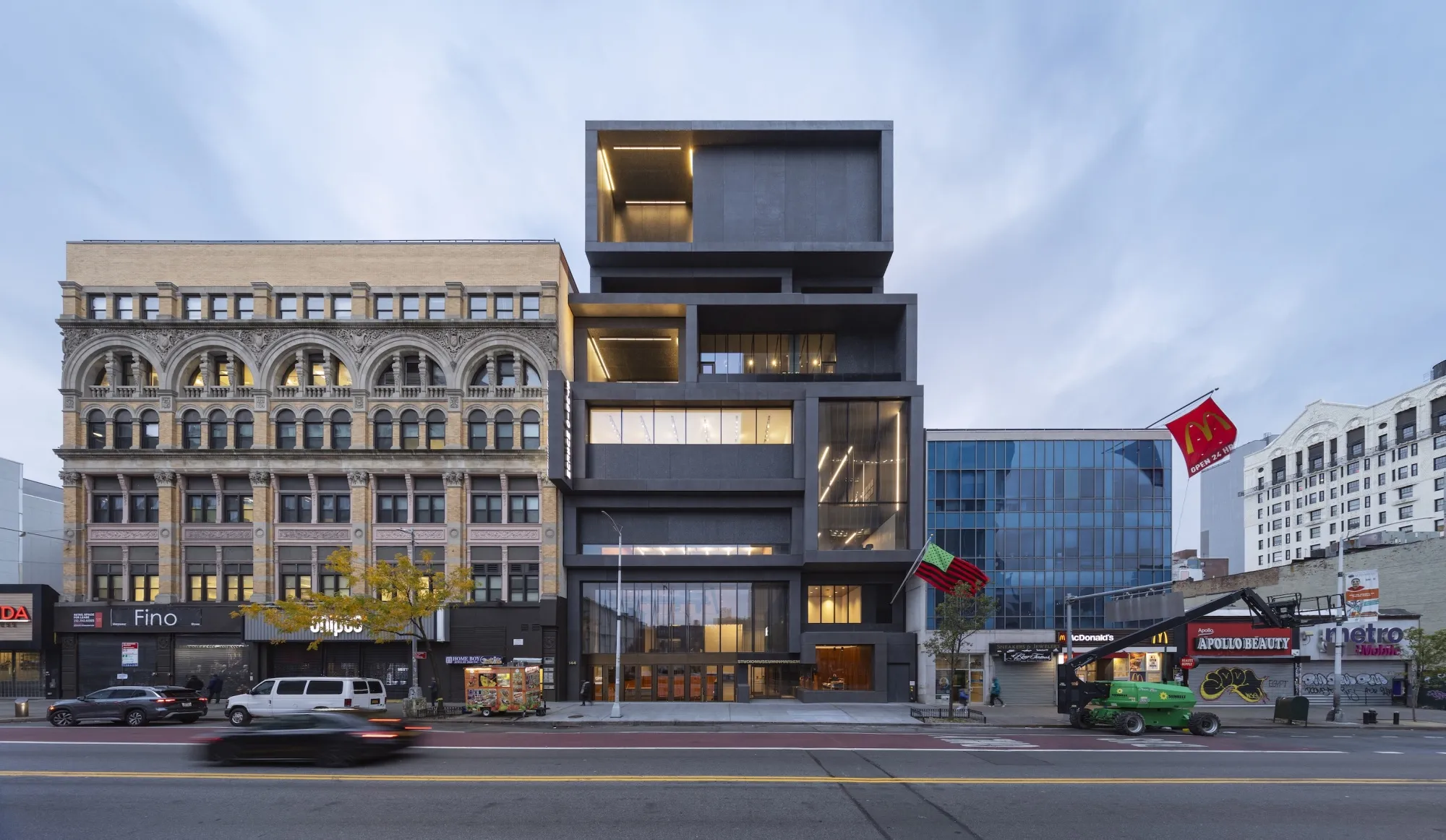
The Studio Museum in Harlem opened to acclaim in November, without the presence of architect David Adjaye.
Photographer: Albert Vecerka/EstoDespite Star Architect’s Alleged Misconduct, New Harlem and Princeton Museums Shine
Two years after misconduct accusations emerged against designer David Adjaye, two museum openings show the value of his architecture firm’s voice.
Pity the critic (pity anybody) asked to form a concise assessment of the Princeton University Art Museum and the Studio Museum in Harlem, the two just-completed projects by David Adjaye. Between the vexations of the buildings themselves, and the inescapable question of the professionally acclaimed yet personally disgraced designer — three women who once worked for him accused him of sexual misconduct in 2023, which the architect has denied — passing any kind of judgment presents a distinctly forbidding prospect: There’s no obvious way to start, and a hundred chances to make a wrong turn.
Even that preamble comes up short, insomuch as it suggests a too-cute-by-half parallel between the experience of the work and an analysis of the man, who has retreated from view, and made no public appearances around the museum openings. So let’s start with what’s different, and reasonably clear — which is that both buildings, obtuse and peculiar and occasionally maddening as they are, more or less triumph over their assorted failings. They do so not only owing to the quality of their respective designs, but because of how the institutions that inhabit them have turned even their most bewildering spatial and material solecisms to good account. In southern New Jersey and on 125th Street, two stellar museums whose programs have never quite received their due now occupy structures that announce them, loudly and proudly, as the heavy hitters they are.