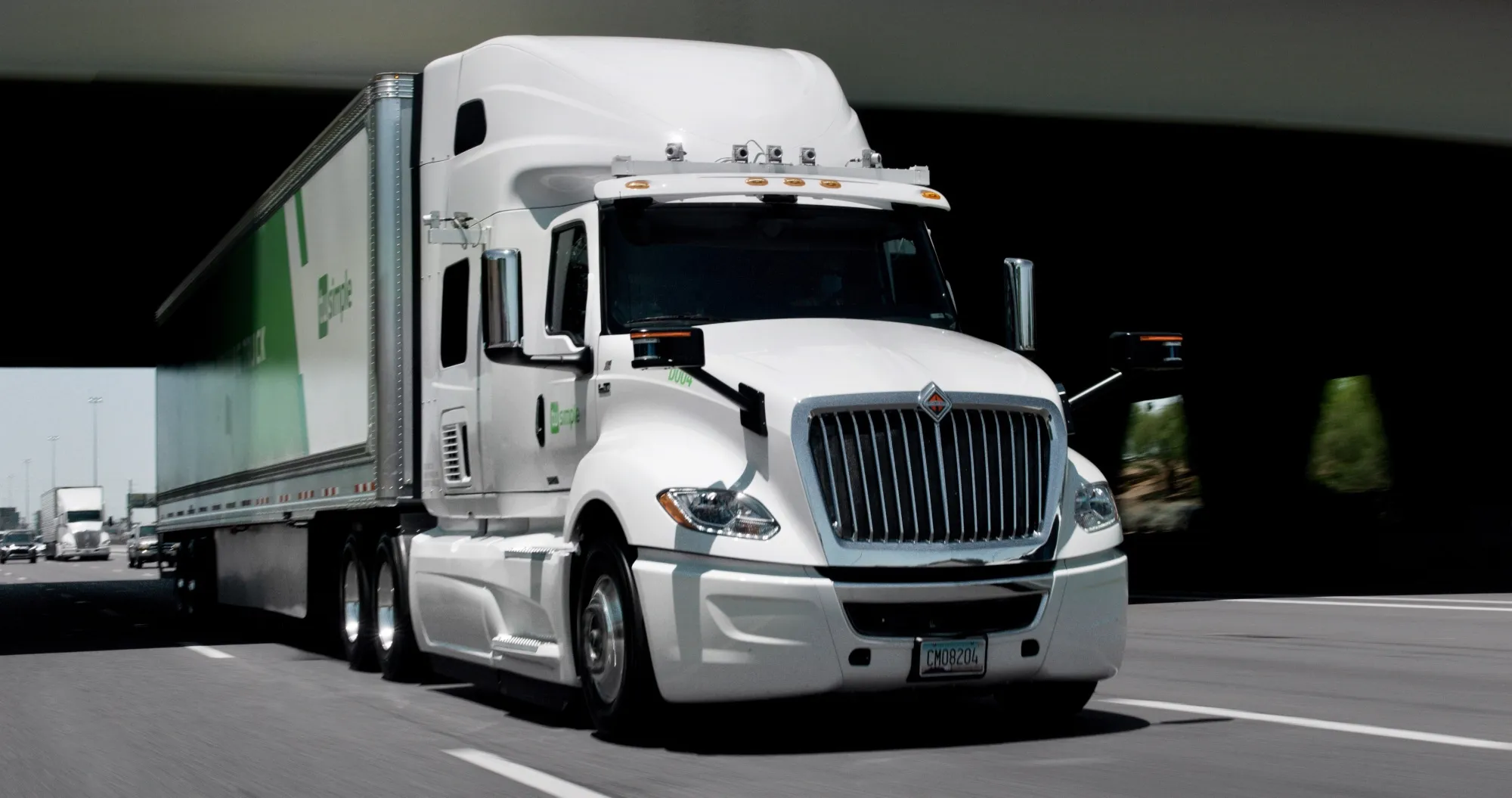
TuSimple's vehicles were meant to transport freight autonomously on highways and surface streets.
Photographer: Business Wire/APSaga of Chinese Trucking Firm Exposes US National Security Gaps
American officials thought they’d secured a deal with TuSimple to protect autonomous-driving technology. It didn’t work.
It was Chinese tech mogul Charles Chao’s last supper with the US leaders of the self-driving truck startup he helped take public at an $8.5 billion valuation a year earlier. Red wine was flowing during the June 2022 meal at Fleming’s steakhouse in San Diego, but Chao was about to spoil the evening.
Turning to the company’s chief executive officer, Chao played a marketing video on his phone showing an autonomous freight truck speeding through the desert. But the ad wasn’t for TuSimple Holdings Inc. It was for a second self-driving venture Chao’s company was backing called Hydron. The startup had just launched in China and appeared to be tapping TuSimple’s pioneering technology — despite a US government deal meant to keep it in America.