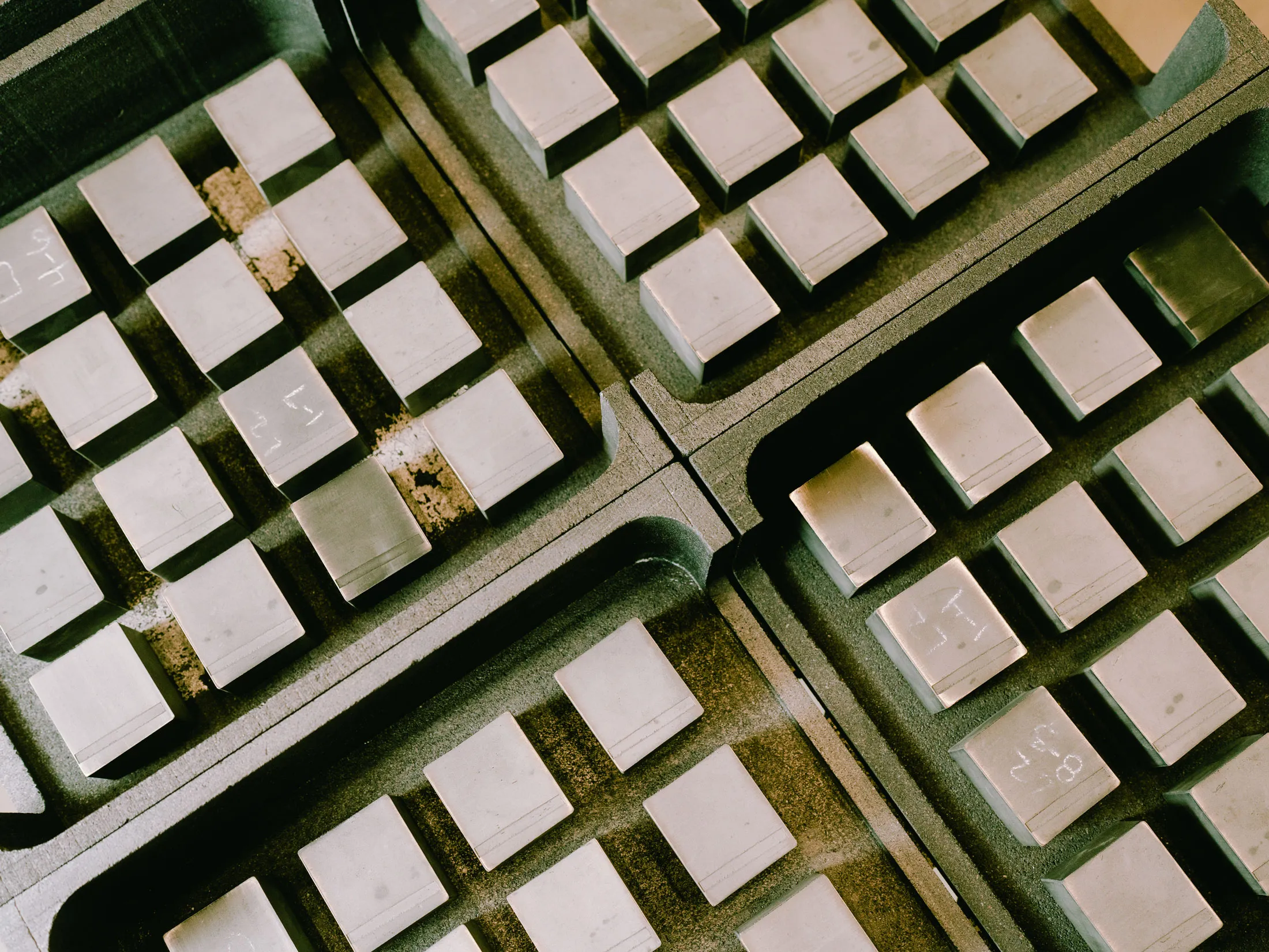
Fully formed rare-earth magnets exit the furnace at Noveon Magnetics Inc.’s plant in Texas.
Photographer: Brenda Bazan/Bloomberg
Rare Earths Producers Look to US-Led Boom to Blunt China’s Power
Even if a trade deal materializes, the industry is betting the world won’t want to go back to one supplier.
A Noveon Magnetics Inc. plant in Texas is at the vanguard of efforts to expand US supplies of the tiny but vital industrial components at the heart of a global trade showdown.
The company’s first facility, less than an hour from Austin, began selling rare-earth magnets commercially in 2023, after a decade of development. The operation is modest, but its ramp-up is emblematic of the shift taking place as the West scrambles to catch up with China’s vast rare-earths industry. After the Asian nation announced export controls earlier this year, Scott Dunn, Noveon’s co-founder, found himself inundated with calls.
“Not only were we being asked to do what we had planned, we were asked to increase those volumes for what was planned by multiples," said Dunn, whose company has inked deals with customers from carmaker General Motors Co. to automation company ABB Ltd.
China, which produces the bulk of rare earths globally, unveiled supply curbs in April in response to a barrage of tariffs imposed by Washington. It outlined plans to expand the curbs this month, including by requiring overseas shippers of items that contain even small amounts of certain rare earths to have an export license. The fate of those measures remains unclear after US Treasury Secretary Scott Bessent said he expects China to offer a deferral of its curbs to seal a trade deal. President Donald Trump and his counterpart Xi Jinping are set to meet for trade talks later this week, and rare earths will be on the agenda
Whatever happens, industry is betting the world won't want to go back to one supplier. Conversations with more than a dozen rare-earth executives and industry veterans describe a commercial landscape that is nascent but rapidly transforming as investor interest surges and governments — especially the US — launch more meaningful efforts to build a non-China supply chain.