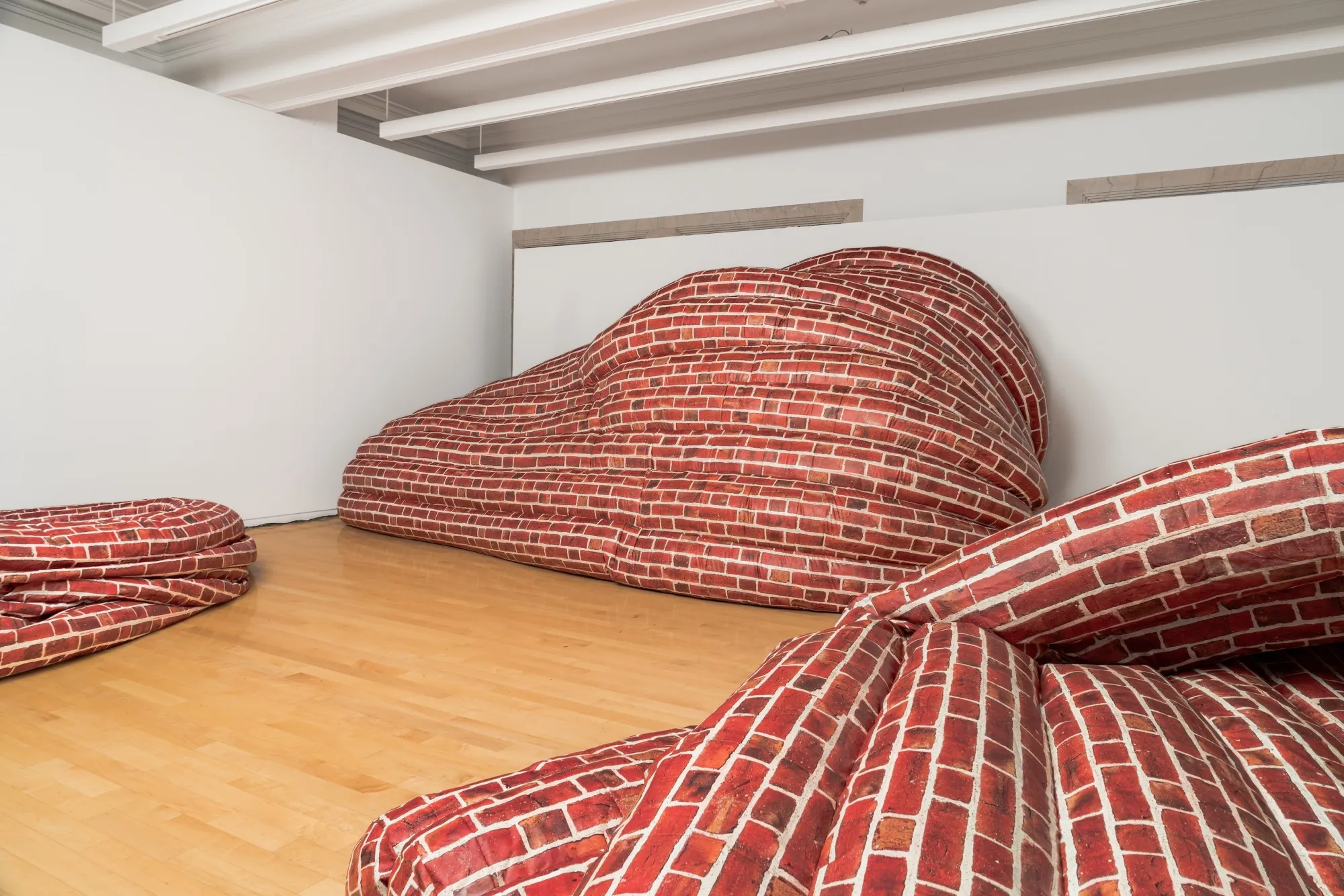
An installation that appears to breathe by Jacqueline Kiyomi Gork characterizes the lighter touch of the latest Chicago Architecture Biennial.
Courtesy of the Chicago Architecture Biennial
In Chicago, a Soft Architecture Biennial for Hard Times
Inflatables and fabrics dominate at the sixth edition of North America’s largest design exhibition, but gentle materials mask hard questions for architects and organizers.
As a child, artist and designer Jason Campbell felt the powerful presence of his mother’s linen collection. It was everywhere: in a dedicated closet, but also in the attic, a separate crawl space, the basement and an armoire. Later in life, Campbell, who is Black and a Chicago resident, asked her why it was so important. She told him, “In a world that doesn’t want us to be comfortable and warm, this was my way to make sure that you were,” he says.
For the 2025 Chicago Architecture Biennial (CAB), Campbell channeled this gesture of care and embrace into an installation called “The Linen Closet,” a wooden structure with seating that hangs 50 blankets and comforters donated by friends, family and assorted loved ones from dowels. Campbell asked donors to say why these blankets were important, and edited their responses into tiny poems printed onto tags and fastened to the blankets: rhythmic fragments of memory that are near-impossible for visitors to not extrapolate into their own experiences of worlds and wombs left behind. Sitting in this closet, totally enveloped by totems of anonymous people’s most vulnerable moments, it’s hard for anyone to seem like a stranger.