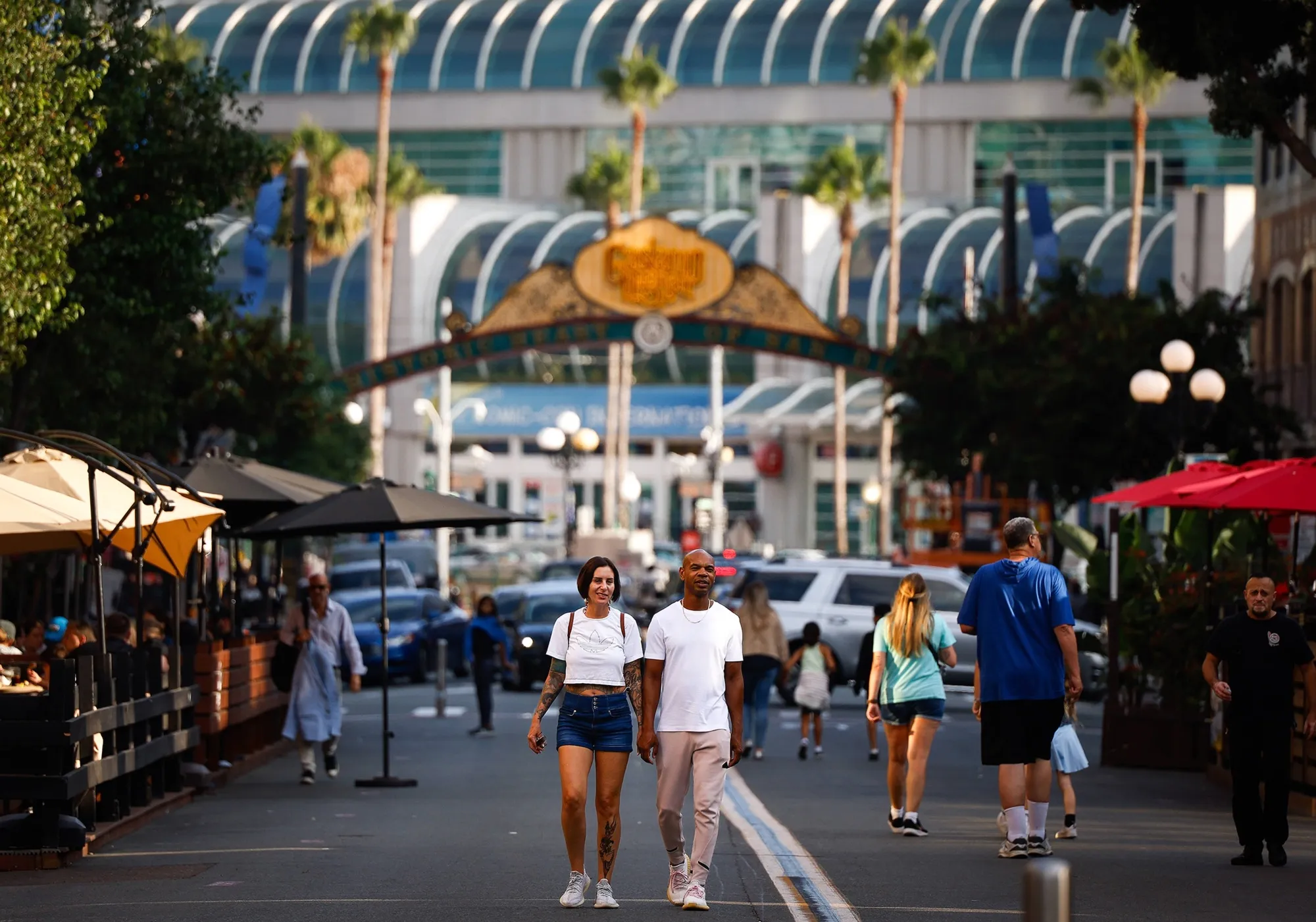
Fifth Avenue in downtown San Diego is closed to car traffic every afternoon and evening as a “slow street,” making it an urban corridor for pedestrians to enjoy the historic architecture of the Gaslamp District.
Photographer: Meg Mclaughlin/San Diego U-T via ZUMA Press Wire)/San Diego U-T/ZUMA Press WireAfter the Pandemic ‘Reset Button,’ Downtowns Reinvent Themselves
A new exhibit at the National Building Museum showcases how downtowns are evolving from office corridors to centers of housing, nightlife and culture.
Downtowns across the US are undergoing a major transformation, years after Covid-19 disrupted local economies and changed the way people live, work and play. For many community leaders, the pandemic was “like hitting the reset button,” forcing them to rethink what purpose city centers serve and for whom, says Georgetown University urban planning professor Uwe Brandes.
After years of cities experimenting with ways to revive city centers amid ongoing office vacancies, lost transit ridership and a national affordability crisis, Brandes is putting some of the best practices from around the country on display. He’s the curator of “Coming Together,” a new exhibit at the National Building Museum in Washington, DC, that charts how US downtowns have changed over the last five years and asks what their future may look like.