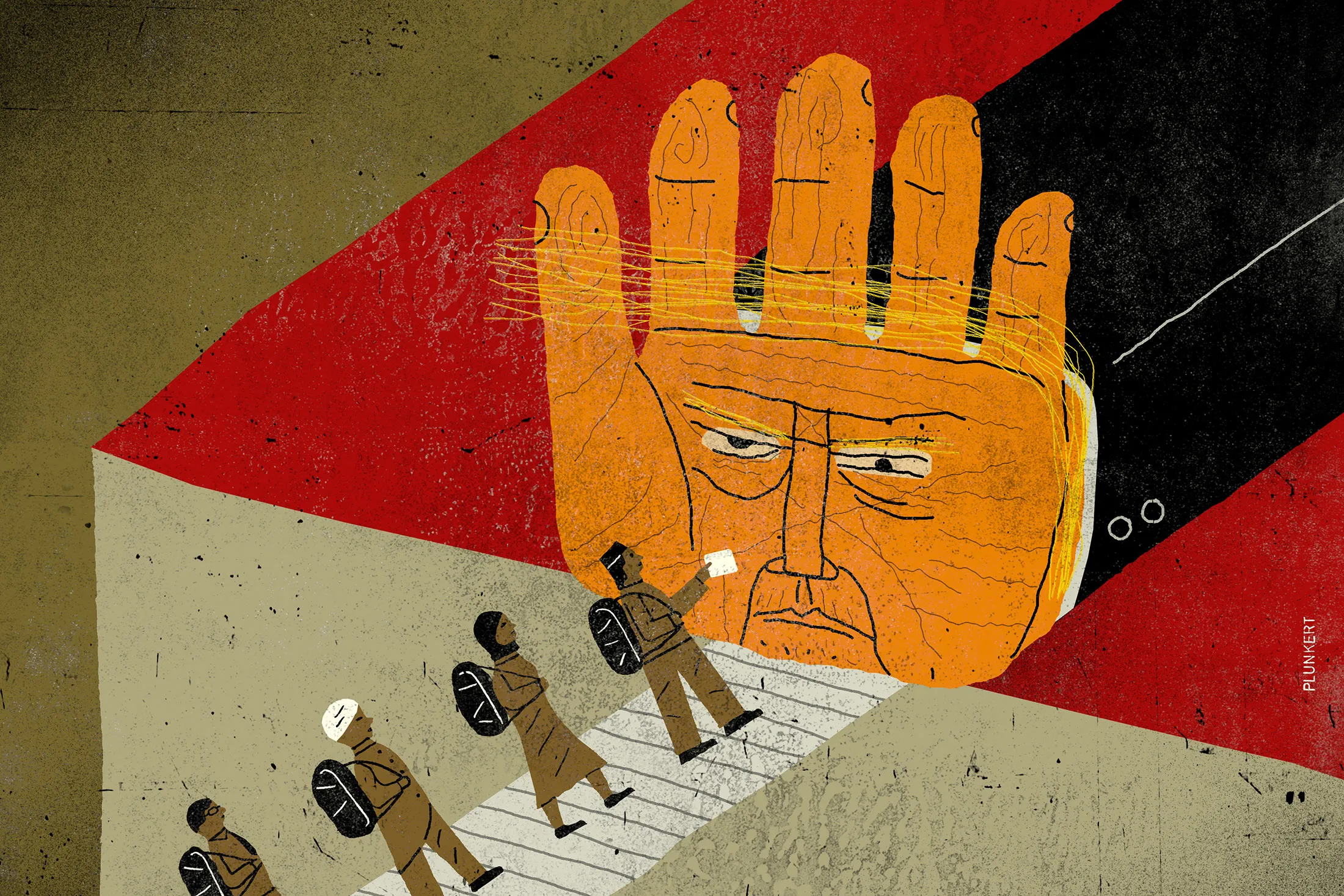
Illustration: David Plunkert for Bloomberg
How the Visa Became America’s Favorite Censorship Tool
Long after most political censorship was rolled back, the US preserved its power to bar outsiders for what they believe. A new court case could test that power.
In a courtroom in Boston in early July, the Trump administration’s visa policy was put on trial. The American Association of University Professors and the Middle East Studies Association are challenging efforts to strip visas from, and then to deport, a number of students involved in pro-Palestinian advocacy. They charge that this is a form of censorship, a violation of the First Amendment. The Trump administration claims to be simply enforcing its rights to determine who can enter the country.
Denying visas on ideological grounds is not a new tactic. Trump himself turned to history when he first raised the idea. “In the Cold War,” he said in 2016, during his first run to the White House, “we had an ideological screening test. The time is long overdue to develop a new screening test for the threats we face today. I call it extreme vetting. I call it extreme, extreme vetting.” The surprising story of the visa’s rise — and persistence — as a screening tool has much to teach us about the history of censorship and dissent in the US, and about the stakes of today’s legal clashes over visas.