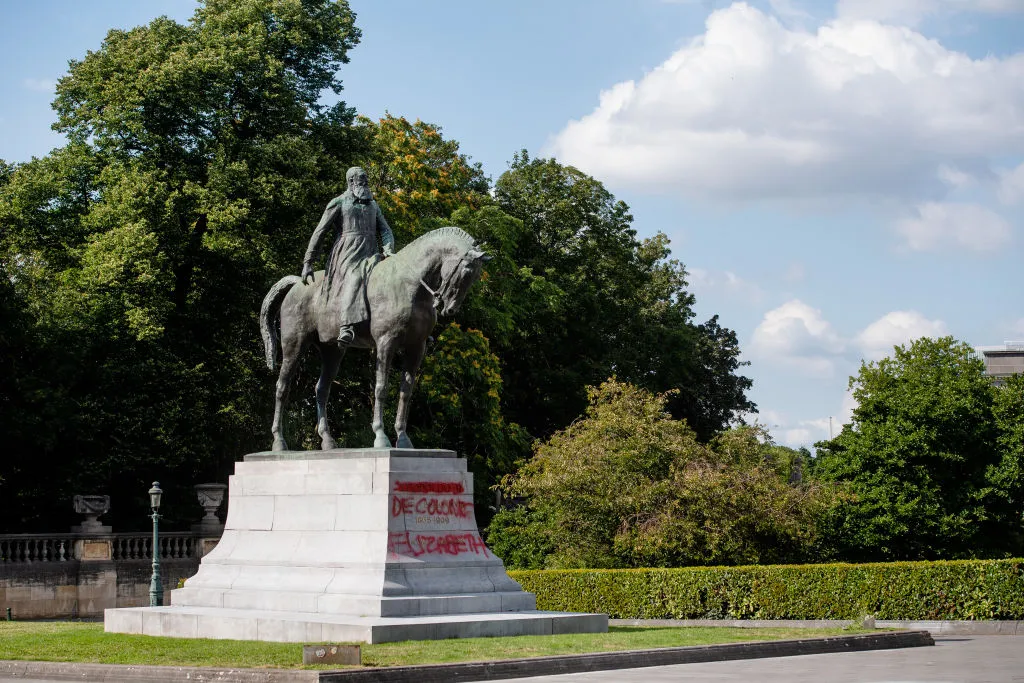
A statue of Leopold II near Trone metro station on July 11, 2020 in Brussels, with anti-colonial graffiti on its base.
Photographer: Jean-Christophe Guillaume/Getty Images
Five Years After Black Lives Matter, Brussels’ Colonial Statues Remain
Monuments depicting the brutal rule of King Leopold II over the Congolese people are still common across the Belgian capital, despite a spurt of activism and pledges for reform.
If you step out of the 93 or 8 tram at the Legrand stop on Avenue Louise, one of Brussels’ upmarket streets, you’ll be confronted with an arresting sight: the statue of a Black man in chains, holding a child, and getting viciously attacked by dogs. A few kilometers away, in a park surrounded by the European Union institutions, a statue depicts a Belgian soldier striking an Arab man while trampling on his head. And at the entrance of the European Quarter, there's a statue of Leopold II, the man singularly responsible for the deaths of millions.
These monuments, among dozens of others, have stood in Brussels for more than a century. They are remnants of Belgium’s violent colonial enterprise in the Democratic Republic of Congo, and continuing symbols of Belgium's unwillingness to meaningfully address that past.