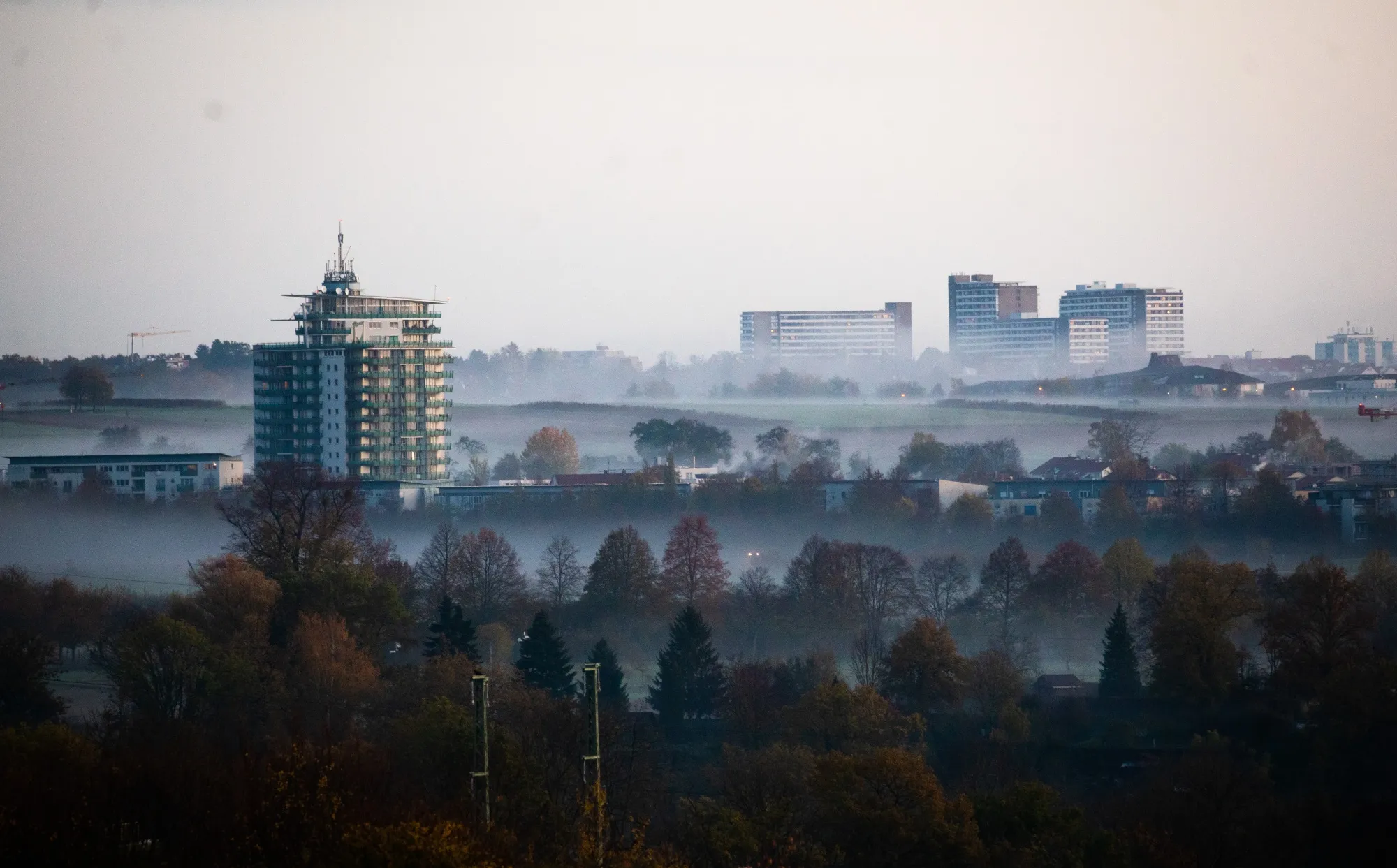
Clouds of fog drift over parts of Stuttgart in the early morning. The city’s topography makes it particularly vulnerable to air pollution build-up.
Photographer: Christoph Schmidt/picture alliance via Getty Images
Seeking Relief From Heat and Smog, Cities Follow the Wind
Decades ago, the German city of Stuttgart studied local air flow patterns to guide its postwar rebuilding. Now Asia’s megacities are taking lessons to combat smog.
Take a tram on a hot summer day in Stuttgart and you might hear people grumble about schlechte Luft — or bad air. “Not bad in the sense of evil,” says Indrawan Prabaharyaka, a researcher in urban anthropology at Humboldt University of Berlin. “It’s sticky air — the air is too thick."
The city of two million is built along the Neckar River, in a wide, sink-shaped valley. Residents have long known that the steep hills have a tendency to trap tailpipe emissions and factory fumes, leaving a stagnant fug of pollutants. But topography also provides natural remedies to this smog. Slow-moving natural wind currents weave through the city, drawing cool air by night from meadows and vineyards higher on the hills into the downtown at the base of the valley. Locals call these Luftbahnen (airways), Kaltluftschneisen (cold air corridors), or, most commonly, Frischluftschneisen (fresh air corridors).