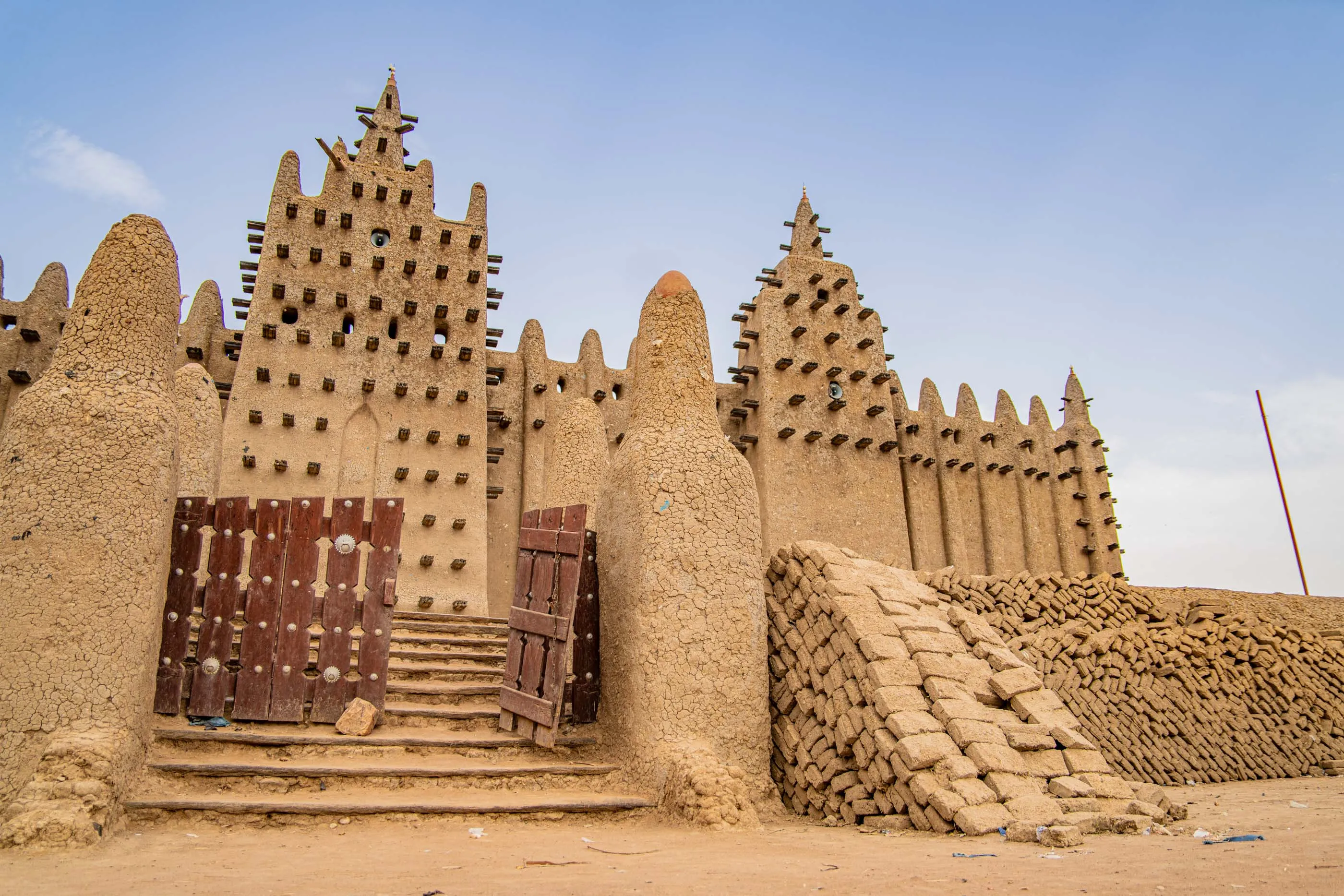
Mali’s Sudanese-style Great Mosque of Djenné is the largest earthen mosque in the world.
Photographer: Tiecoura N’Daou for BloombergA UNESCO-Protected Site in Mali Is Becoming a Burden for Locals
Known for its mud-brick architecture, the town of Djenné is struggling to attract tourists and maintain buildings that have been damaged by floods.
In one of Mali’s oldest towns, poverty and climate change are eroding the resolve of residents to safeguard a slice of the world’s architectural heritage.
Djenné has existed since at least 250 B.C. Its iconic mud buildings were designated a UNESCO World Heritage Site in 1988, meaning they cannot be destroyed or modified. But in recent years, extreme rains have made the buildings harder to maintain, while political turmoil and safety fears have also diminished the town’s appeal to tourists. Some local people say the UNESCO designation has imposed a burden they’re struggling to bear.