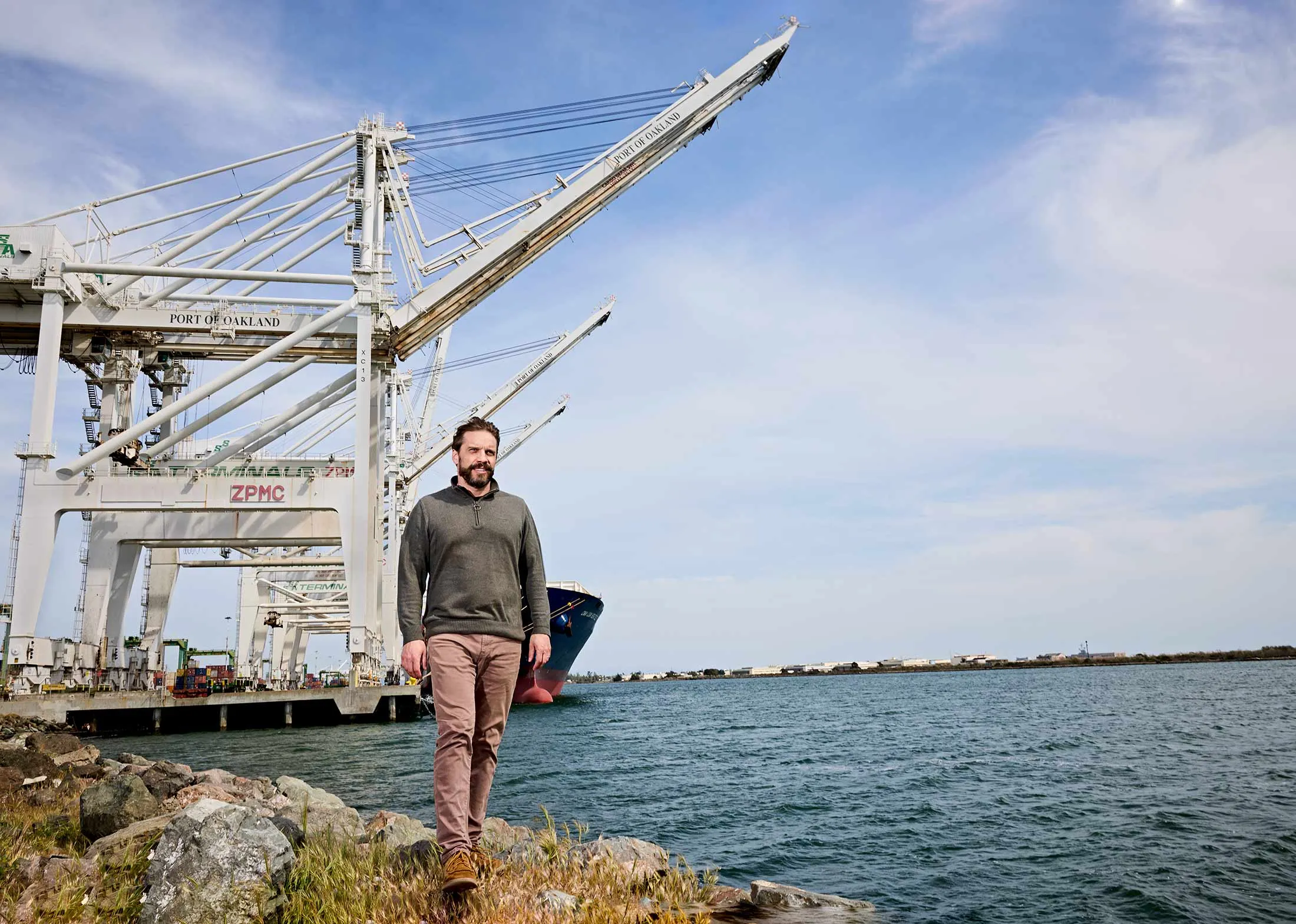
Ryan Petersen, CEO of Flexport Inc.
Photographer: Gabriela Hasbun for Bloomberg Businessweek
Inside the Dizzying Chaos of Running a Freight Business Under Trump
The trade war has been good for Ryan Petersen’s social media following, but less so for his startup Flexport.
Ryan Petersen is tracking the Matson Waikiki on his phone. As the chief executive officer of Flexport Inc., a startup that makes software for the freight shipping industry, he keeps an eye on cargo ships using an internal tool. The Waikiki left Shanghai on April 9, just hours after President Donald Trump’s new tariffs took effect on ships leaving China. Petersen thinks it will be the first ship to arrive in the US with its goods taxed at 145%.
When he explains this to me, on an afternoon ferry ride to the Port of Oakland in California, the Waikiki is still crossing the Pacific. When the container ship docks near Los Angeles, its customers will have to pay a tax that could set off a ripple effect: higher prices for consumers, higher costs to companies, narrower profit margins, job cuts and more. Petersen says the real pain from Trump’s tariffs is likely yet to come—which makes the Waikiki a hulking, slow-moving harbinger of economic turmoil.