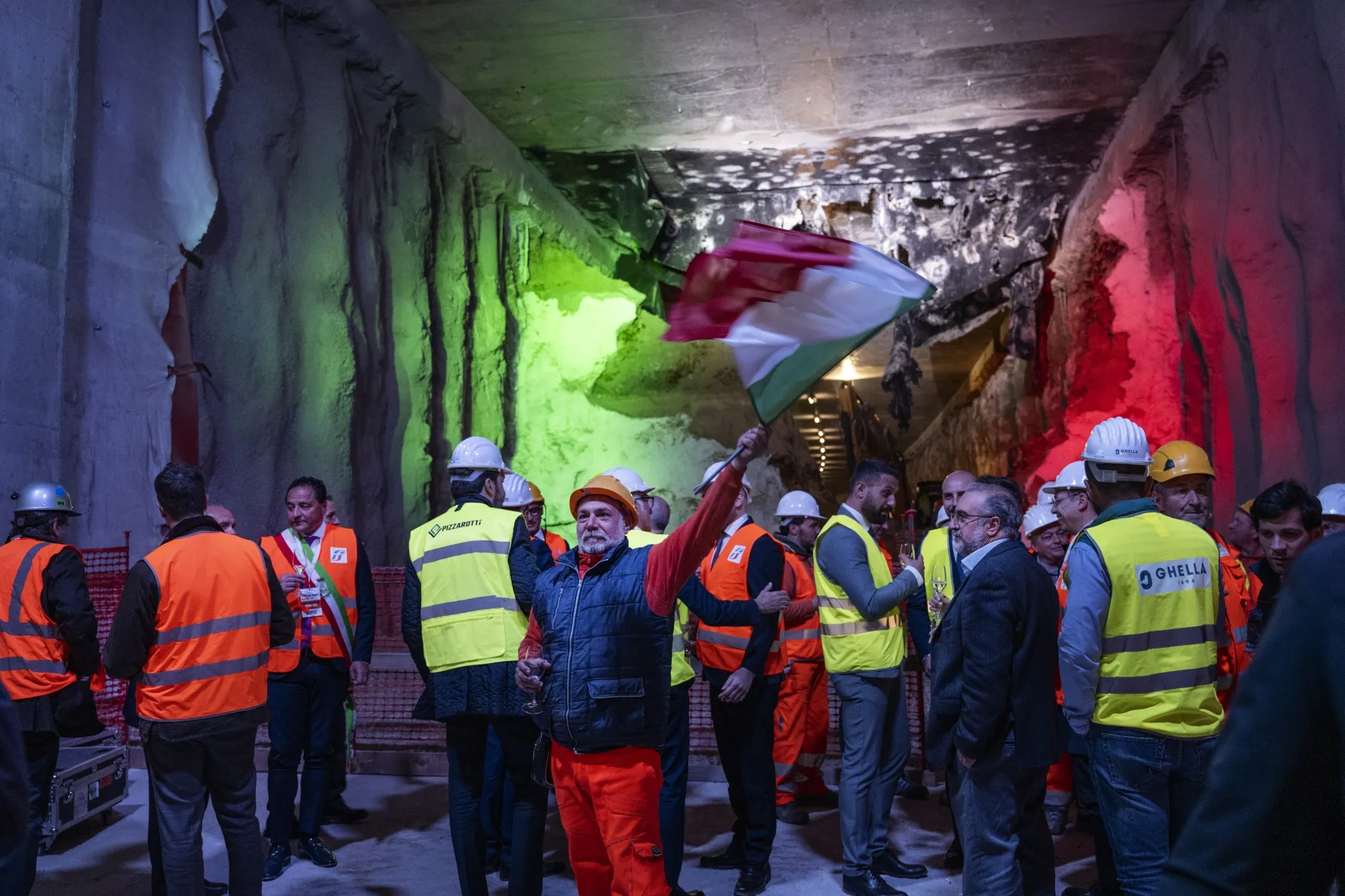
A ceremony for the final breakthrough of the Telese Tunnel, part of the Naples-Bari high-speed railway, in Telese Terme on April 9.
Photographer: Stephanie Gengotti/Bloomberg
Italy’s €25 Billion Rail Plan Is a Model for EU Spending
Financed using a European post-Covid recovery fund, a new rail link could be an economic boost, and a sign that the EU is getting better at spending money.
East of Naples near the town of Telese, engineers are cutting into the foothills of the southern Apennine mountains. The straight lines and white gleaming concrete of new high-speed train tunnels and overpasses contrast with the swerving roads and ancient stone walls of the nearby countryside.
When it is completed in 2028, the high-speed rail line will run coast-to-coast between Naples and Bari in just two hours, and connect Italy’s underdeveloped south with the wealthier parts of the peninsula and the rest of Europe. The Italian government hopes the new rail links will finally open up opportunities for business, education and tourism in the south. Earlier this week, Ferrovie Dello Stato, the rail company, broke through two key tunnels that will allow part of the line to come into service by the end of the year, cutting more than an hour from the travel time between Italy’s Adriatic and Tyrrhenian coasts.