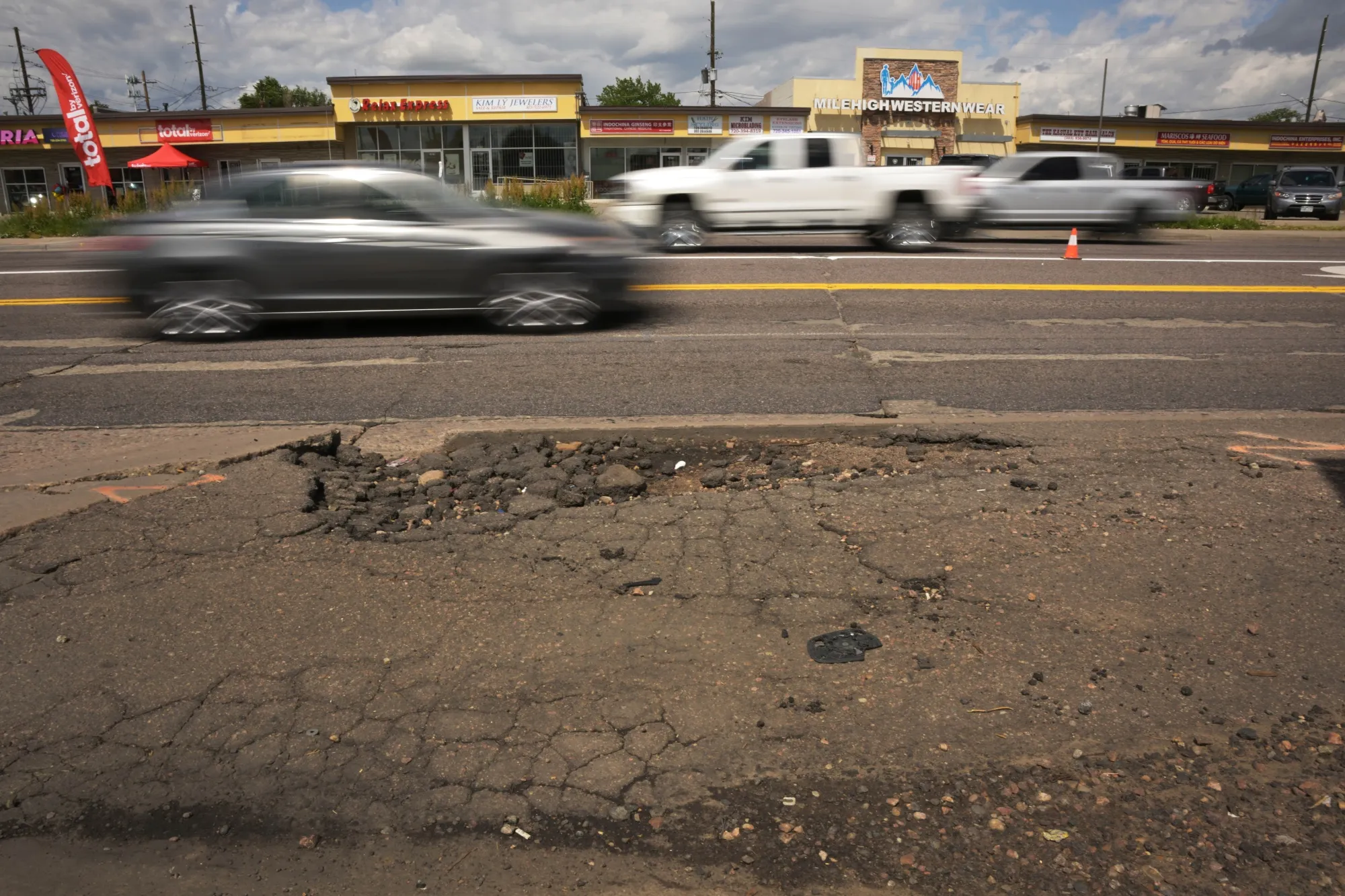
Heavily damaged sidewalks line a roadway in Denver’s Little Saigon business district in 2024. A new sidewalk fee for all property owners is set to reform the city’s
Photographer: Hyoung Chang/Denver PostWho Should Pay to Fix the Sidewalk?
Denver has made sidewalk upkeep a public responsibility, becoming the largest US municipality to fund and maintain this critical but unsung pedestrian infrastructure.
Denver’s Colorado Boulevard is a major artery and an important transit corridor; local leaders are considering expanding bus service by adding a Bus Rapid Transit line along its length. But getting to or from a stop often requires trudging along unpaved paths that run between patches of crumbling concrete and then standing in the dirt waiting for the next bus.
The reason: Like a lot of US cities, Denver has a dearth of decent sidewalks. According to an analysis last year, the city is missing 300 miles of pedestrian pathways; of the 2,300 miles that do exist, around 30% are too narrow and an unknown proportion are in disrepair, making them treacherous to negotiate.