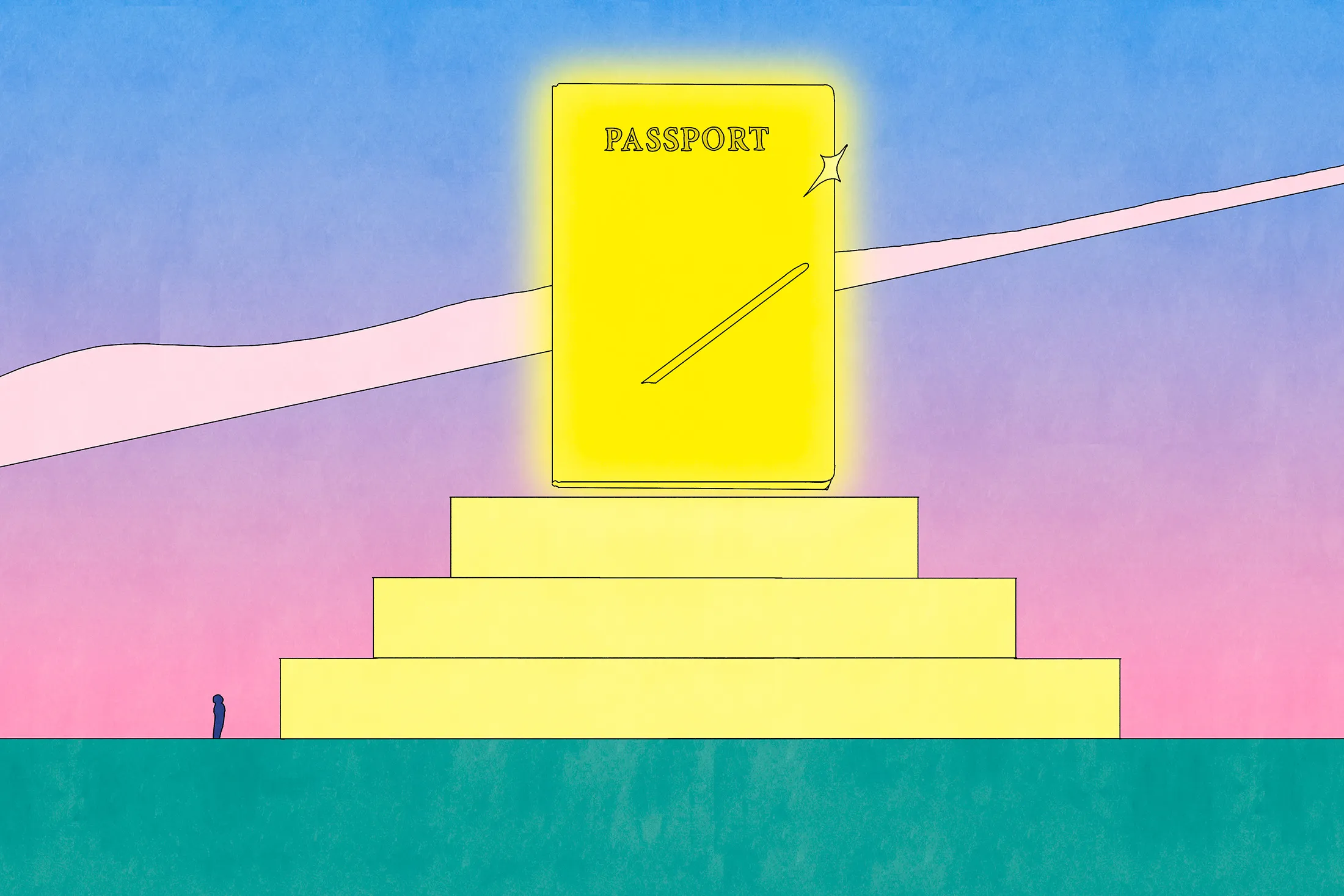
Illustration: María Medem for Bloomberg
Citizenship Is Becoming More of a Privilege Than a Right
The institution is changing in restrictive ways.
In Donald Trump’s first term, he came for the immigrants. His administration sowed chaos by separating migrant families, building parts of a wall between the US and Mexico, banning citizens of Muslim nations from entering the country and withholding funding for “sanctuary” cities that would not help deport their residents. His methods were ruthless, but the policies were part of a growing hostility towards immigration around the world. Countries were getting choosier over who belonged — and more likely to send away anyone who didn’t.
This time around, Trump is raising the stakes: He wants to repeal a 100-year-old law granting citizenship to anyone born on US soil. If he gets his wish, the population of undocumented people could hit 24 million in 2050, from 11 million today, according to the Migration Policy Institute. A large number of them would find themselves functionally stateless, unable to obtain the basic documents they need to live a normal life. These are demographics befitting a Gulf autocracy, like the United Arab Emirates or Kuwait, not a Western democracy.