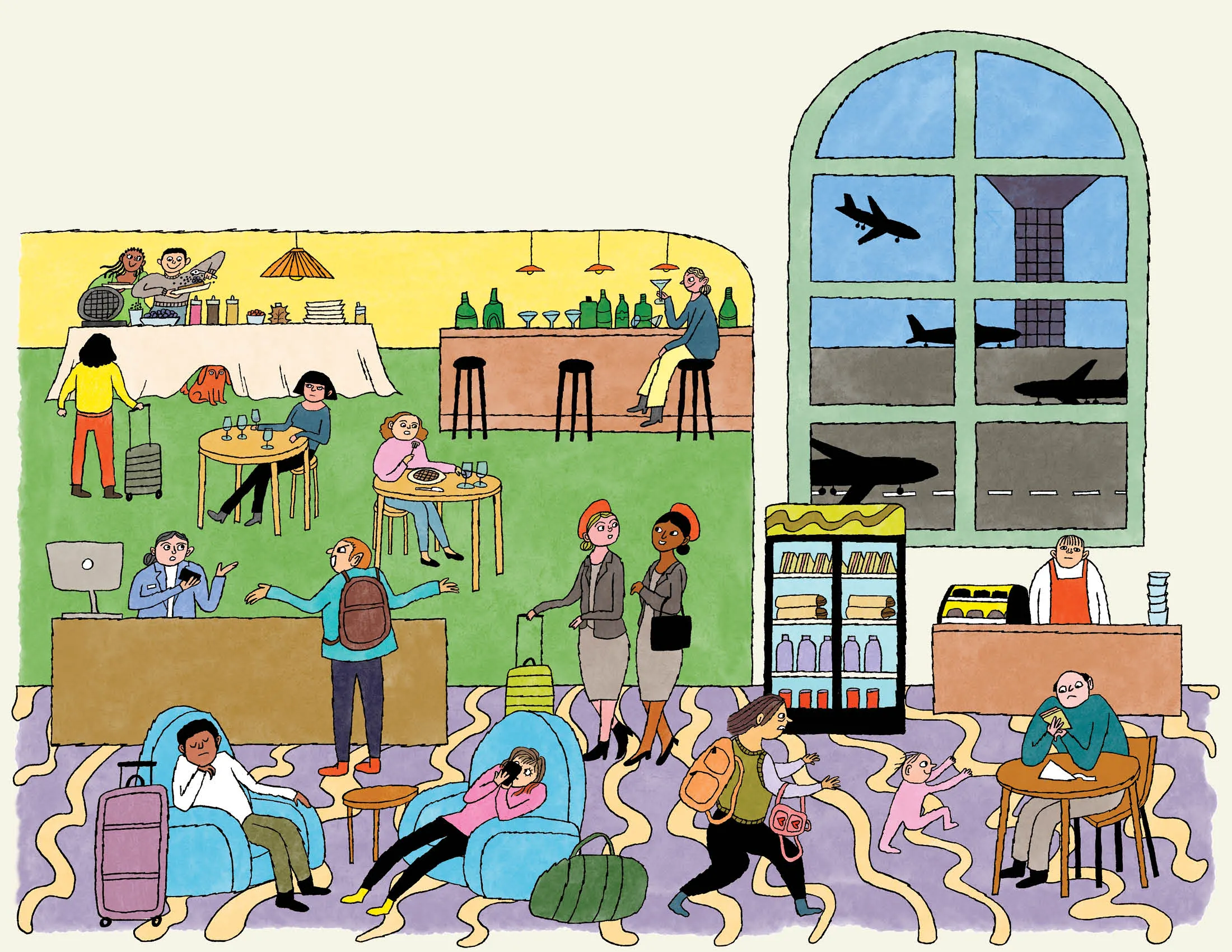
Airport Hotels Became a $13 Billion Business by Being Boring
They have little charm or surprise—but sometimes that’s the point.
I was eating a Cobb salad at a Courtyard by Marriott a few miles south of Denver International Airport, trying to penetrate one of the great mysteries of modern life. The parking lot was full. The lobby was empty. The street outside was also empty, except for the shuttle vans that appeared, twice hourly, then shuddered off into the distance. Transportation hubs have always supported lodging businesses that seem to reflect back the character of their travelers. Other centuries had bawdy roadhouses and wharf-side taverns and cosmopolitan train station hotels. What did it mean that we have this?
The use case for the airport hotel sounds like a riddle. “People go there because they want to not be there,” says Jan Freitag, director of hospitality analytics at CoStar Group. It’s the ultimate liminal space, subject to the same unspoken airport rules that lead people to nonchalantly spend $19 for a soggy turkey sandwich or a breakfast cabernet at the terminal wine bar. If you check into an airport hotel late at night and leave early the next day, are you really even there? And yet there you are, with nowhere to go but the waffle bar. Might as well have that second helping.