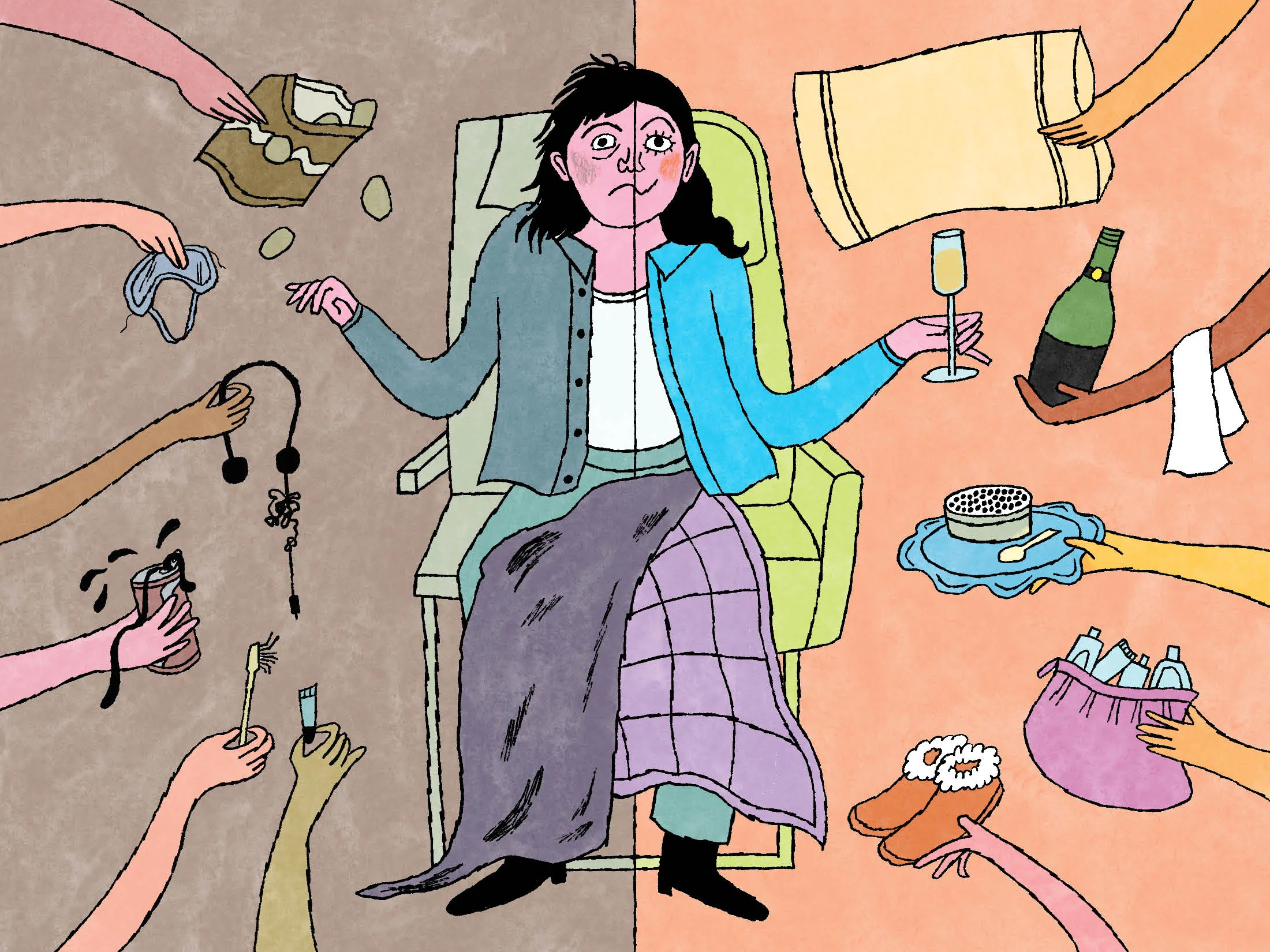
Why the Flying Experience Feels So Much Worse
The front of the plane is now a haven of luxury, while coach has turned into a low-cost shakedown. The real winner: Airlines.
Nothing is more valuable on a plane than space. There are mathematical reasons for that, but if you’ve ever spent hours stuck in a middle seat or had the person in front of you demolish your knees while shooting backward into nap mode, you also just know it in your heart. Every inch of cabin space is carefully meted out; there’s no wiggle room, literally. And some of the ever-dwindling inches between you and those in adjacent seats have been sold twice. Who gets to use the armrest depends on who’s most game to make enemies.
Knowing all of this, maybe it’s not surprising that a substantial number of people say they’d be willing to buy into a more pleasant setup. But even the airlines have been surprised by exactly how eager Americans are to pay for more comfort. Before the pandemic, the biggest US carriers spent more than a decade experimenting modestly with fare offerings beyond first class and coach—say, a few rows with extra legroom and better snacks. But premium seats have never been top sellers. Delta Air Lines Inc., for example, sold only 14% of its first-class fares for cash in 2011. Across the industry, that grew steadily leading up to 2020, but most of the best seats still weren’t bought, only exchanged for miles or given as upgrades to road warriors with airline clout.