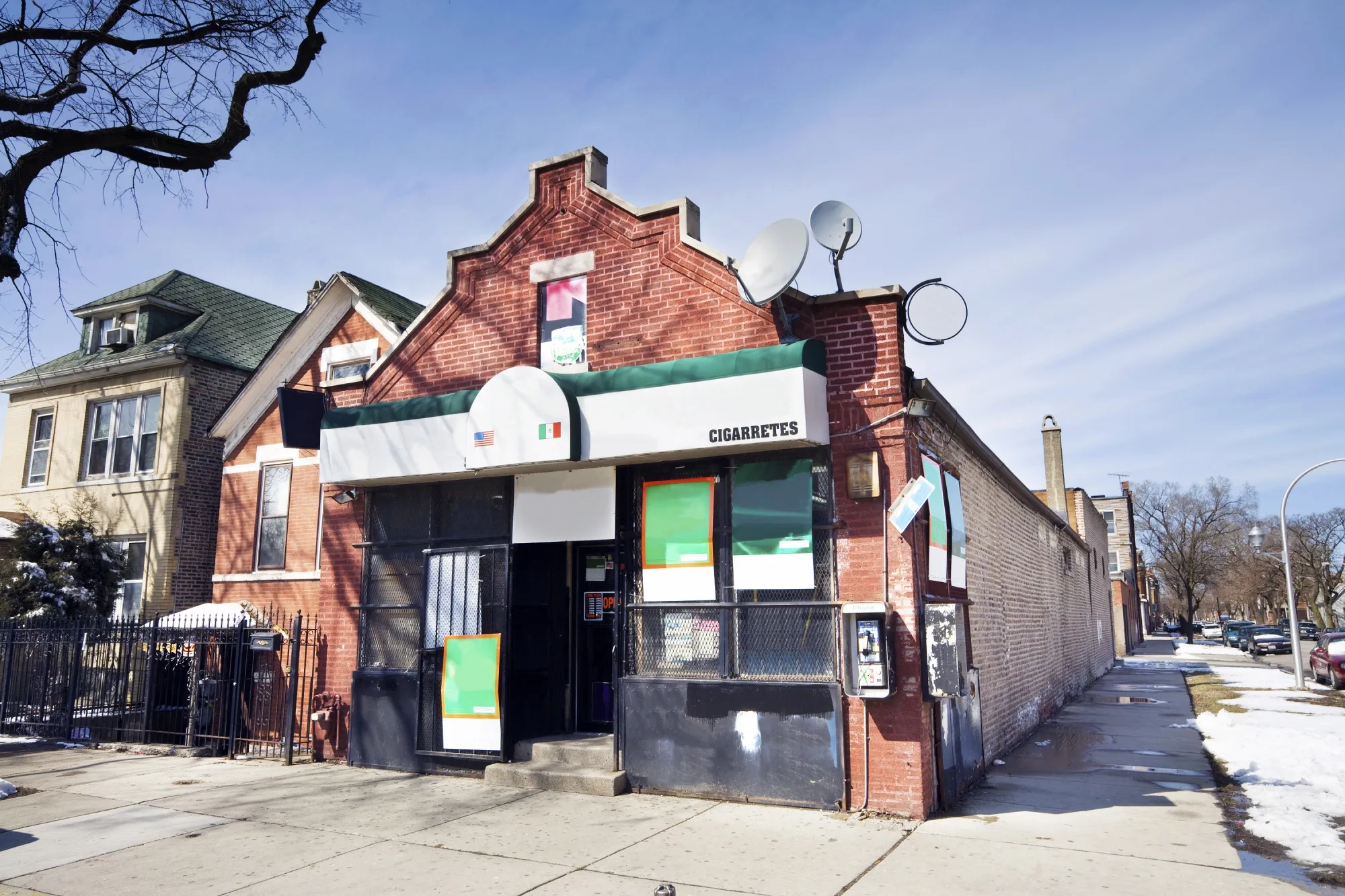
A grocery in Chicago’s West Side is typical of urban corner convenience stores that emerged at the beginning of the 20th century.
Photographer: stevegeer/iStockphoto via Getty Images
The Corner Store Comeback
Small-scale neighborhood retail is staging a post-Covid revival in many cities, thanks to a mix of zoning reforms, shopping trends and local incentives.
When it was constructed in 1926, the one-story building at the corner of East Newark and Laura streets in Spokane, Washington, served, variously, as a small grocery, a barber shop and a candy store for residents of the city’s Perry District. The shop eventually converted to a residence, then sat vacant until 2018, when it reopened as the Grain Shed, a combination bakery and brewpub.
That transformation — from abandoned building to thriving business — was facilitated by a 2017 change in Spokane’s zoning code. The city allowed buildings that historically had functioned as corner stores or cafes to reestablish their commercial use, even in neighborhoods that typically don’t allow retail, such as single-family residential zones.