What We Know About Covid’s Impact on Your Brain
Scientists are worried that persisting cognitive issues may signal a coming surge of dementia and other mental conditions
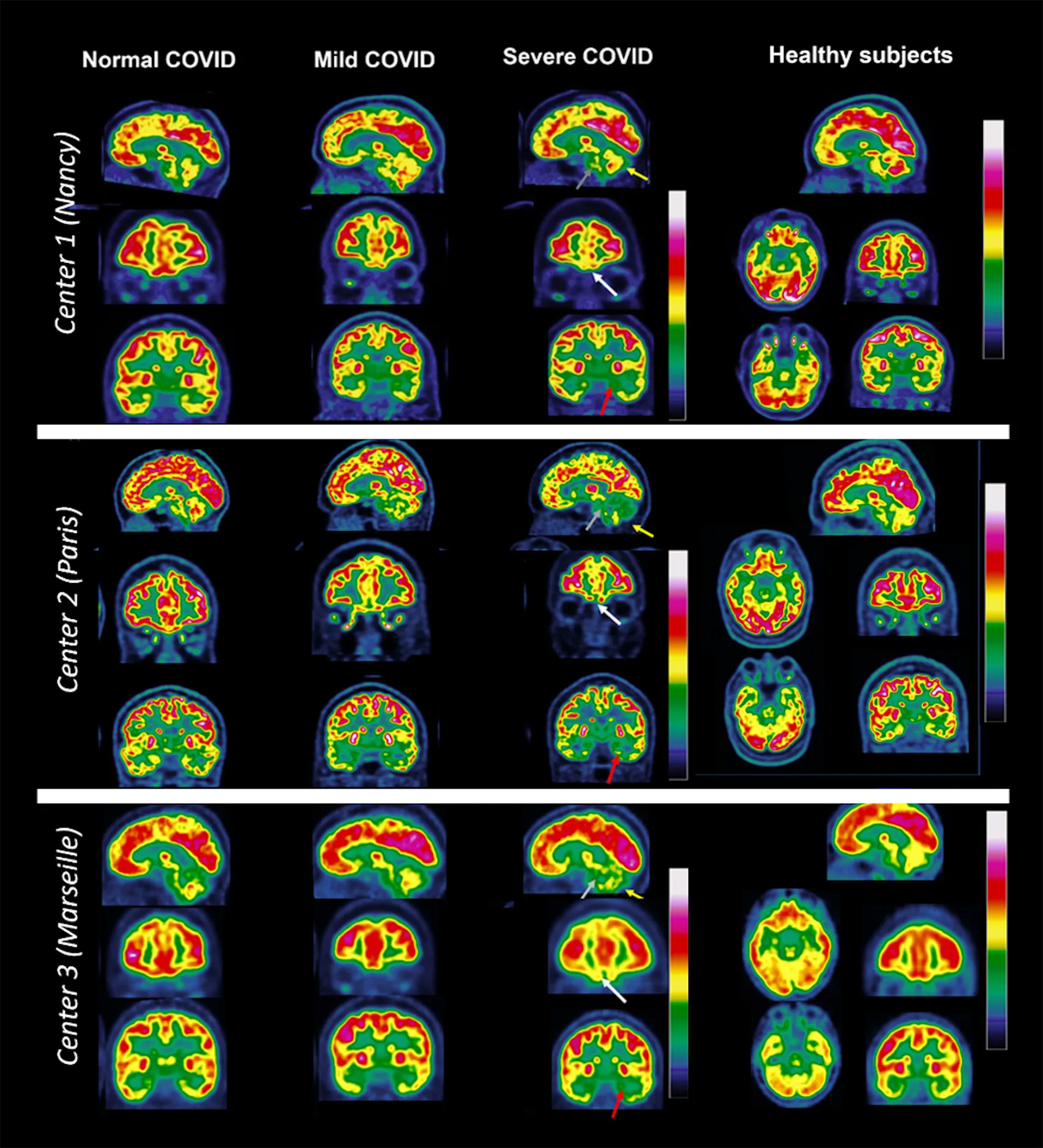
Brain PET images of patients with long Covid from three French nuclear medicine departments, CHRU of Nancy, Timone Hospital, APHM Marseille and Pitié-Salpêtrière Hospital, APHP, Paris.
Courtesy: Eric Guedj, Aix-Marseille University, France, adapted from European Journal of Nuclear Medicine and Molecular Imaging, July 2022.
Many of Covid’s earliest and most alarming effects involve the brain, including a lost sense of smell, sluggish thinking, headaches, delirium and strokes. More than four years after the pandemic began, researchers are recognizing the profound impacts Covid can have on brain health, as millions of survivors suffer from persistent issues such as brain fog, depression and cognitive slowing, all of which hinder their ability to work and otherwise function. Scientists now worry that these symptoms may be early indicators of a coming surge in dementia and other mental conditions, prolonging the pandemic’s societal, economic and health burden.
In 2021, UK researchers reported early results from a study comparing brain scans taken before and after the pandemic began. They discovered signs of damage and accelerated aging in the brain, particularly in the region responsible for smell, even in patients who had experienced mostly mild cases of Covid months earlier.