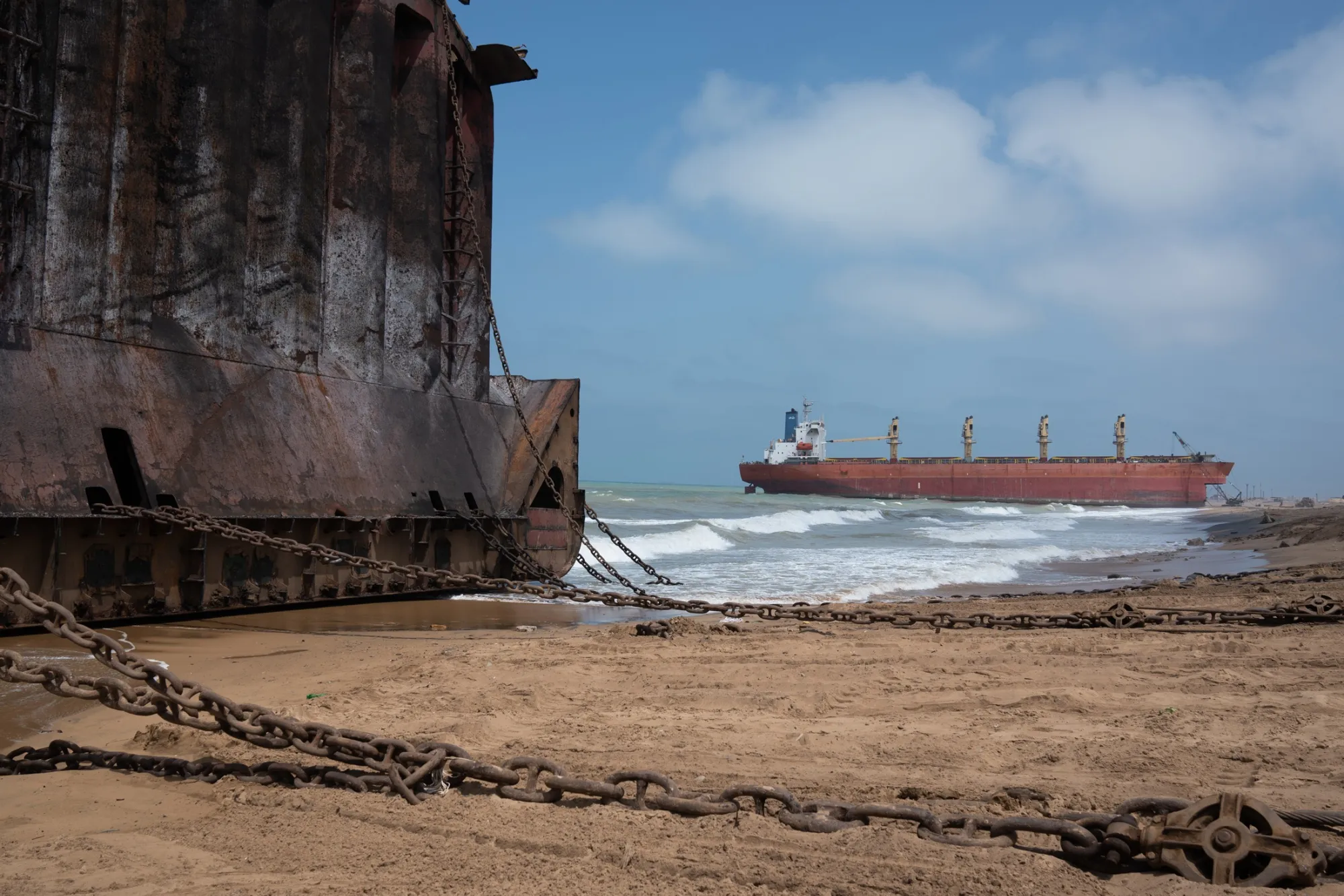
Shipbreaking yard in Gadani, Pakistan.
Photographer: Nida Mehboob for Bloomberg Businessweek‘Dancing With Death’: What It’s Like to Dismantle a Ship
A global treaty aims to clean up shipbreaking. Critics say it’s not enough.
In March 1998 the 43,000-ton Oak Wave slid down a dry dock in Japan. Over the next 25 years, the $30 million bulk carrier, designed to haul grain and other commodities, called at ports across Asia and the Arabian Peninsula, ran through five owners and three names, and changed its flag twice. Then, last November, just after being sold for $5.9 million, the Catherine Bright (as it was rechristened in 2018) set sail from Qatar for a destination it had never before visited: Gadani, Pakistan.
The town of about 10,000 is more ship graveyard than port, just a cluttered 10-kilometer (6.2-mile) stretch of oil-sodden beach. It’s one of three South Asian shipbreaking yards where dozens of small companies dismantle almost three-quarters of the vessels—hundreds of container ships, oil tankers, vehicle carriers, tugs, cruise liners and even oil and gas platforms—that are broken apart globally each year. All three yards feature relatively deep water right up to the beach, allowing operators to run enormous ships aground, no dock required.