China’s Economic Powerhouse Is Feeling the Brunt of Its Slowdown
As a four-decade rise in living standards shows signs of stalling, the pain in the country’s most entrepreneurial province is acute.
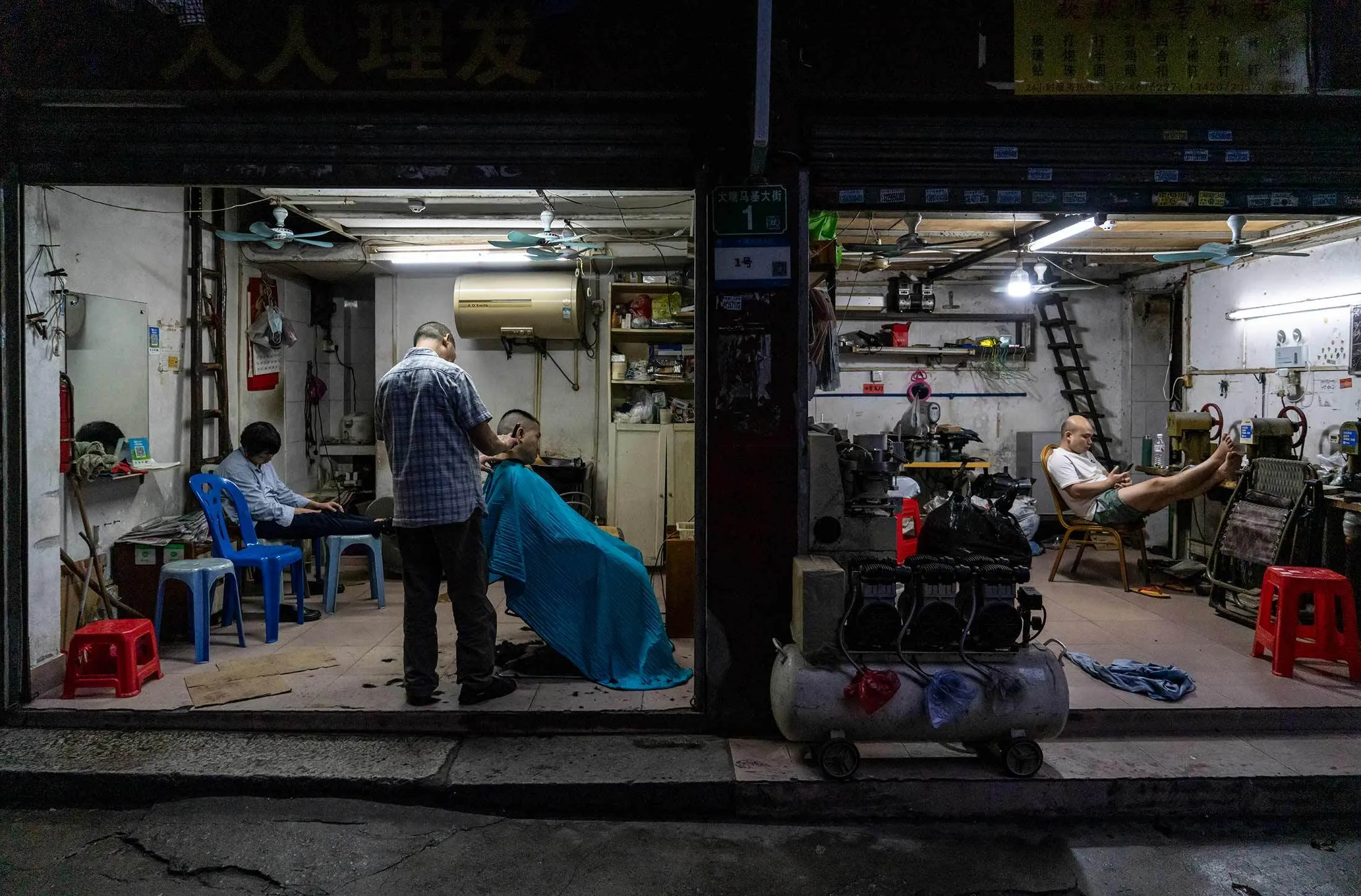
A barbershop in the Datang neighborhood of Guangzhou, the capital of China’s Guangdong province.
Photographer: Qilai Shen for Bloomberg BusinessweekLydia Dong moved to Shenzhen, China’s technology capital, because she worried she was falling behind. When she arrived in 2021, at the age of 27, the city of 18 million seemed to have more economic potential than anywhere else in the world, partly because China’s strict Covid-19 controls ensured, for a time, a degree of normalcy that was still elusive in the US and Europe. Dong had been working as a journalist in nearby Hong Kong, which was then suffering an exodus of residents and businesses, and she wanted in on Shenzhen’s potential. Taking a role in business development at an autonomous-vehicle startup, she initially reveled in the energy of the metropolis, which is home to many of China’s most ambitious people.
Now, at 30, she’s about to begin her third job in as many years, and her initial optimism has evaporated. “If you go to cafes in Shenzhen, people are talking about how to get money all the time,” Dong says between sips of an iced latte in Nanshan, a city-center district of soaring skyscrapers and glitzy malls. White-collar salaries are stagnant and homes unaffordable for many, despite recent price drops. “Even on the weekends, they talk about property, tuition fees,” she says. The financial pressure is even bleeding into her dating life. Men she knows are carefully weighing the pay and family background of potential partners, and some are even deciding that relationships are a luxury they can no longer afford. Dong’s last partner dumped her to focus on seeking a promotion. “It’s not love anymore,” she says. “It’s a game of mathematics.”