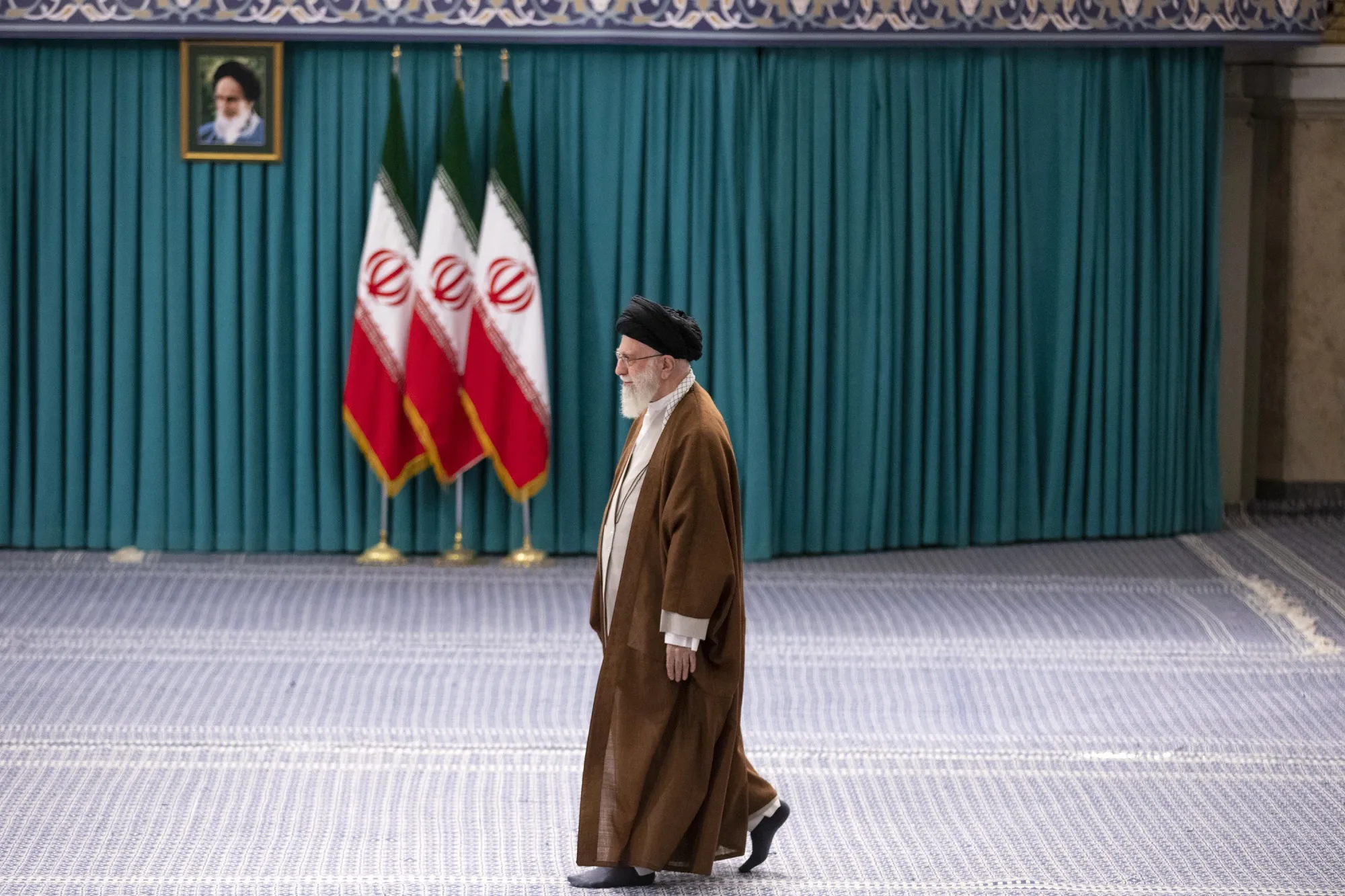
Iranian Supreme Leader Ayatollah Ali Khamenei arrives to vote in the parliamentary run-off elections in Tehran, on May 10.
Photographer: Sobhan Farajvan/Pacific Press/LightRocket/Getty Images
Iran's Center of Power Shifts From ‘Clerical Slippers to Combat Boots’
The country’s supreme leader is trying to lay the political, military and diplomatic groundwork for his succession, and the IRGC stands to benefit.
The death of Iranian president Ebrahim Raisi raises a serious question about the future of one of the most powerful jobs in the Middle East: who or even what can succeed Supreme Leader Ayatollah Ali Khamenei. Hard-line cleric Raisi — who died on Sunday in a helicopter crash — and Khamenei’s son Mojtaba were widely seen as the frontrunners to replace Iran’s ultimate ruler.
With Raisi gone, the Islamic Revolutionary Guard Corps — the most powerful arm of Iran’s military which over the past two decades has significantly increased its influence on the country’s politics and economy — is now well placed to become more powerful than any individual who might eventually replace Khamenei, who’s in his mid-80s.