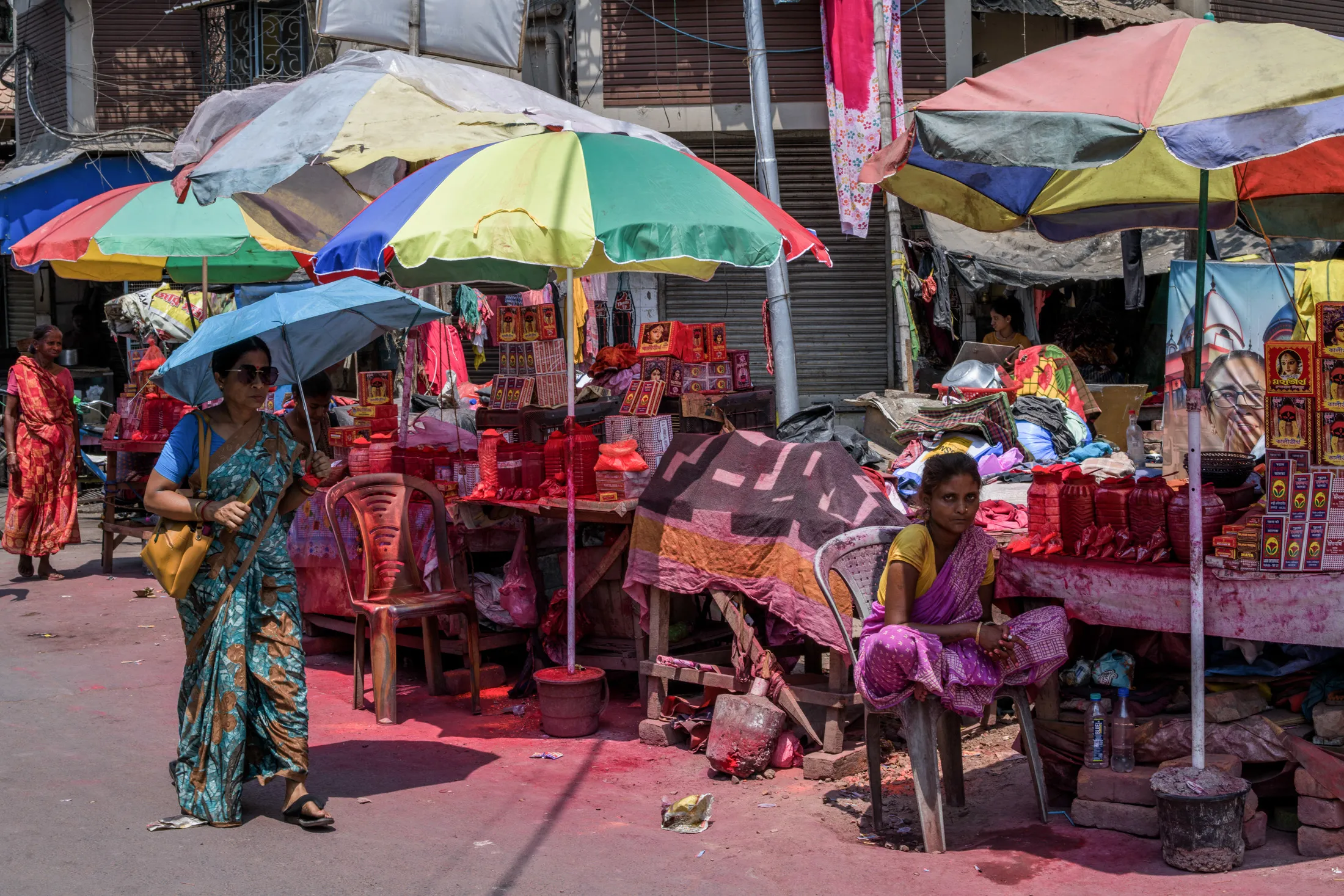
Street vendors and market goers protect themselves from heat in Kolkata on April 23. Attempts in Kolkata and across India to improve the 1.4 billion population’s resilience to extreme heat have often been ill-conceived.
Photographer: Arko Datto/BloombergFatal Heat Waves Are Testing India's Ability to Protect 1.4 Billion People
Longer and more frequent periods of extreme temperatures are exposing the nation’s flawed attempts to respond to a changing climate.
In scorching heat on a busy Kolkata street last month, commuters sought refuge inside a glass-walled bus shelter where two air conditioners churned around stifling air. Those inside were visibly sweating, dabbing at their foreheads in sauna-like temperatures that were scarcely cooler than out in the open.
Local authorities initially had plans to install as many as 300 of the cooled cabins under efforts to improve protections from a heat season that typically runs from April until the monsoon hits the subcontinent in June. There are currently only a handful in operation, and some have been stripped of their AC units, leaving any users sweltering.