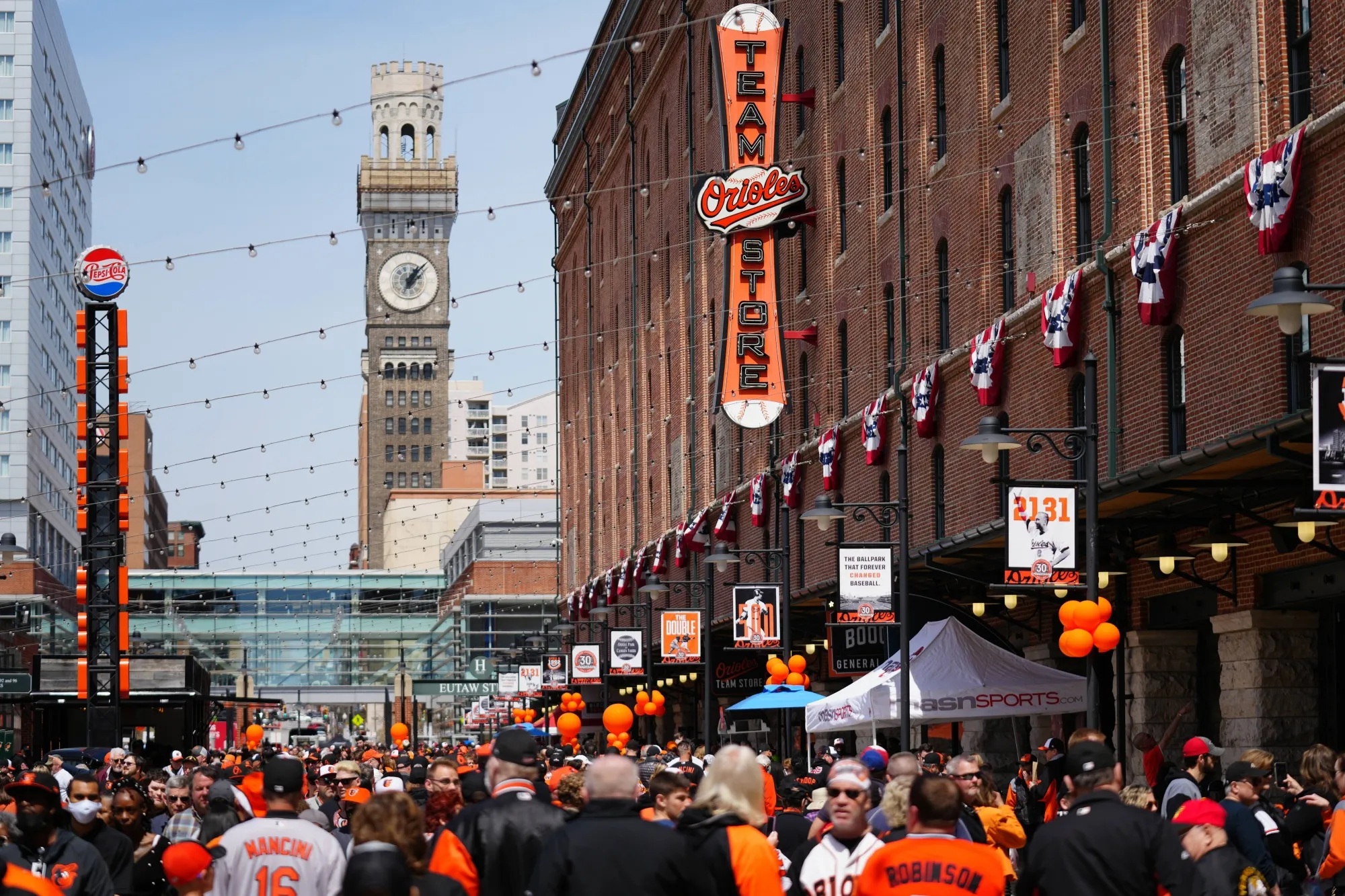
Crowds gather before a 2022 game between the Milwaukee Brewers and the Baltimore Orioles at Oriole Park at Camden Yards, which opened in 1992 and kicked off a wave of nostalgia-themed urban ballparks.
Photographer: Daniel Shirey/MLB via Getty Images
A New Pitch for Ballparks as Downtown Development
Stadium design consultants Janet Marie Smith and Fran Weld say that baseball venues have a role to play as drivers of inclusive post-Covid urban recovery.
If you’re a Major League Baseball team today, it’s not enough to just have a nice ballpark: To claim a stable future, teams also want the ability to develop the real estate surrounding their home field.
By that metric, the new 30-year lease on Oriole Park at Camden Yards, approved by Maryland officials in December, offers only partial relief to anxious fans in Baltimore. The team’s longtime owner, attorney Peter Angelos, died on Saturday at age 94, having sold the club in January to a team led by financier David Rubenstein. (Also in this ownership group: Michael Bloomberg, founder and majority owner of Bloomberg News parent Bloomberg LP.) On Wednesday, Major League Baseball approved the $1.725 billion sale to Rubenstein, who also hosts a show on Bloomberg Television. The team’s new owners have until 2027 to reach an agreement with the state on development rights for adjacent parking lots owned by the Maryland Stadium Authority. Until then, “The Ballpark That Forever Changed Baseball” — a phrase that the Orioles officially trademarked in 2012 — is a bit behind the times.