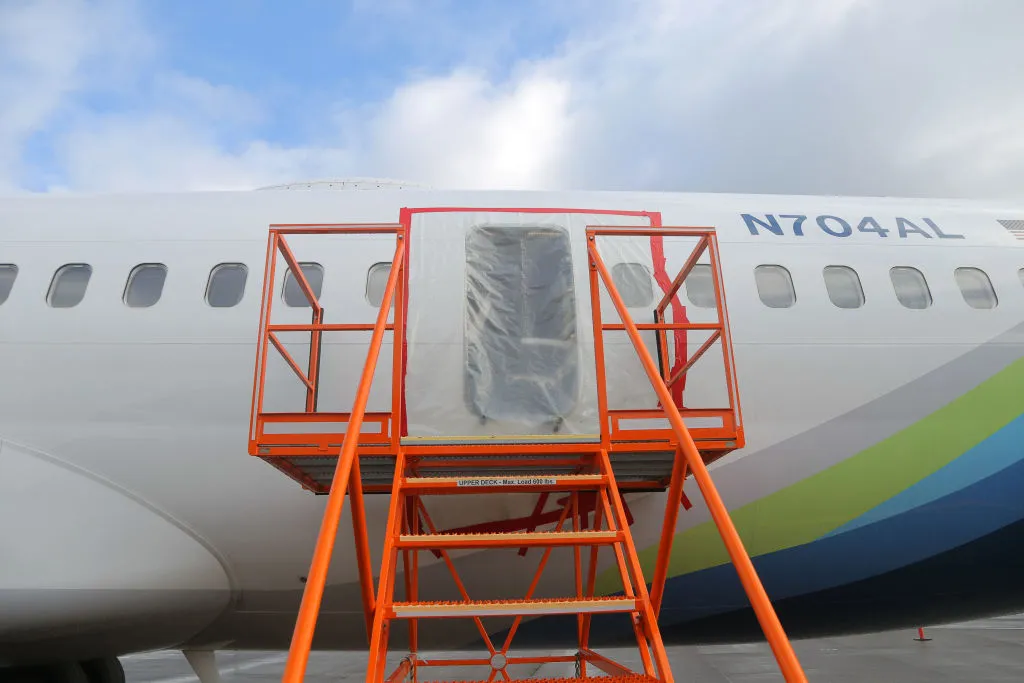
Plastic covers the fuselage plug area of the Boeing 737 Max 9 used on Alaska Airlines Flight 1282, two days after the Jan. 5 accident.
Source: NTSB/Getty Images
Boeing’s Legacy Vanished Into Thin Air. Saving It Will Take Years
After a Boeing 737 Max 9 narrowly escaped catastrophe, the US company must regain trust that it can still build reliable aircraft.
Back in October, Boeing Co. Chief Executive Officer Dave Calhoun sought to rally employees reeling from a manufacturing setback, this time involving wrongly drilled holes in a crucial aircraft section — yet another blow to a company that once enjoyed a sterling reputation for building awesome flying machines.
“I have heard those outside our company wondering if we’ve lost a step. I view it as quite the opposite,” Calhoun wrote in a company memo, going on to tout the “rigor around our quality processes” at the US aircraft manufacturer. “I am proud of the team, and confident we’ll look back on this time period as when we took the necessary steps that set Boeing on the right course for the future.”