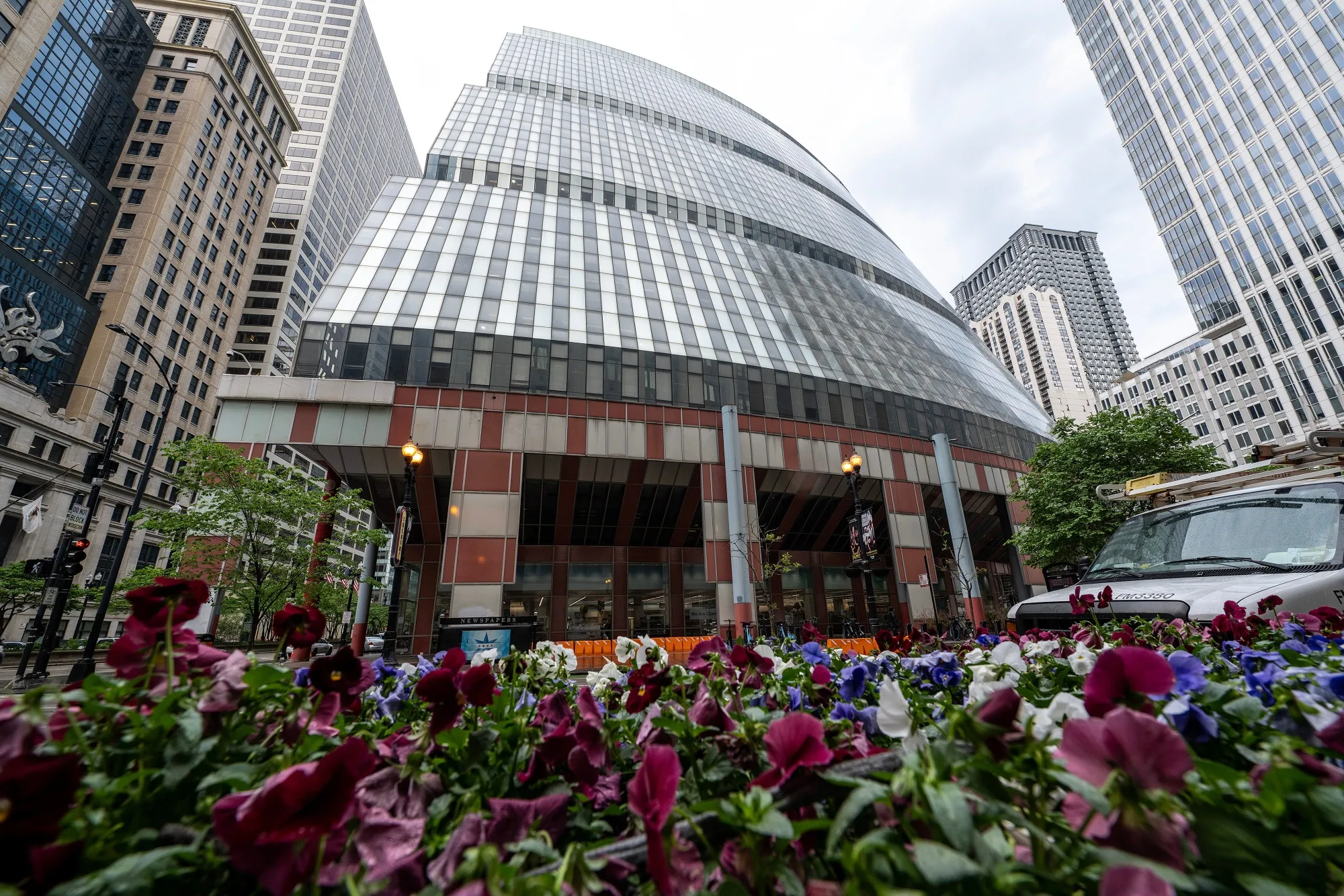
Helmut Jahn’s 1985 James R. Thompson Center in Chicago is poised to be redeveloped, and many fans fear that it will lose some of its quirky style along the way.
Photographer: Christopher Dilts/BloombergThe Case for Saving Postmodernism, Architecture’s Wildest Buildings
Many of the playful designs in the 1980s and ’90s in the US and UK are now aging and threatened with demolition. Can these architectural oddities be preserved?
“I’m toast,” said Michael Graves.
The polarizing architect uttered these fateful words in 1988 at a show at New York City’s Museum of Modern Art. An important figure in the then-ascendent design movement known as Postmodernism, Graves was famous for achievements large and small, from prominent municipal landmarks like the colorful Portland Building, one of the earliest major US projects associated with the movement, to the playful Alessi tea kettle. Yet by the late ’80s, he sensed a collective shift away from the bombastic, multihued objects and buildings he helped to popularize over the prior two decades — and toward something more subdued and pragmatic.