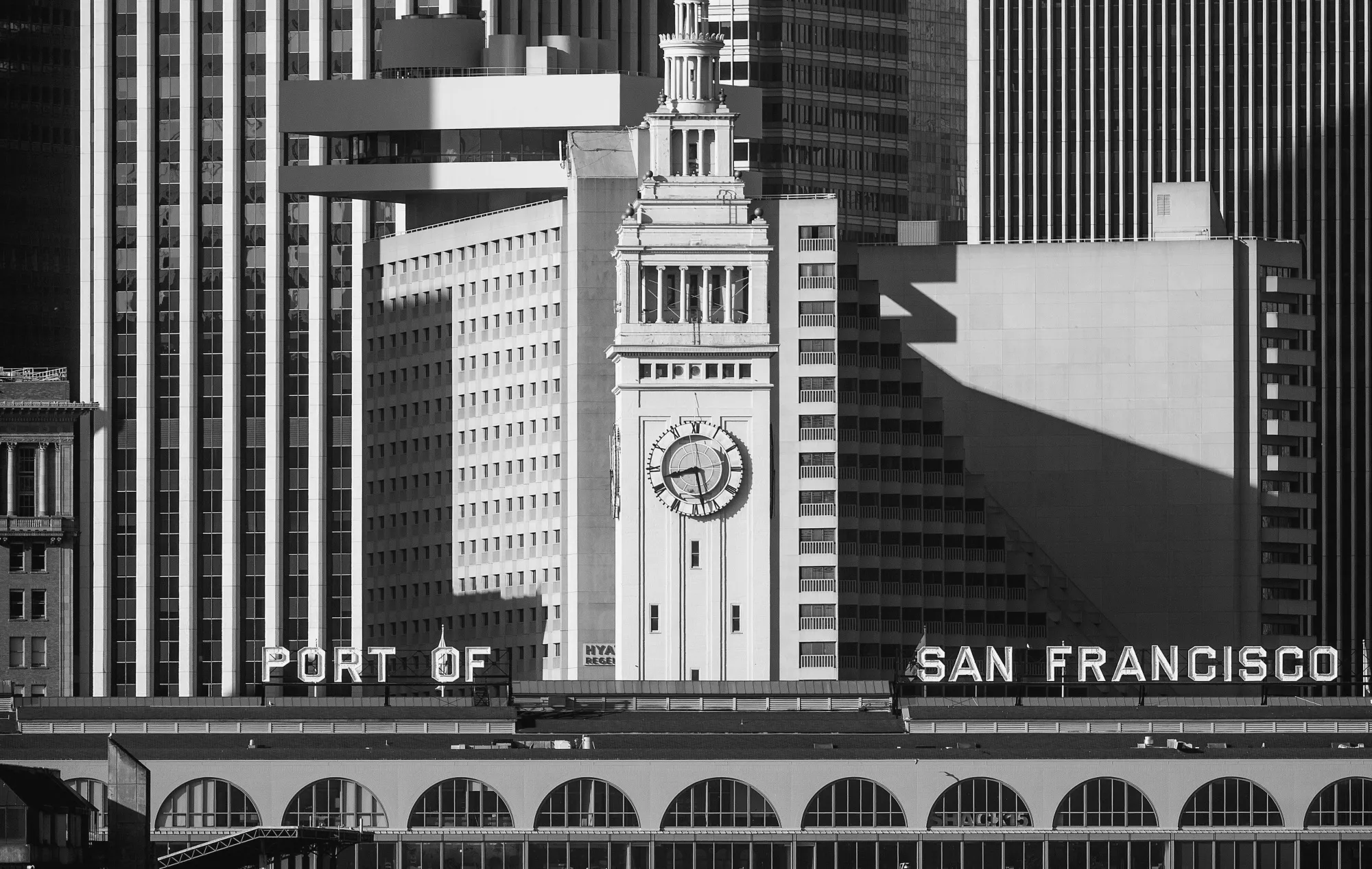
The Ferry Building has survived San Francisco’s booms and busts over the past 125 years.
Courtesy of Noah Berger
Why San Francisco Fell in Love With the Ferry Building
In his new book Portal, architecture critic John King chronicles the saga of a Bay Area transportation hub that evaded the wrecking ball and emerged a civic landmark.
In its 125 years, San Francisco’s Ferry Building has dodged many a disaster. Opening in 1898 as a depot for ferry riders, the waterfront complex survived earthquakes, fires and functional obsolescence to emerge as a beloved civic landmark; the building, with its distinctive 245-foot-tall clock tower, remains a “shorthand for the city by the bay,” as urban design critic John King writes in his new book, Portal: San Francisco’s Ferry Building and the Reinvention of American Cities.
At its peak in 1930, 47 million passengers passed through the building’s arched arcade, crossing the bay on a fleet of 43 ferries. After cars became king and boat traffic tumbled, King shows how the giant structure became a “void” that “existed to be filled.” A series of plans to abandon, redefine or replace it ensued, as equal and opposite forces rallied to preserve its legacy.