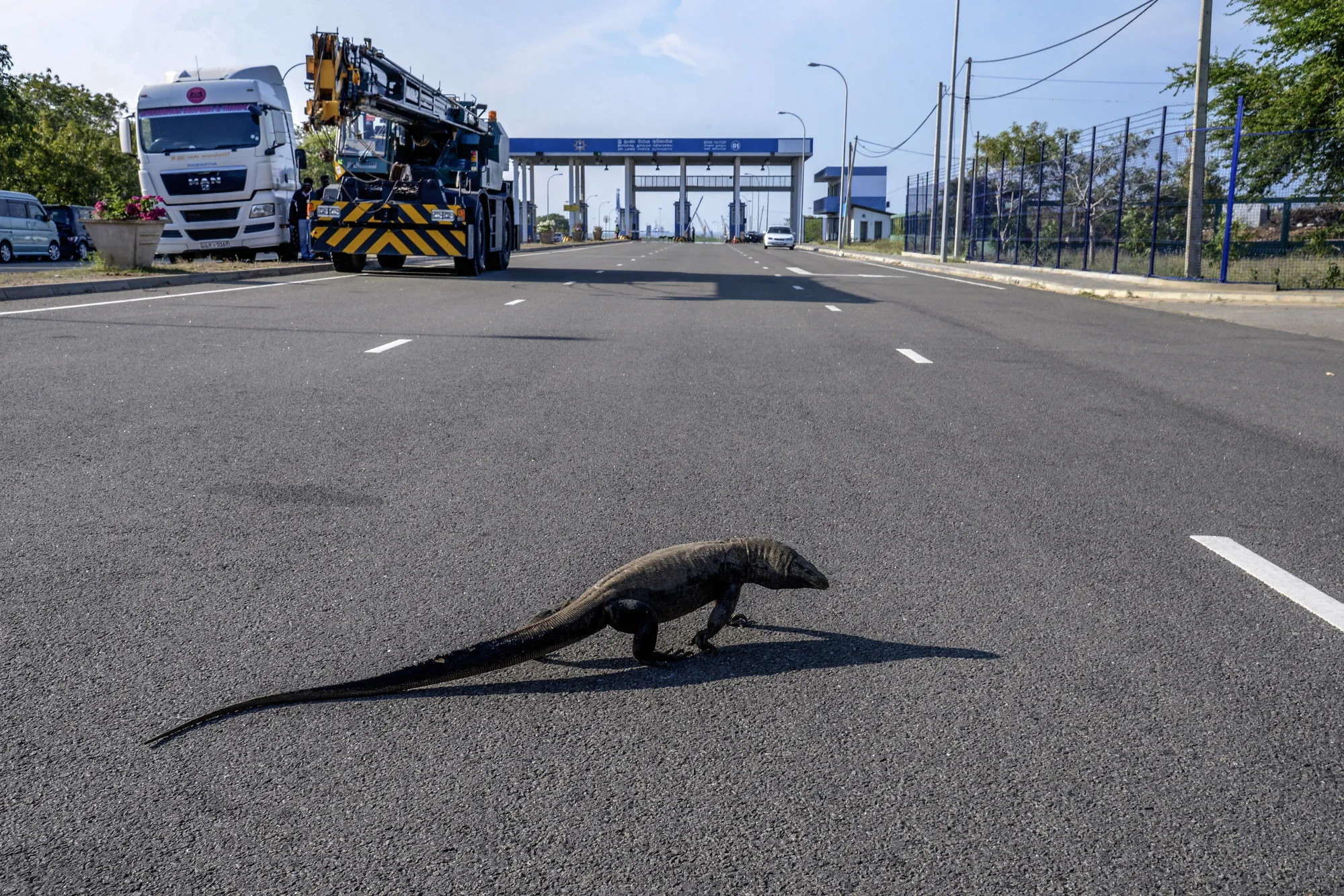
A monitor lizard crosses a roadway in Singapore.
Photographer: Atul Loke/Bloomberg
Rethinking Roadkill
A new book chronicles the enormous ecological damage caused by roadbuilding and makes a case for highways that are less lethal to animals.
If asked how the 4.2 million miles of roads in the US affect the nation’s wildlife, most people would probably have a one-word answer: roadkill.
The intuitive response is a sensible one. In the US alone, an estimated one million vertebrates a day are struck and killed by motor vehicles. But a new book argues that the death toll from car collisions is only one of the myriad ways in which roadways reconfigure ecosystems. In Crossings: How Road Ecology is Shaping the Future of Planet, environmental journalist Ben Goldfarb guides the reader through an array of often heartbreaking stories, from the Los Angeles mountain lions so isolated by highways that they could inbreed themselves into extirpation to salmon populations smothered by tire pollution. As he writes: