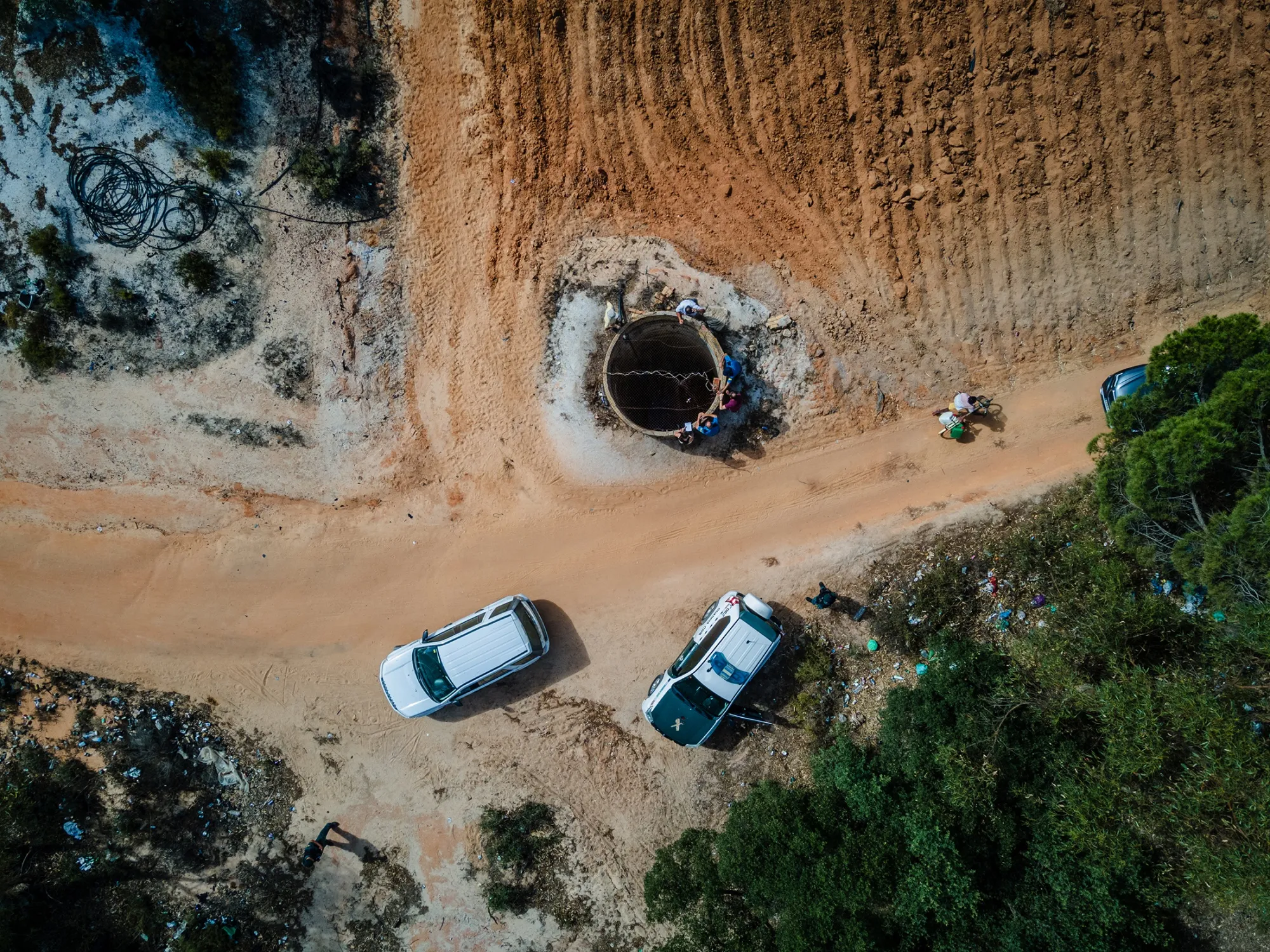
Guadalquivir water police and Guardia Civil closing illegal wells in Doñana Park, Huelva.
Photographer: Àngel García/Bloomberg
Spain’s Climate Election Pits Water Police Against Angry Berry Farmers
A vote in the middle of the second straight summer of unprecedented heat and drought could decide the fate of one of Europe’s most important wetlands.
The water cops knew their way around the maze of strawberry fields and dirt roads surrounding the Doñana National Park in southern Spain. It still took more than two hours to find the exact spot where a well was siphoning water off one of Europe’s most biodiverse wetlands to cultivate lucrative crops. A handful of lush fig trees — a rare green patch in the increasingly parched region — and a white electricity box gave away the location.
Tracking down unsanctioned wells over the vast area, where legal and illegal farms are haphazardly arranged, is “like finding a needle in a haystack,” says a technician with the local water authority. He asked not to be named because he’s not authorized to talk to the media and fears retribution from farmers. “We’re detecting more wells now thanks to satellite images, but farmers keep digging them because berry farming is so profitable.”