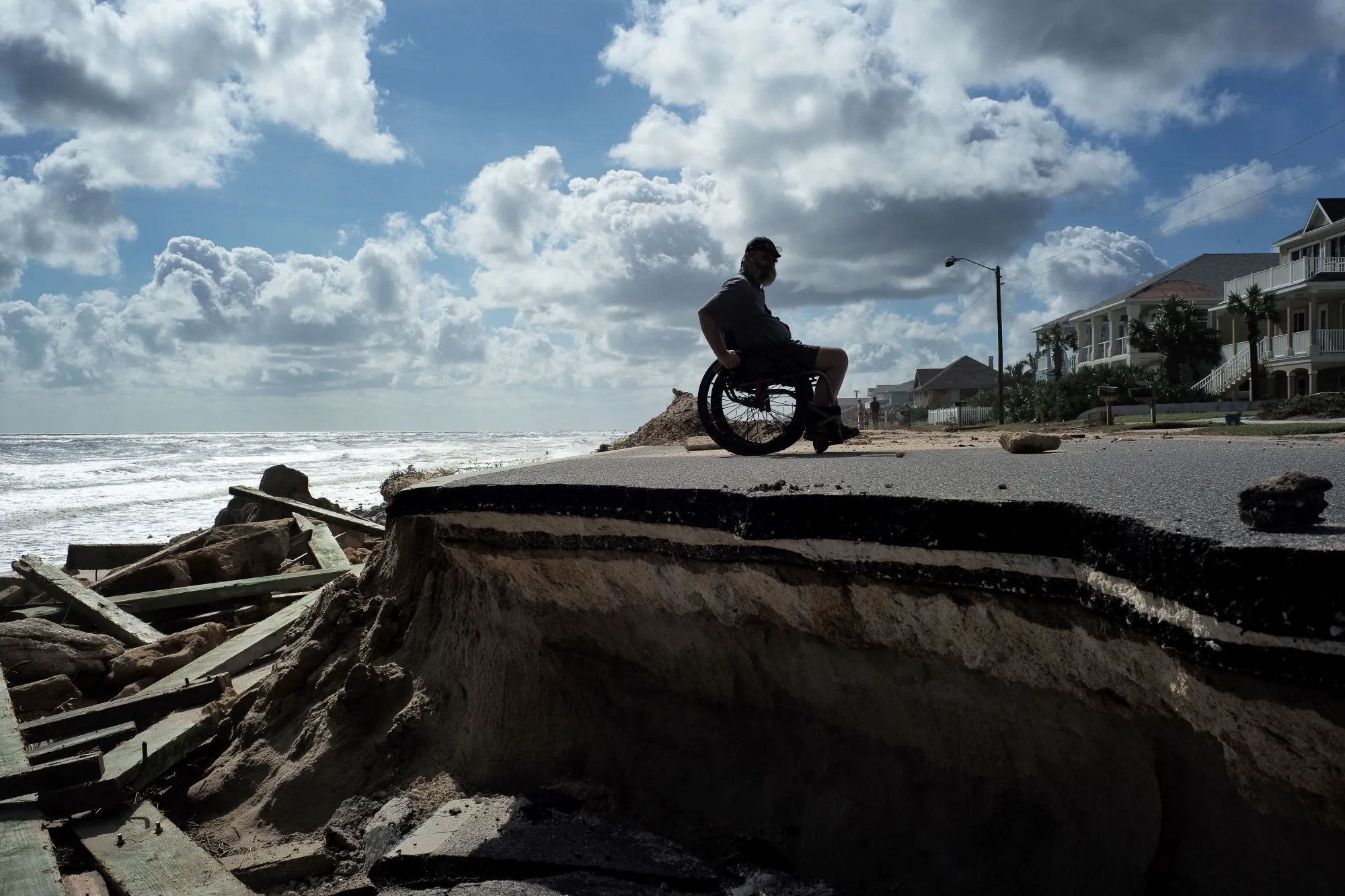
A wheelchair user negotiates a washed-out highway in Flagler Beach, Florida, in the wake of Hurricane Matthew, in 2016.
Photographer: Jewel Samad/AFP via Getty Images
What People With Disabilities Know About Surviving Climate Disasters
Those with disabilities have long been ignored in emergency planning, despite the higher risks they face. Extreme weather is making this gap more deadly.
As Typhoon Mawar bore down on Guam at the end of May, the Federal Emergency Management Agency prepared for the aftermath of the storm, the strongest to strike the US Pacific territory since 2002. Amid briefings with local officials and the stockpiling of supplies for the island of 150,00 people, FEMA was also making sure that those with disabilities were not ignored.
That meant undertaking risk assessments, to understand how many people on the island had mobility issues or relied on electrical devices for medical treatment. After the storm hit on May 24, lashing the Pacific island with 140-mile-per-hour winds that destroyed homes and disrupted power, water and communications, advisers from FEMA’s Office of Disability Integration and Coordination partnered with Guam’s Department of Integrated Services for Individuals with Disabilities to get deliver aid, travel to group homes, and set up recovery centers.