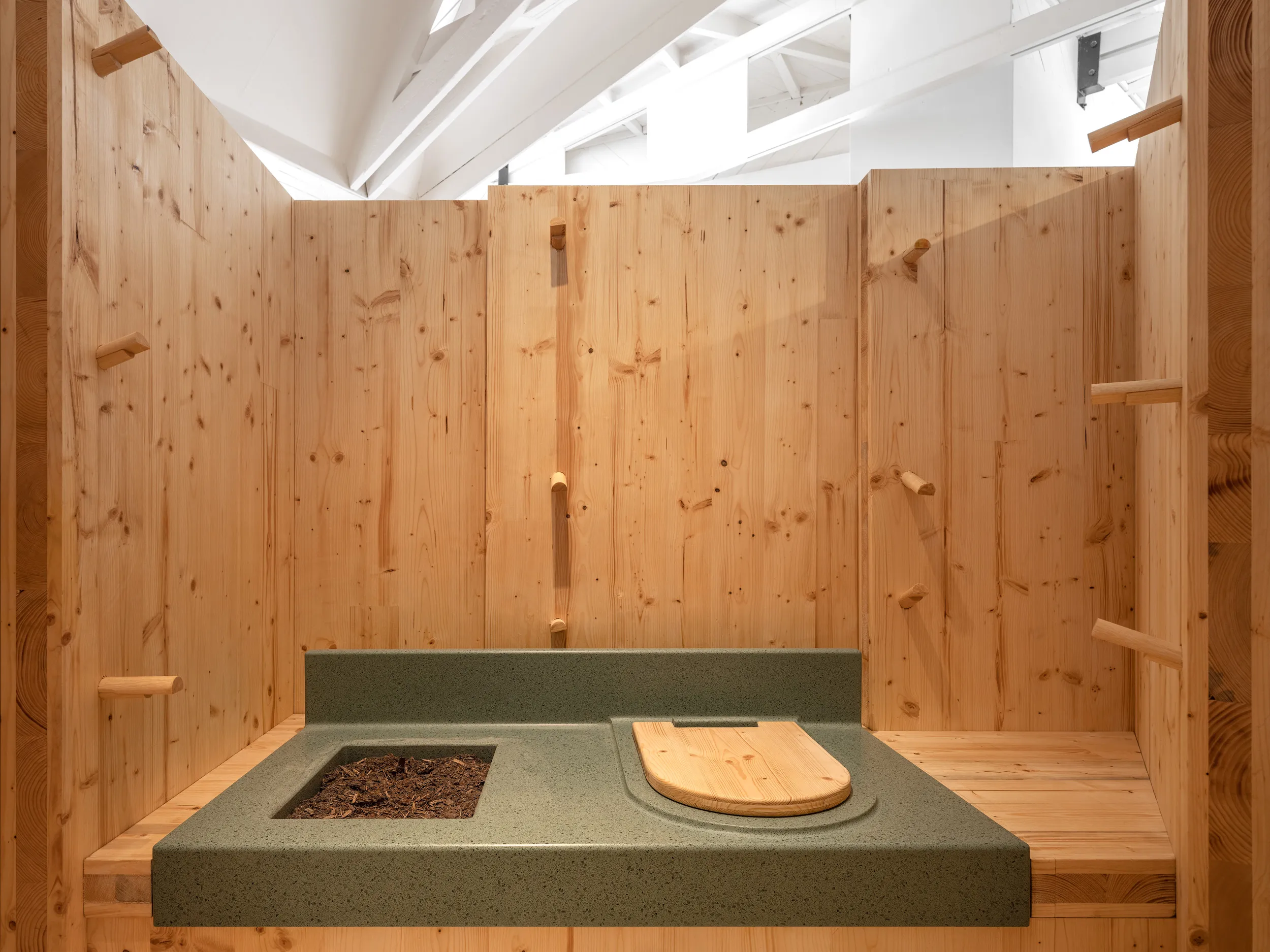
The Huussi toilet in Finland’s pavilion at the 2023 Venice Architecture Biennale disposes of waste without any water.
Photographer: UGO CARMENIThere Are Better Ways to Build a Toilet
Designs at the Venice Architecture Biennale are rethinking the modern flush for a water-strained world.
Visitors to the Finnish pavilion at this year’s Venice Architecture Biennale are greeted with an unlikely sight at a festival typically devoted to the avant-garde and newfangled: a no-flush outhouse toilet.
While the structure, known as a Huussi, may seem a bit primitive to some, it’s long been a popular toilet design in rural parts of Finland because it requires no connection to water supplies: It processes waste not by flushing it away, but by converting it to compost in a hay-filled container. It’s a design that’s making a comeback because it saves water and recirculates waste back into the ecosystem — both essential goals in a world where many areas are drying out thanks to climate change, and where as much as 30% of urban water supplies are used to flush human waste. Our modern toilet practices are likely to become unsustainable within the next few decades; by 2050 it’s estimated that up to five billion people could be facing water shortages.