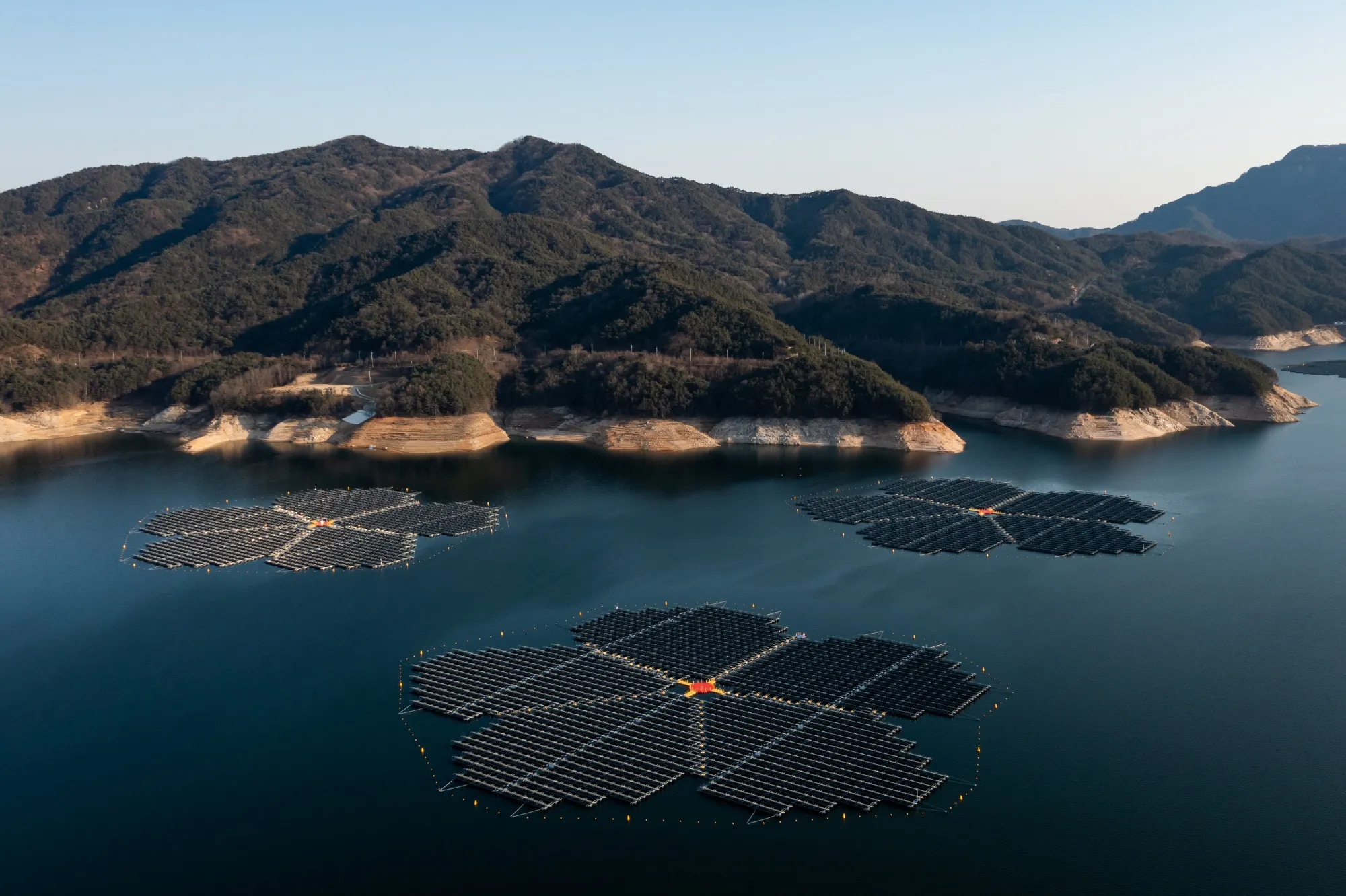
How Floating Solar Panels Are Being Used to Power Electric Grids
Solar panels that float on water are becoming a popular clean-energy option for island nations and those with limited land. These photos reveal the possibilities.
In a world of finite land, solar farms can take up a lot of space. But there’s a solution for that scarcity: panels that float.
In nearly a dozen countries around the world, floating solar farms are providing a welcome alternative to ground-mounted modules, with the potential to significantly boost clean power as the world races to cut carbon emissions. Massive solar farms can now be found atop bodies of water in China, South Korea, Japan, Thailand, Portugal, Singapore and Switzerland. Nations that include India and Indonesia are developing such projects, and the world’s largest man-made lake — on the border of Zambia and Zimbabwe — may also get floating solar panels to supplement local hydropower.