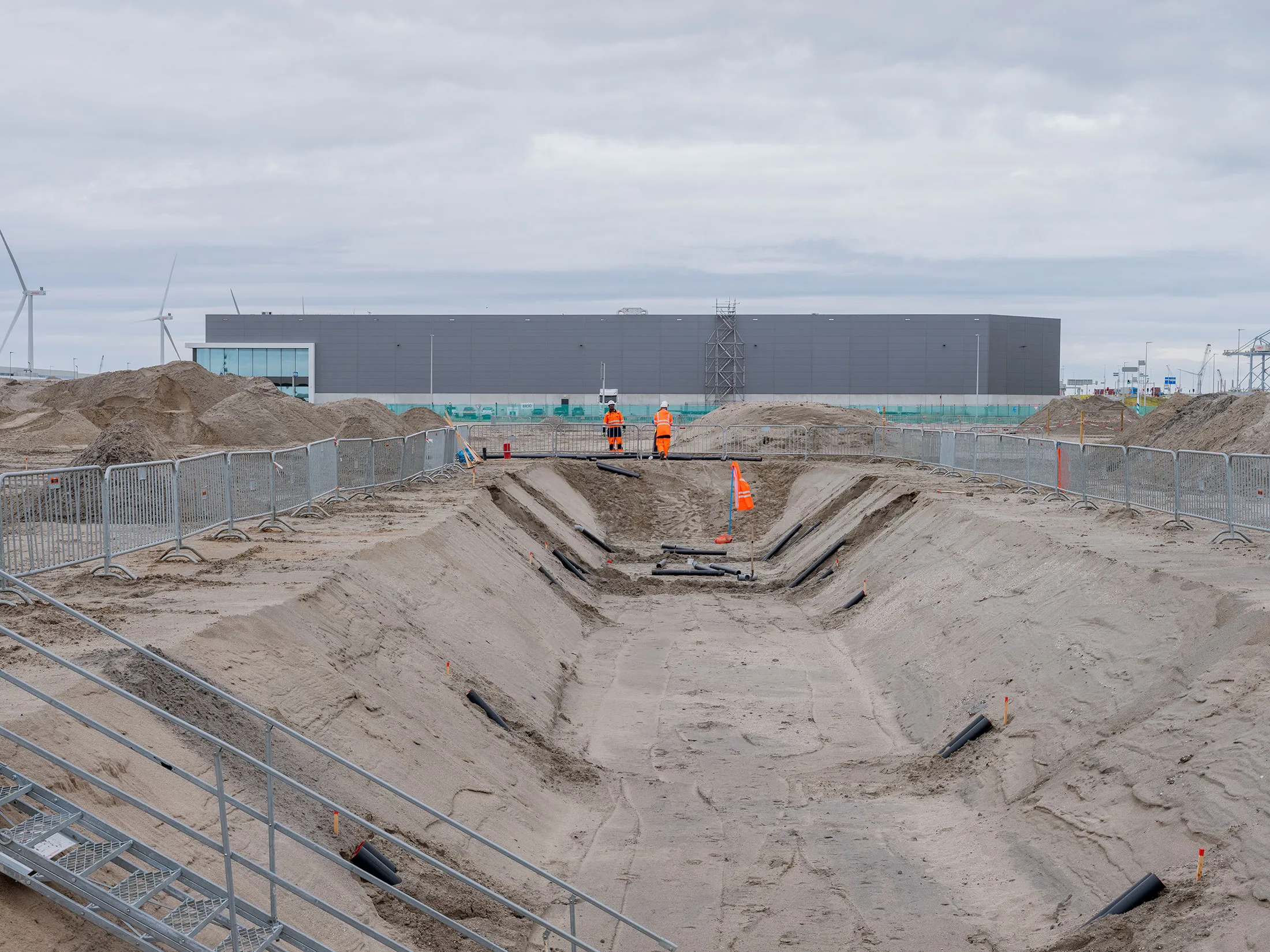
Future site of Shell’s Holland Hydrogen 1.
Photographer: Sem Langendijk for Bloomberg BusinessweekShell’s Grand Plan to Fight Climate Change (and Continue to Cause It)

In 1902 the Royal Dutch Petroleum Co. built a refinery in Rotterdam, on the river running to the nearby North Sea. The facility would later relocate a few miles downstream to the village of Pernis, where it processed crude from the company’s distant concessions on the island colony of Sumatra, in modern-day Indonesia. At the time, petroleum was mostly refined into kerosene to be burned for heat and light. But the young company’s Sumatran crude was particularly light and low in sulfur, and thus suited to a newer use: powering the automobiles that were growing in popularity as playthings for the wealthy. Five years later, to compete with the American juggernaut Standard Oil, the Dutch company merged with an English competitor run by brothers Marcus and Samuel Samuel, who’d developed a new type of ship to carry crude in bulk. The brothers named each tanker in their growing fleet after kinds of seashells—an homage to their father’s import-export business, which had brought shell-encrusted curios into England from East Asia.
During the century that followed, the appetite for petroleum products grew exponentially, and Royal Dutch Shell grew accordingly to feed it. Today the Pernis refinery, officially called Shell Energy and Chemicals Park Rotterdam, is the biggest in Europe at more than 5 square kilometers (2 square miles). Each year, 20 million metric tons of petroleum flow through the compound’s holding tanks, processing units, towering catalytic crackers and tens of thousands of kilometers of pipes and are transformed into gasoline, diesel, jet fuel and the chemical feedstocks for products such as plastics and hand sanitizer.