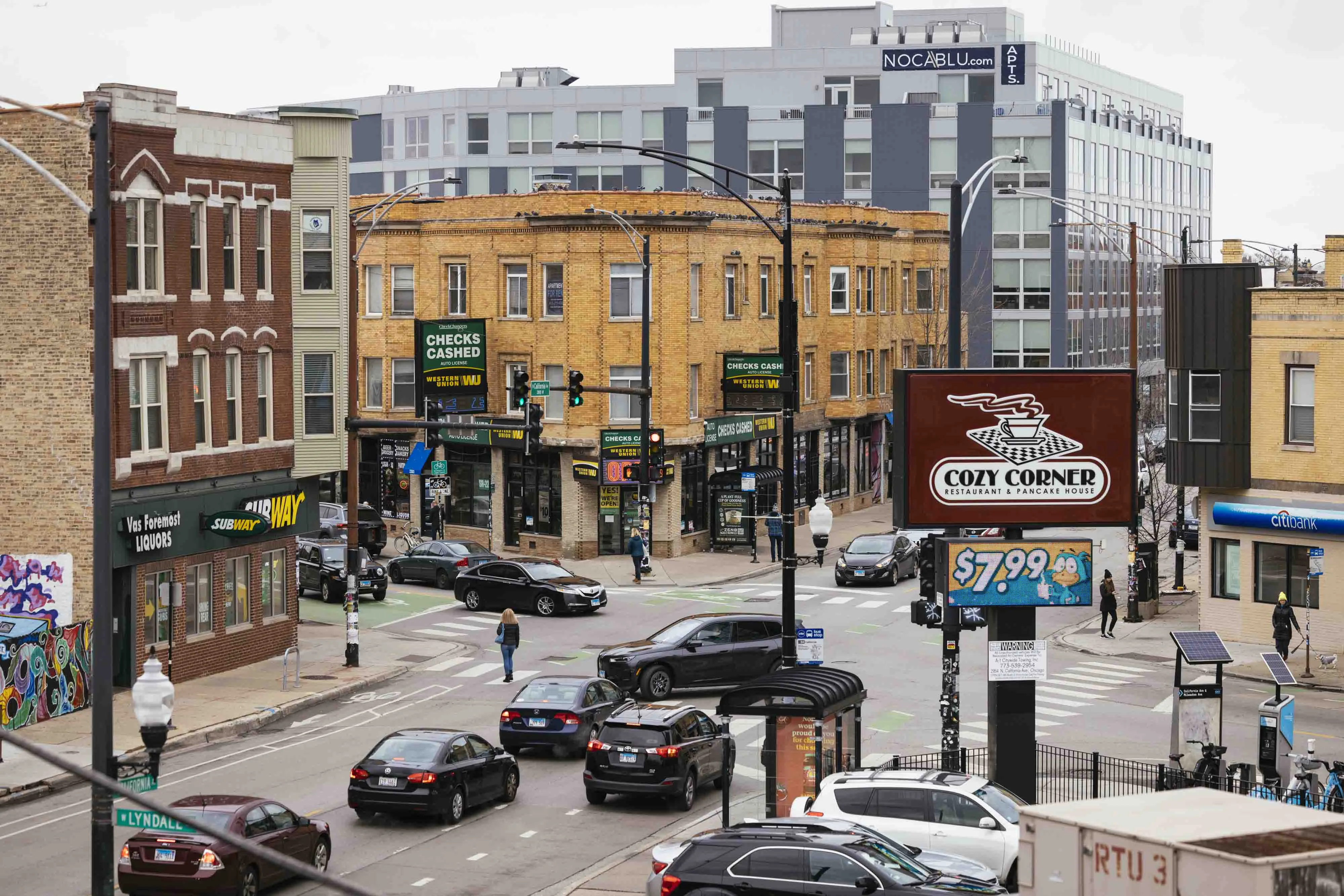
New apartments mix with older buildings at the intersection of California Avenue and Milwaukee Avenue in Chicago’s Logan Square neighborhood.
Photographer: Taylor Glascock/BloombergChicago Taps Brakes on Gentrification With a Tax on Teardowns
With multi-unit dwellings giving way to single-unit homes, Logan Square leaders pushed for measures to keep the neighborhood’s Latino population in place.
Right next to the California stop on Chicago’s Blue Line, one-bedroom apartments in a new luxury building start north of $2,000 a month. Recently built single-family homes on adjacent streets frequently go for $1 million or more. Coffee shops and craft breweries have become neighborhood staples.
Scattered throughout: taquerias marked with a single dollar sign on Google Maps, and traditional duplexes and triplexes. These multi-unit dwellings have housed members of Logan Square’s Latino population since a wave of immigration in the 1960s, but lately the flow has gone in the opposite direction. The Latino population in the neighborhood has diminished to 36% from 65% in 2000, according to the US Census Bureau, as wealthy, and often White, residents find appeal in the area’s trendy businesses and proximity to The 606, a 2.7-mile railway-turned-walking and biking path that opened in 2015.