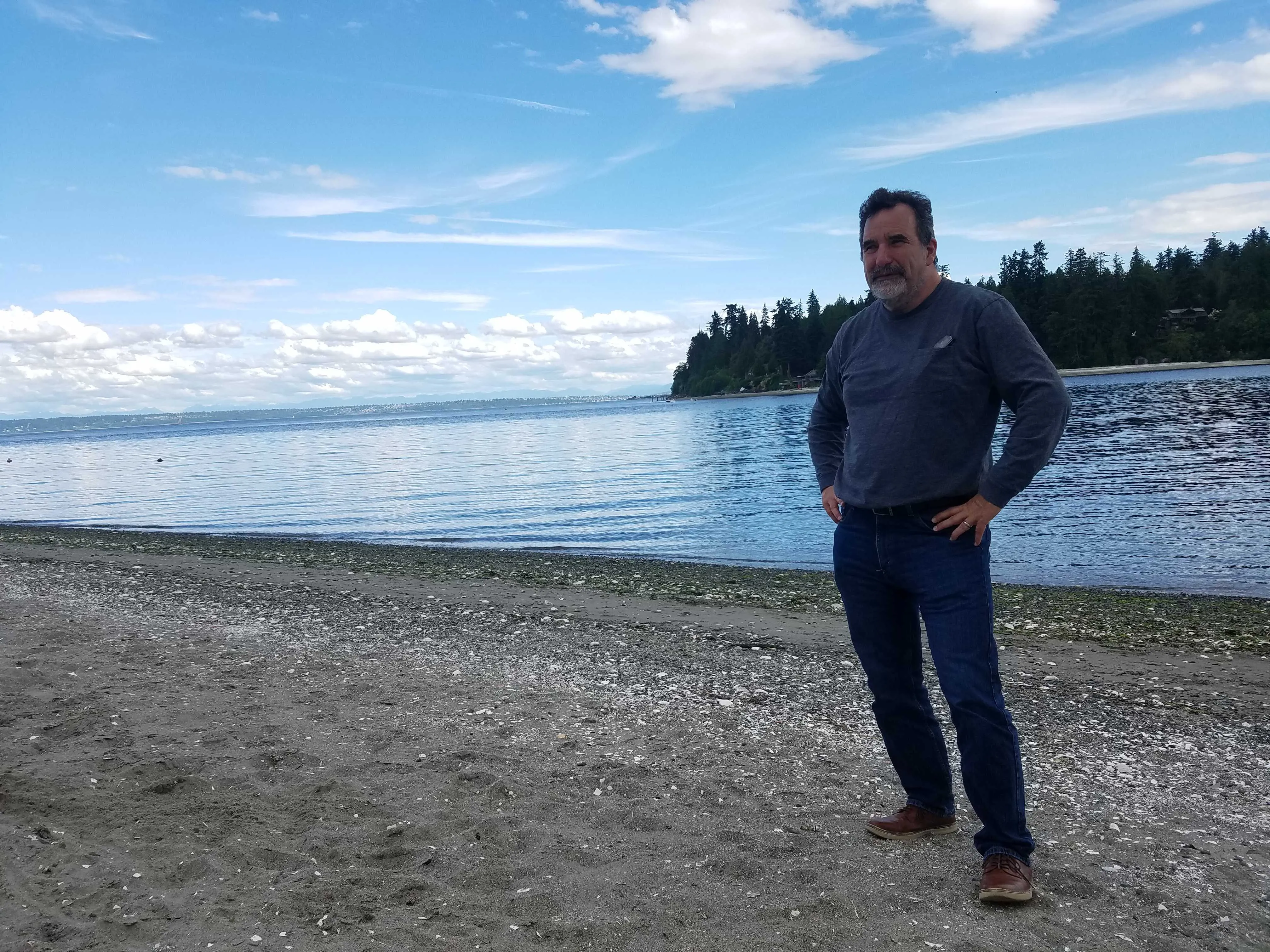
Leonard Forsman, chairman of the Suquamish Tribal Council, stands on sacred land reclaimed by the tribe near where Chief Seattle’s long house was burned down by the US government. The city of Seattle is visible across Puget Sound from this Native American reservation.
Photographer: Amy Yee/Bloomberg
How Pandemic Aid Is Boosting a Seattle-Area Tribe
Native American communities are receiving $20 billion in federal relief. The Suquamish Tribe is putting its share toward affordable housing.
The town of Suquamish, which makes up about half of Port Madison Indian Reservation, looks like another pleasant Seattle suburb, replete with lush greenery and compact houses. The grave of Chief Seattle, a leader of the Suquamish Tribe, is a short walk to the shores of Puget Sound.
It was a sleepy place when Leonard Forsman, the 62-year-old chairman of the Suquamish Tribal Council, grew up on the reservation in the 1960s and 1970s. People fished and logged, but there wasn’t much steady work. “We had a country life,” he recalls. “There weren’t opportunities here, so people left.”