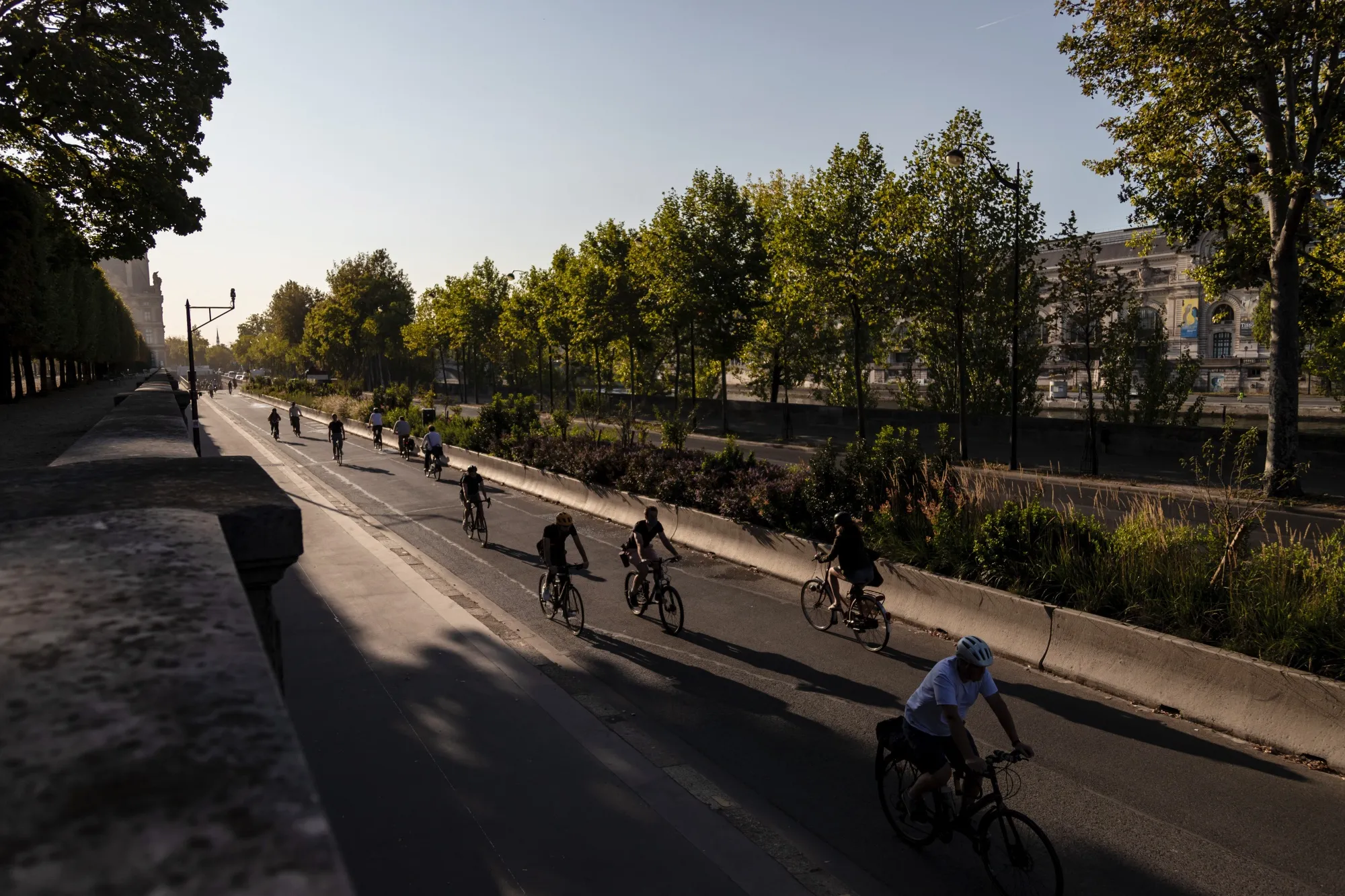
Cyclists use a two-lane bike lane on Voie Georges-Pompidou in Paris in 2020. The rapid expansion of car-free infrastructure has helped France improve its safety record as well as save gas.
Photographer: Anita Pouchard Serra/BloombergUS Traffic Safety Is Getting Worse, While Other Countries Improve
The rising rate of road deaths in the US continues to defy global trends. Here’s what traffic planners in other nations could teach their American counterparts.
A few months ago the United States Department of Transportation Secretary Pete Buttigieg unveiled Momentum, a new federal program created “to help countries around the world learn from our best practices in planning and modernizing transportation.”
It was a curious move for a country whose mobility network seems more likely to inspire pity than admiration when viewed from abroad. The US road transportation system is a climate bomb that generates more than twice as much carbon dioxide per capita as the roads of the European Union, thanks to the dominance of personal vehicles. American efforts to build cleaner alternatives such as high-speed rail — which is common across Japan, China, and many EU countries — have consumed billions of dollars with little to show for it.