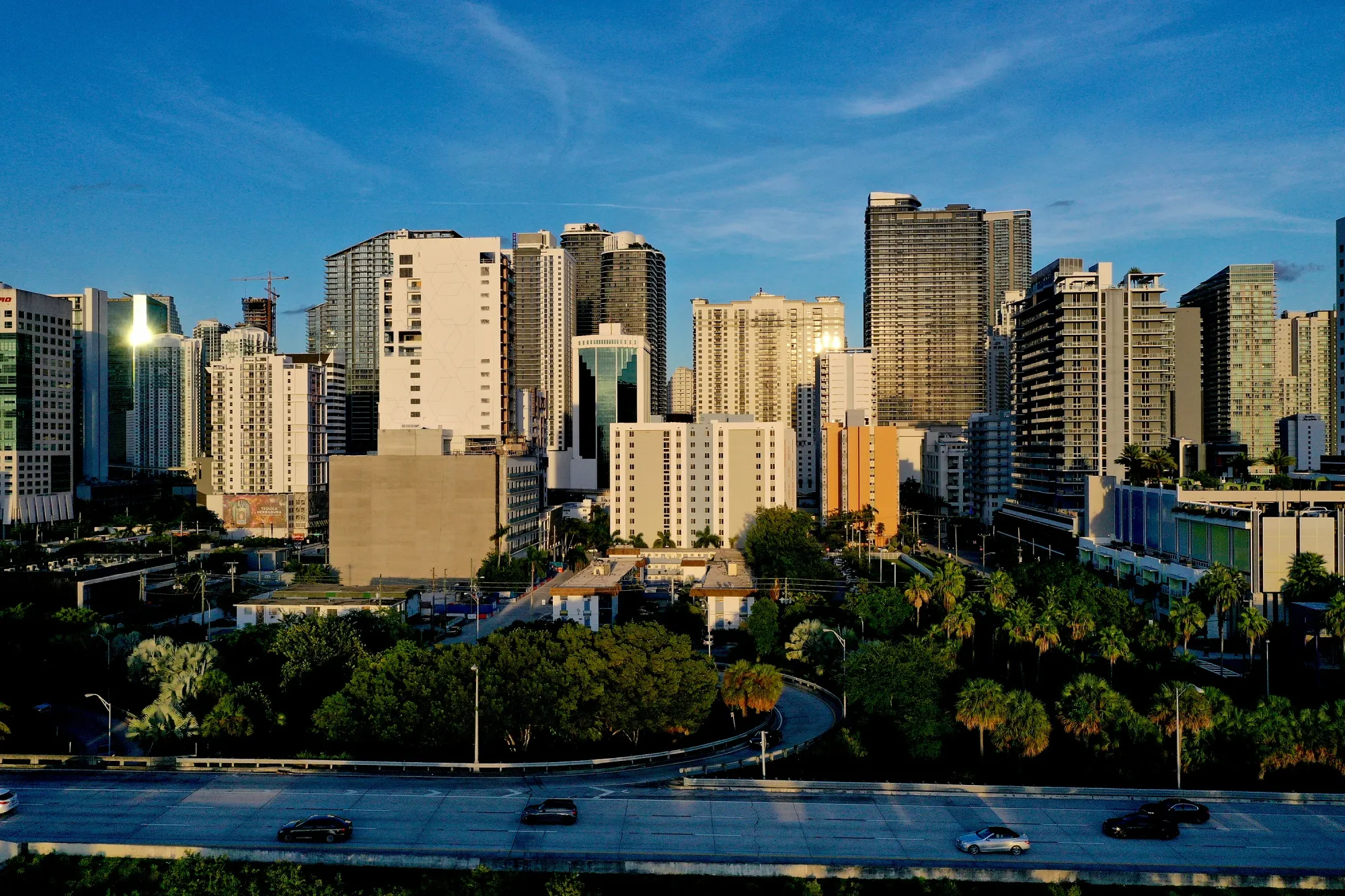
Rents in Miami have jumped 40% since May 2021.
Photographer: Joe Raedle/Getty Images
How the ‘Rise of the Rest’ Became the ‘Rise of the Rents’
The pandemic helped spread the sky-high housing prices of coastal hubs to other cities across the US. Here’s why it happened.
We hear a lot these days about the effects of the Covid-19 pandemic and the shift to remote work it has accelerated, on the rise of Sun Belt tech hubs like Miami and Austin, and of rural “Zoom towns” like Bozeman, Montana, and Truckee, California. What’s not as widely recognized is the role that the pandemic has played in America’s deepening housing affordability crisis, spreading it from superstar cities and tech hubs like New York, Los Angeles and the Bay Area to cities, suburbs and rural areas across the US.
What Steve Case, the entrepreneur and venture capitalist who founded AOL, famously dubbed “the rise of the rest” — the shift of tech jobs and companies away from coastal hubs to less-expensive places — has turned into the “rise of the rents.” As knowledge and tech workers spread out in search of more space, housing prices and rents surged in once-affordable communities across the country. You can even call it a new kind of pandemic gentrification.