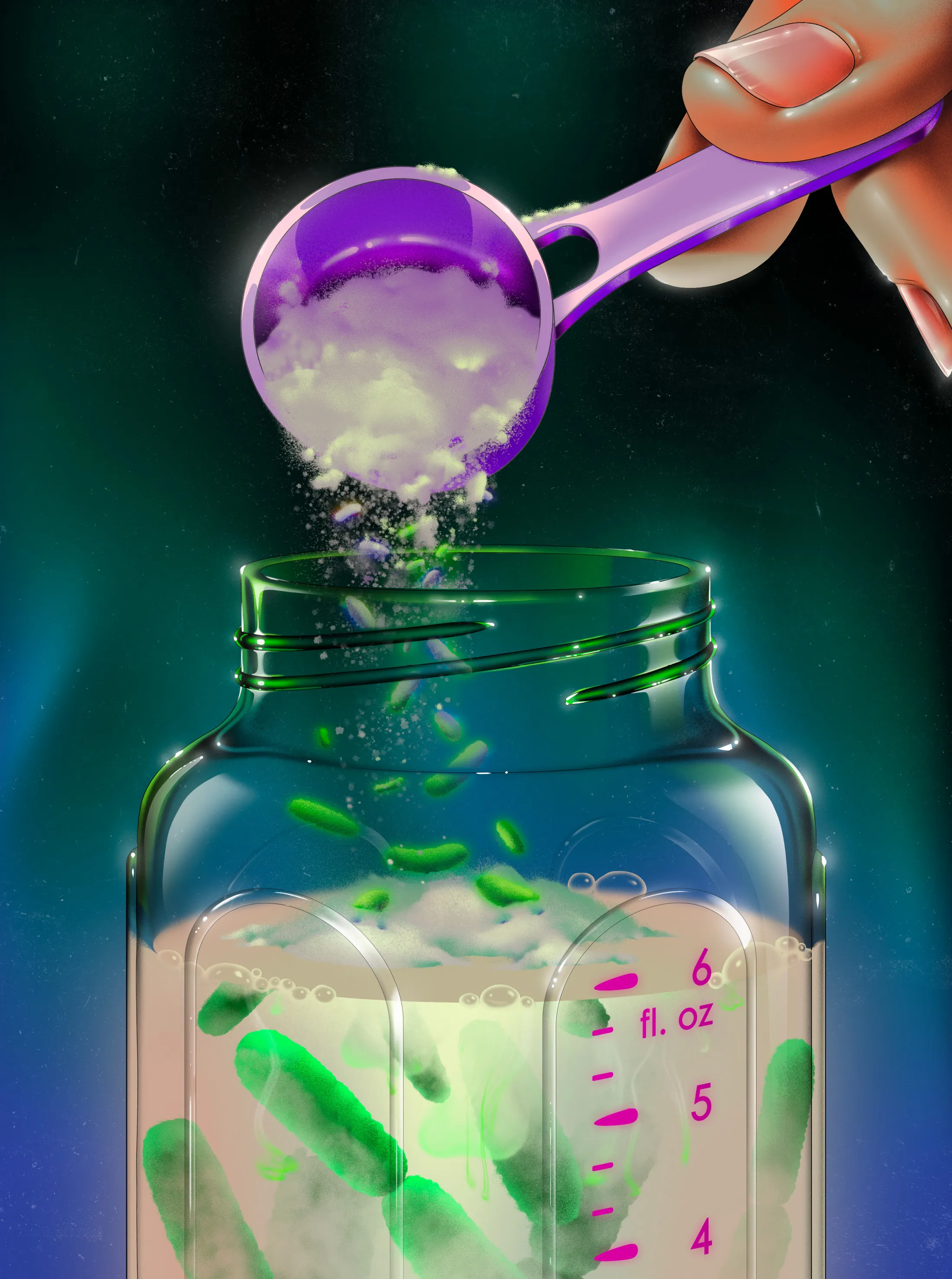
How Deadly Bacteria Spread in a Similac Factory—and Caused the US Formula Shortage
Procedures got sloppy at the facility in Sturgis, Mich. Cronobacter bacteria proliferated. And when the FDA finally acted, America found itself in a desperate scarcity.
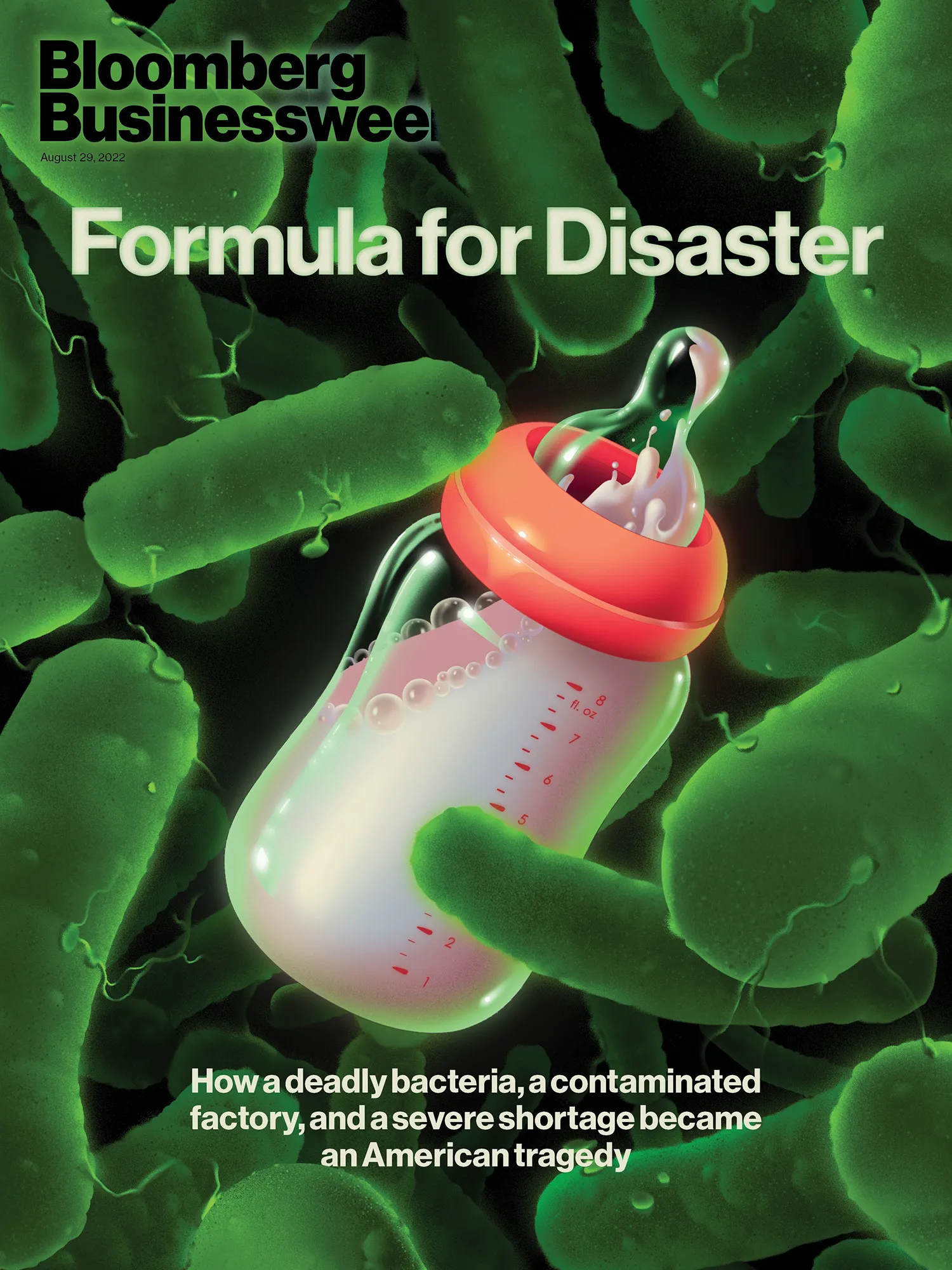
About 20% of the infant formula produced in the US comes from a plant on the edge of the city of Sturgis, in southern Michigan, where it’s been a presence for more than five decades. It’s owned by Abbott Laboratories and makes Similac, the country’s most popular brand. On a September morning in 2021, two US Food and Drug Administration investigators arrived for an annual inspection that was a year overdue because of the agency’s Covid-19 restrictions. When they reviewed company records, they saw evidence of Cronobacter sakazakii, bacteria that can survive for months, sometimes years, in powdered formula and cause devastating illness in infants.
Abbott’s routine testing had turned up cronobacter at the plant five times in the previous two years, which isn’t unusual for a formula maker. More concerning, the bacteria had twice made its way into the formula itself, in cans ready for distribution. Abbott held back the cans in those batches but didn’t recall any others. The company wasn’t required to notify the FDA, and it didn’t. Abbott was expected to fix whatever may have allowed the contamination and said that it had. Yet the inspectors watched as a worker reached into a bag containing an essential ingredient without cleaning his gloves or hands—just the kind of sloppiness, they noted, that could spread cronobacter from work surfaces to the powder. They found more to fault: crucial drying equipment with a history of pits and cracks where cronobacter could hide; pooled water where it could multiply.