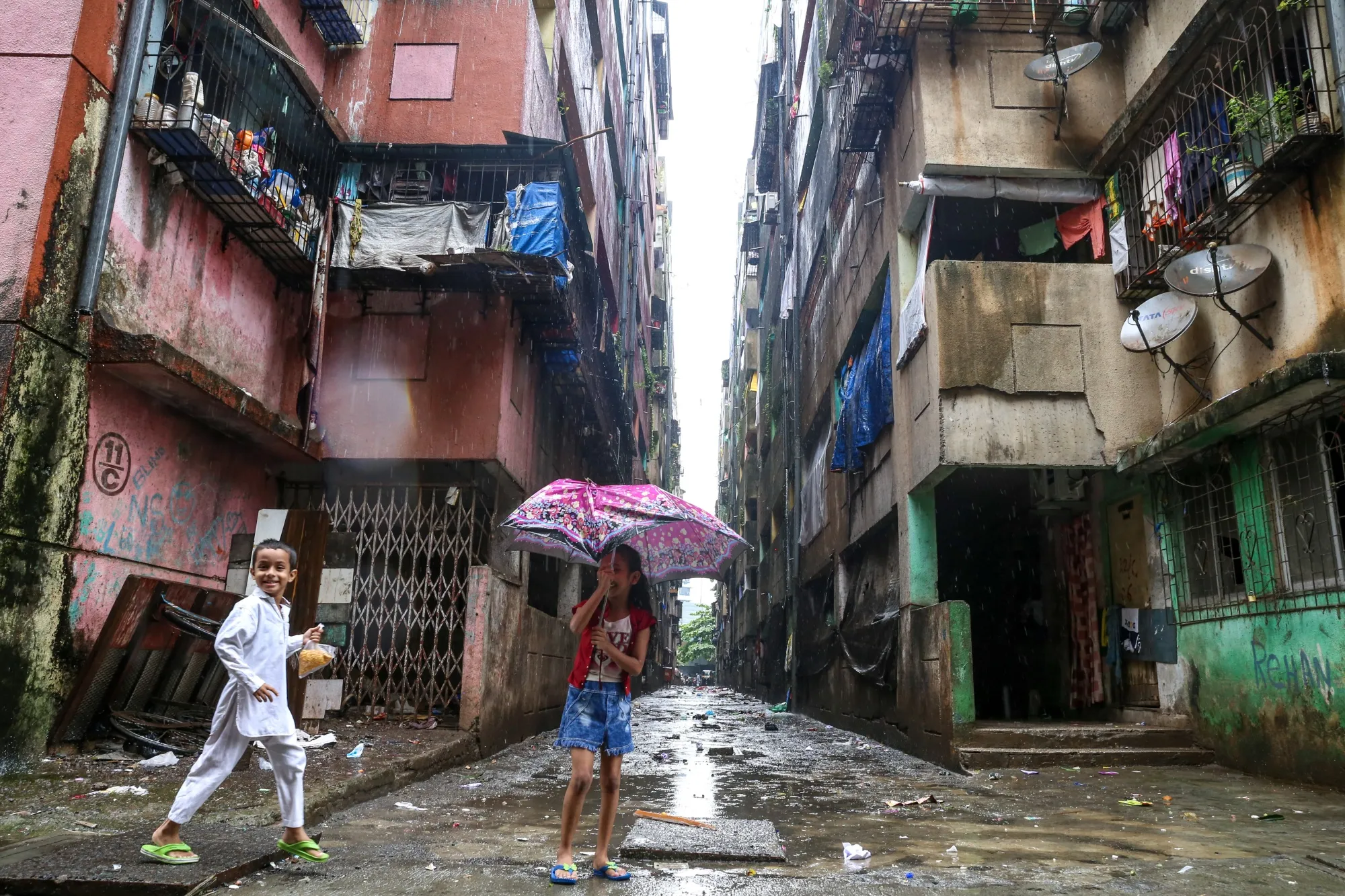
Children play in the rain outside their house in Natwar Parekh, where tuberculosis rates are notably high.
Photographer: Catherine Davison
Urban Design in an Antibiotic-Resistant World: Lessons From Mumbai
Cities once fought disease by improving air flow and access to sunlight. Those early public-health interventions are increasingly relevant today.
A mysterious illness spreading quickly through densely packed slums; the mass exodus of migrant workers from the city; quarantine centers for the sick.
In an eerie foreshadowing of the present-day pandemic, the 1896 arrival of the bubonic plague in Mumbai — then under British rule and known as Bombay — brought life in India’s financial capital to an abrupt standstill. Within months, the disease had spread across the country, with Bombay at its epicenter; an estimated 50,000 died in the city alone.