How an Old Golf Course Can Fight Climate Change
A nonprofit bought the California property and is transforming it into a public park, reviving creeks and turning fairways into habitat for endangered salmon and other wildlife.
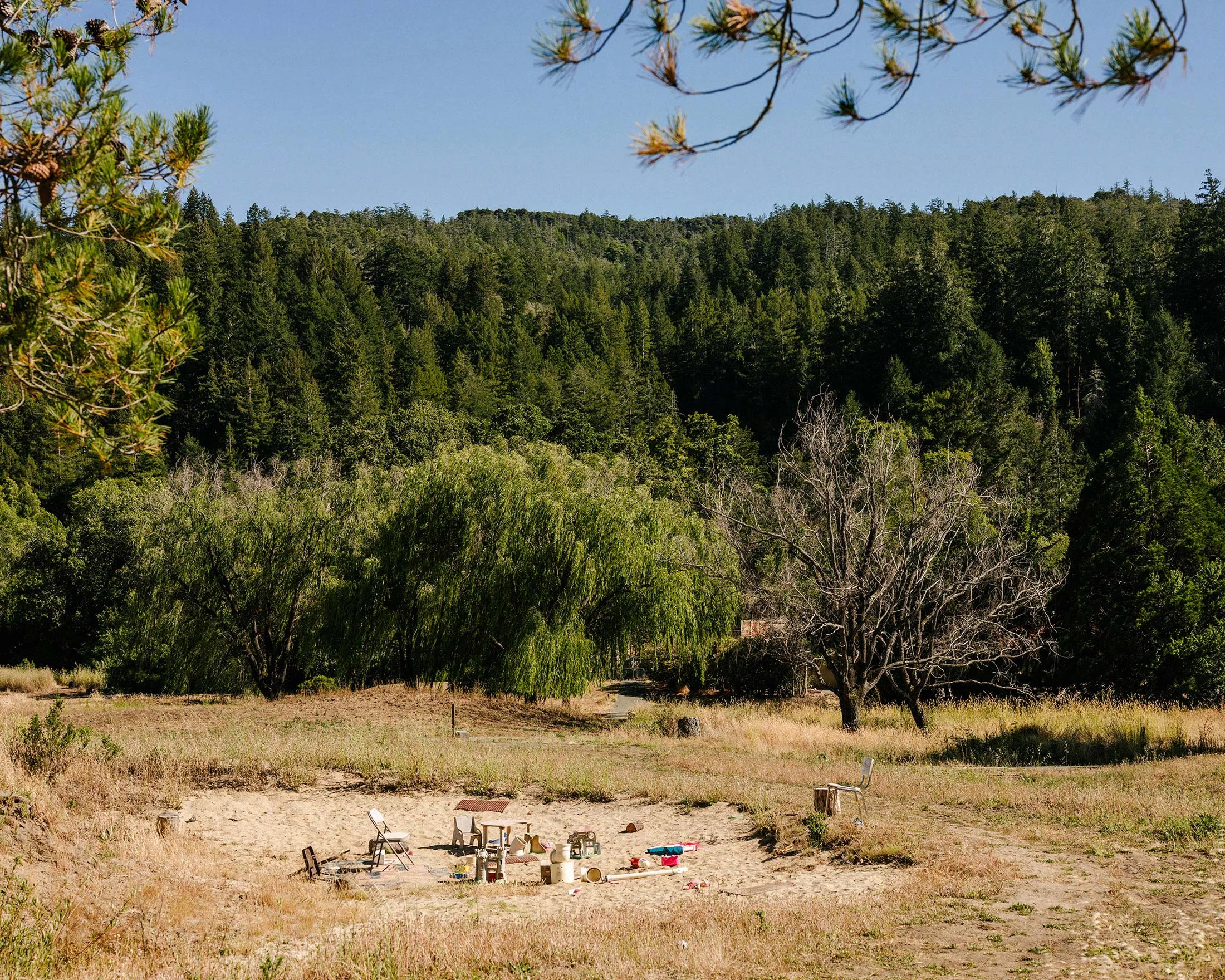
A sand trap has been repurposed into a sandy play area on the former San Geronimo Golf Course, now owned by the Trust for Public Land in San Geronimo, California.
Photographer: Ian Bates for Bloomberg Green
In a rural California valley framed by redwood- and oak-covered hills, hawks circle above a meadow of native grasses where golf carts once trundled over acres of manicured, well-watered turf. Fairways are nothing but flowers now, and the remnant of a sand trap is a pop-up playground. Here and there, small stone obelisks inscribed with the words “San Geronimo Par 5” poke through a riot of yellow-and-white petals like signposts from a lost civilization.
When golf courses go out of business, large swathes of open space suddenly become available for redevelopment. In the United States, they have been transformed into suburban housing tracts, Amazon warehouses and even solar power plants. The San Geronimo Golf Course in Marin County, California, though, isn’t being developed so much as devolved to a state of nature to build resilience to climate change and revive endangered salmon while creating a new public park.