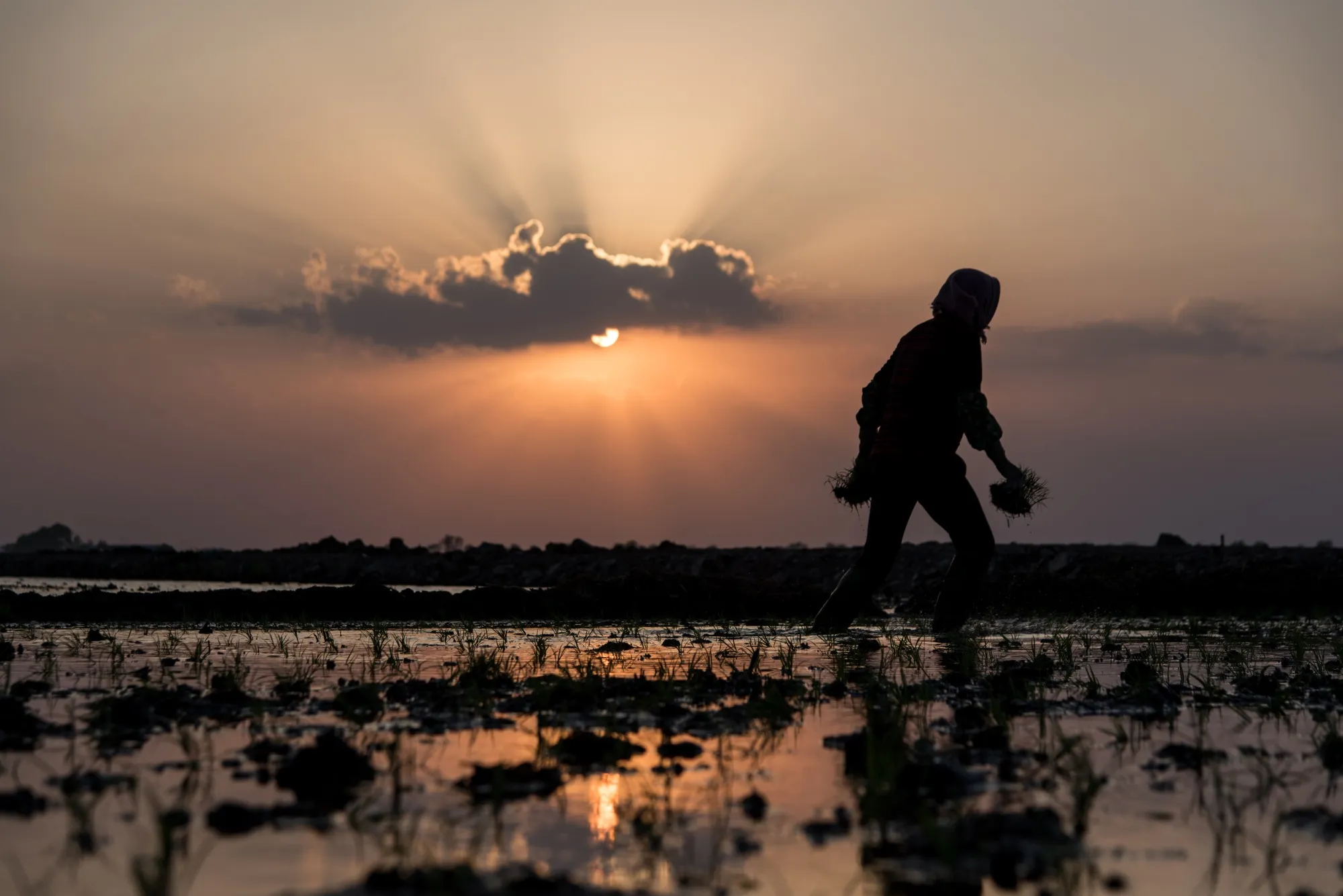
Farmers sow in a paddy field in Wuchang, Heilongjiang Province. In China, the fertile soil is a product of the region’s geography and its special history.
Photographer: Xiaolu Chu/Getty Images
The Rich, Black Soil That Fed a Growing China Is Washing Away
A Mao-era campaign to end famine tapped the country’s most fertile land. Now President Xi Jinping is trying to protect what’s left.
In one of his first actions as Supreme Leader, Chairman Mao Zedong sent tens of thousands of soldiers and educated youth into China’s northeastern provinces with a mission: raze the forests and replace them with houses and farms, cultivating a granary that would nourish a billion people for decades.
The campaign was a success. The black soil region became critical to feeding the growing population, and in the following decades, the demand for arable land also grew. In the ten years from 1990 to 2000, for example, the three provinces of northeast China added 2 million hectares of farmland, and today, the northeast region generates as much as 50% of China’s japonica rice crop, 41% of its soybeans and 34% of its corn.